Eating: (and Savouring) Arequipa

Our next stop was Arequipa, Peru – a beautiful city surrounded by impressive volcanoes on the country’s southern coast.

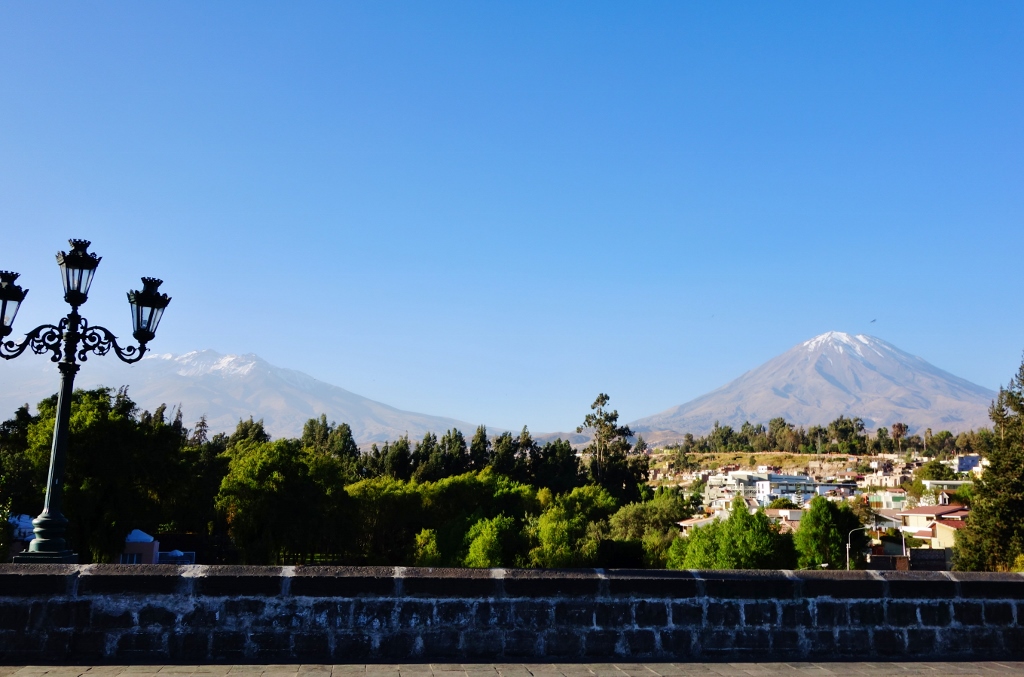
El Misti, Arequipa Peru

The majestic El Misti volcano that’s visible from almost anywhere in the city of Arequipa, Peru

After finishing the rather tough trek to Machu Picchu, Jason and I just wanted to sprawl out in relative comfort for a few days. So we rented a beautiful little apartment in a Spanish-style house for a week – complete with a full patio set and a fancy, modern BBQ!

Spanish-colonial house in Arequipa, Peru

Our home in Arequipa for the week!

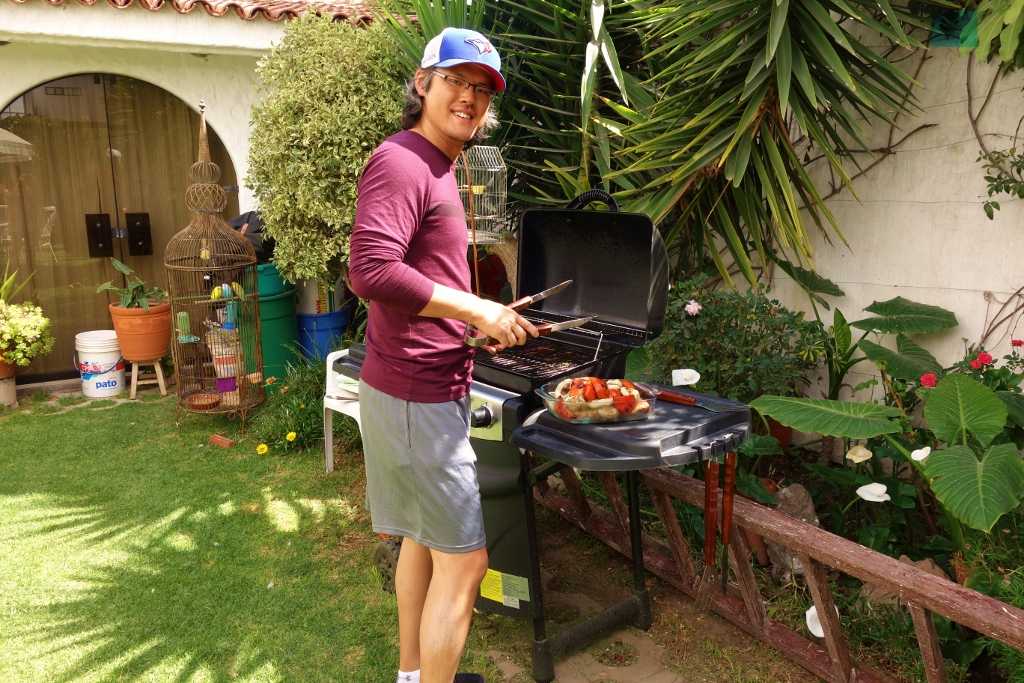
We made immediate use of the BBQ upon arrival. We picked up some summer eats (i.e. chicken, vegetables for grilling) even though we’re in the middle of winter here in Peru.

Arequipa, Peru

Jason in his natural element – barbequing meat

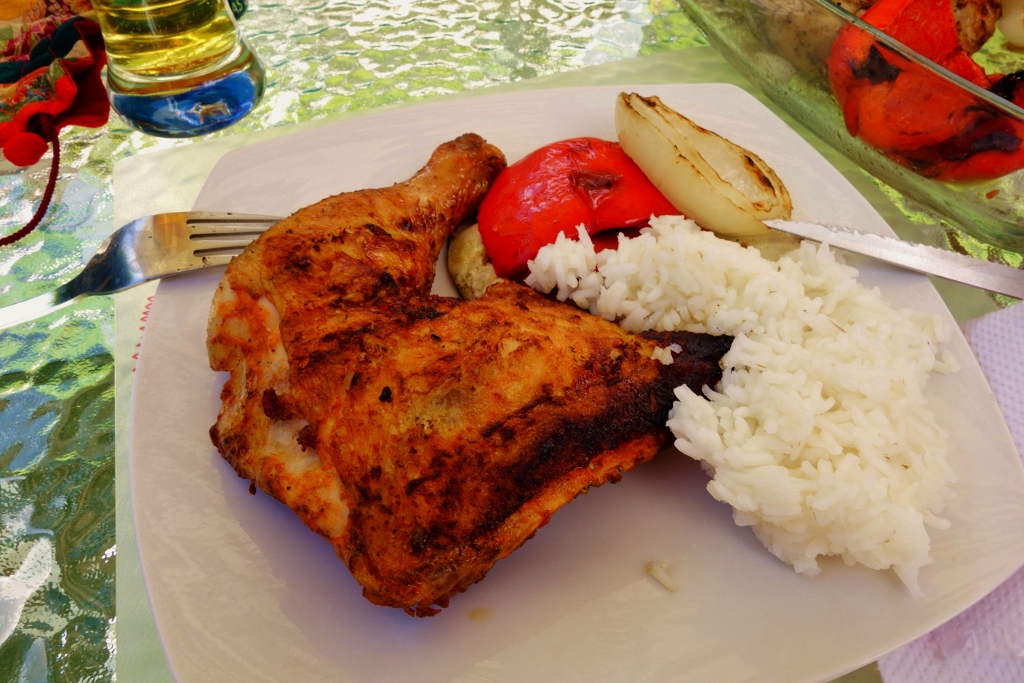
Eating on the patio in Arequipa, Peru

Me, in my natural element – eating!

It was great to be able to cook up something that reminded us of Toronto in the summer – chicken on the barbeque, grilled veggies and cold beer!

Arequipa, Peru

Another fantastic home-cooked meal by Jason

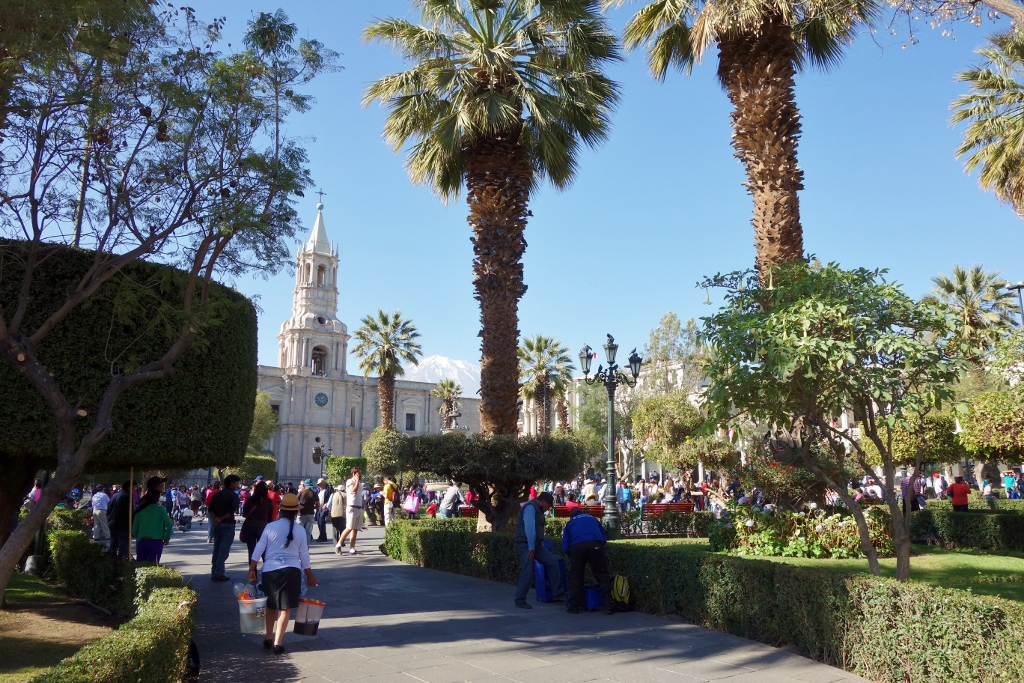
Arequipa is a very liveable city: beautiful little neighbourhoods, an impressive main square, and clean, pedestrian-friendly streets.

Arequipa's main square

The palm-tree lined main square of Arequipa

It felt very different from drab Lima and tourist-choked Cusco. We actually didn’t check out many of the tourist attractions while we stayed in Arequipa.. Instead, we just “lived” in Arequipa for the week: walking into the city every day, window-shopping, checking out cafes, people-watching, grocery-shopping, and of course eating food.

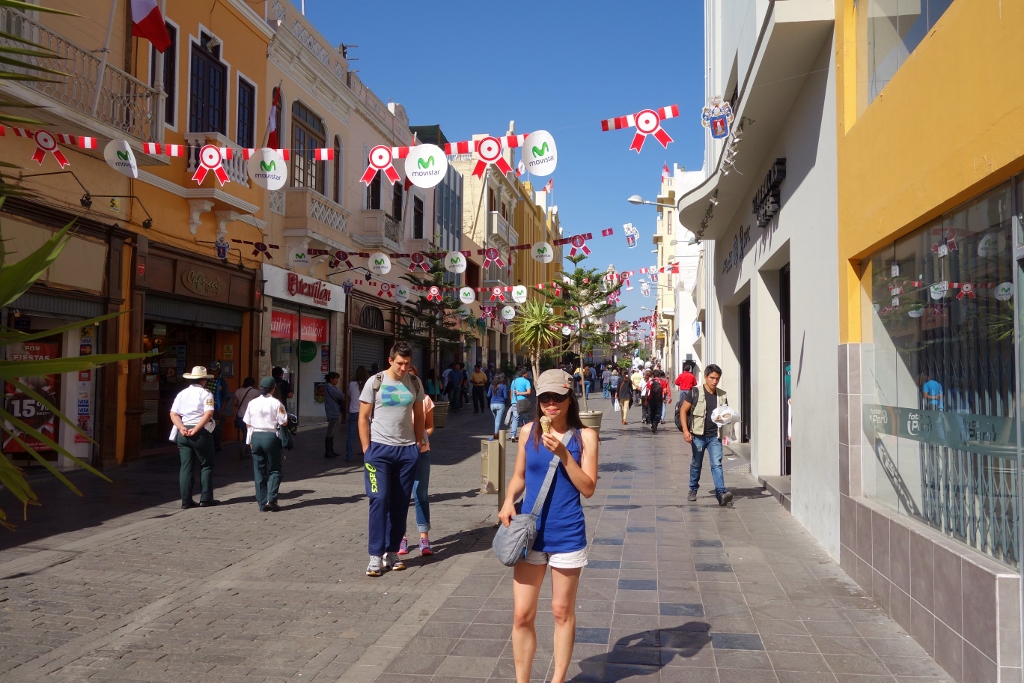
Eating ice cream on Calle Mercaderes in Arequipa, Peru

Eating ice cream on the pedestrian-only Calle Mercaderes in Arequipa, Peru

We spent an afternoon walking around and eating whatever looked good to us.

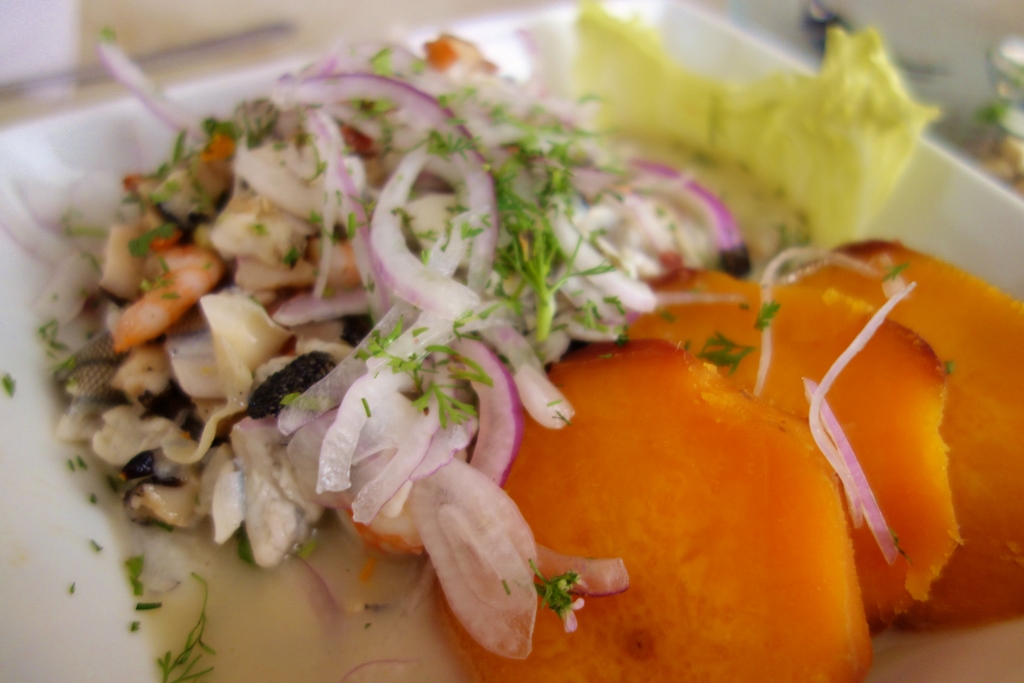
Ceviche in Arequipa, Peru

Ceviche: a must-have in Peru. This dish pictures here cost us 11 Soles (CDN $5)! It might be a little sketchy to have cheap ceviche, but we lucked out with this dish – so delicious and fresh!

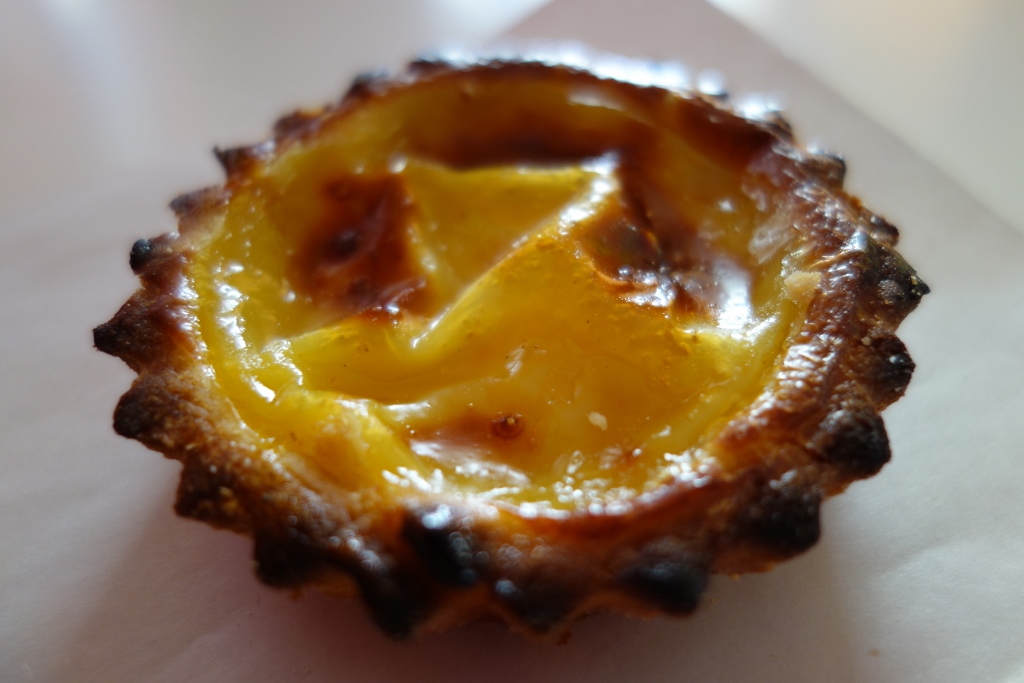
Portuguese-style tart in Arequipa, Peru

Portuguese-style tart – as delicious as it looks!

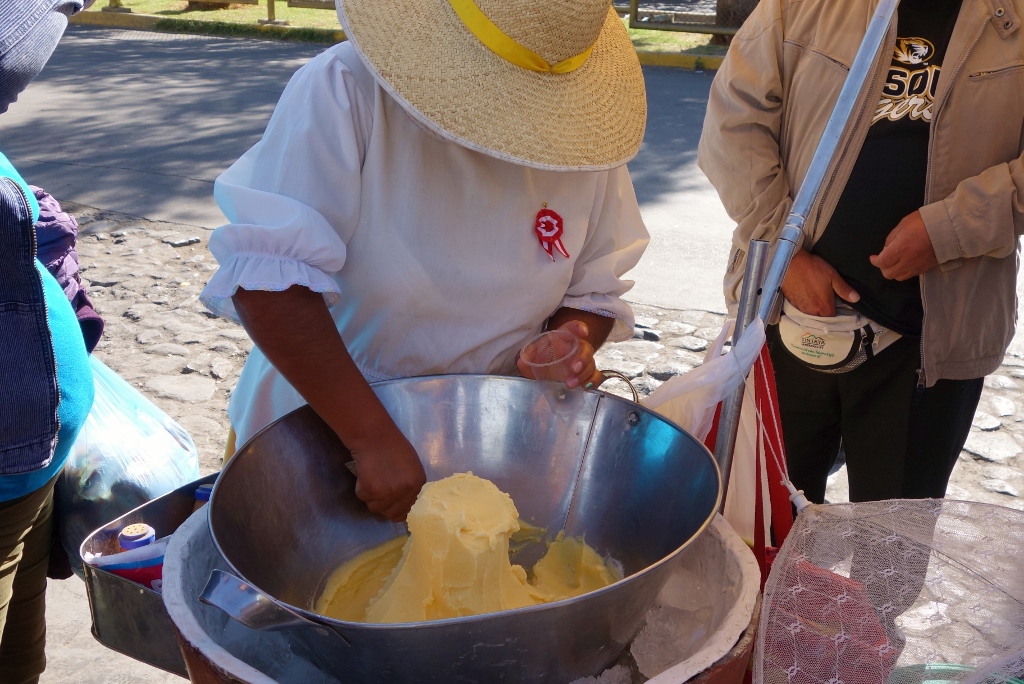
A strange thing I kept seeing on the streets of Arequipa were these little stands that were labelled with the words “Queso Helado”. I looked up the definition – it literally translates to “Iced Cheese”. Sounds gross, yes? I tried it anyway.

It tasted delicious – sweet, light, icy, creamy with a touch of cinnamon. Upon further research, I found out that this delicious dessert had nothing to do with cheese. It uses the unfortunate description of cheese because of the way it looks when you prepare it. It actually consists of sweet milk and sometimes a touch of coconut or cinnamon for flavour.

Queso Helado in Arequipa, Peru

Queso Helado stand: she scoops out the sweet, icy treat into little plastic cups and sprinkles a bit of cinnamon on top. So good!

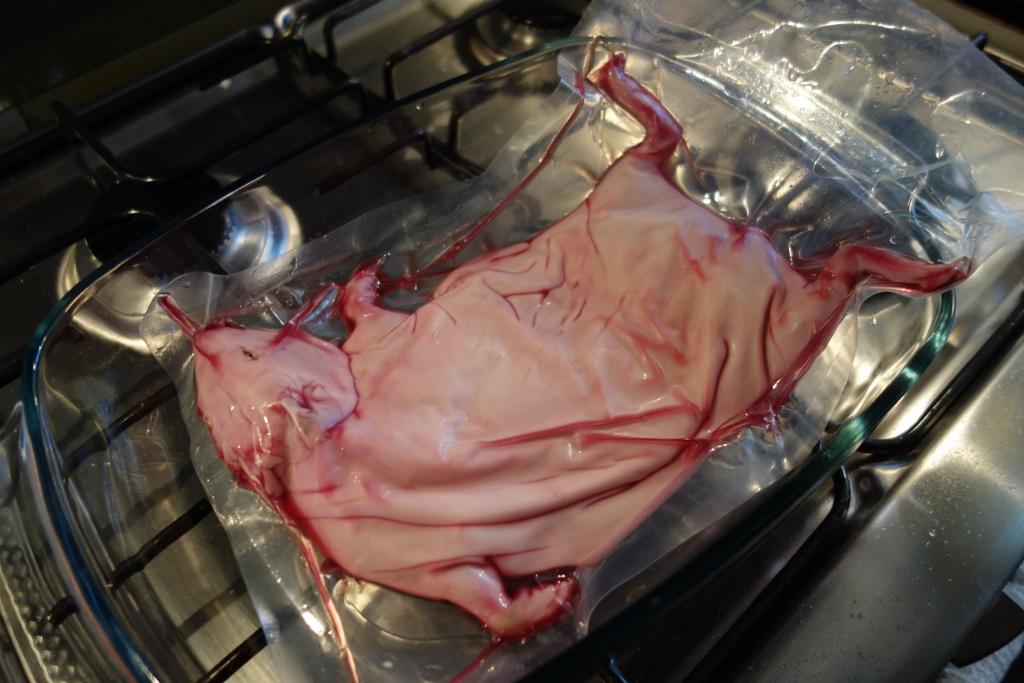
And then for dinner, nothing says Peruvian cuisine like cuy (guinea pig). The thing to do in Peru is to try this delicacy. In Cusco, they bake it which dries it out a bit. We were advised to try cuy in Arequipa where they fry it, which helps retain some of its juices. But we were going to do something completely different: we were going to prepare our own cuy! Warning: kind of gory picture coming up!

Pre-cleaned cuy (guinea pig) from the butcher

Cuy (guinea pig) cleaned and gutted by our local butcher.

I debated awhile as to whether I wanted to try cuy in Peru. I knew it was a delicacy and people had told me about what it’s like (note: it’s a little gamey, not very meaty, and tastes like chicken). You see, I had a guinea pig as a pet when I younger. I have a personal thing about never eating any animal that I would own as a pet (i.e. dogs, hamsters, guinea pigs, goldfish, cat, bunnies). However, Jason mentioned that I owed it to my blog to try cuy – since the blog is partially about our travel adventures in food. So I put my big-girl pants on and bit the bullet (or guinea pig?), and made the conscious decision to try the Peruvian delicacy.

We bought some Peruvian spices, picked up a pre-cleaned cuy from the local butcher, and some more grilling vegetables. Warning: another kind of disturbing picture coming up!

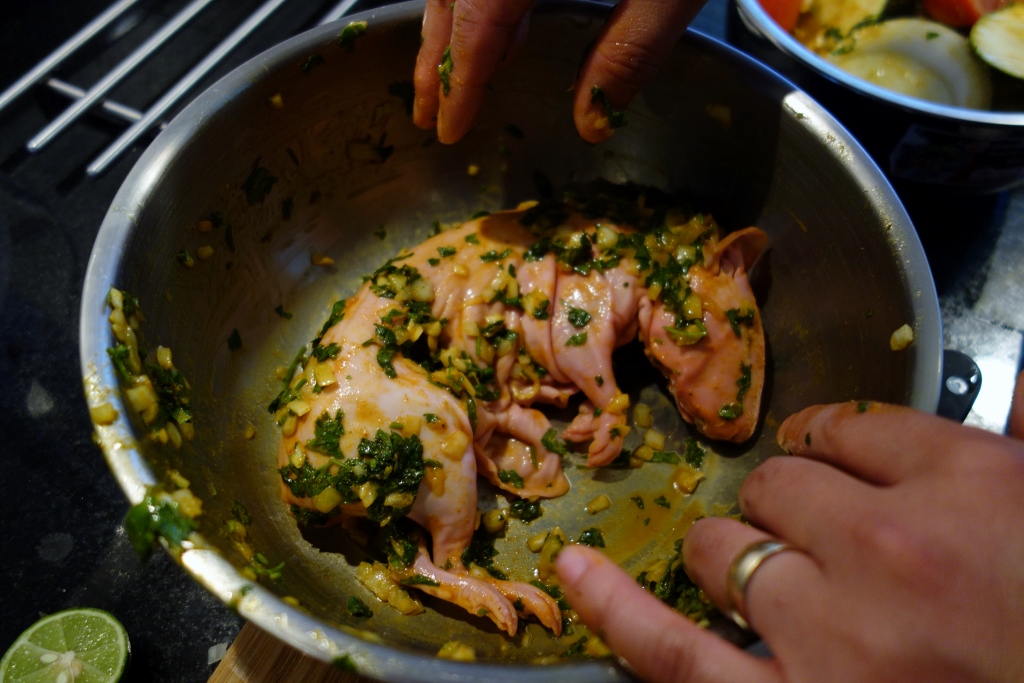
Marinating cuy (guinea pig) at home in Arequipa

Marinating the cuy. Jason kept putting the guinea pig in these little poses. Sigh.

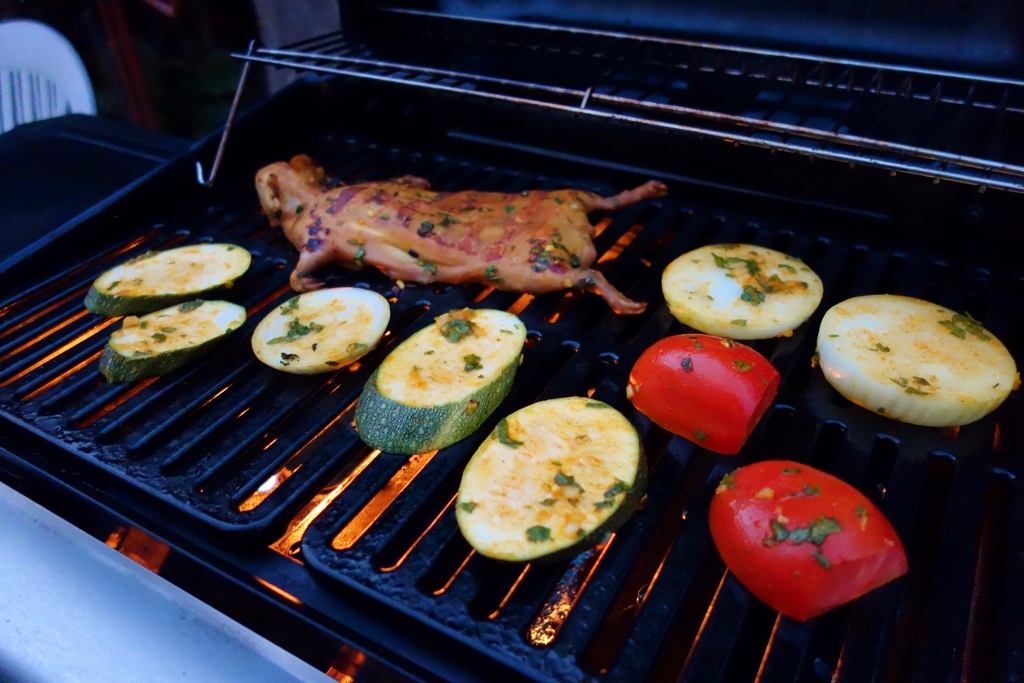
Barbequed cuy (guinea pig) at home in Arequipa

Cuy on the barbie

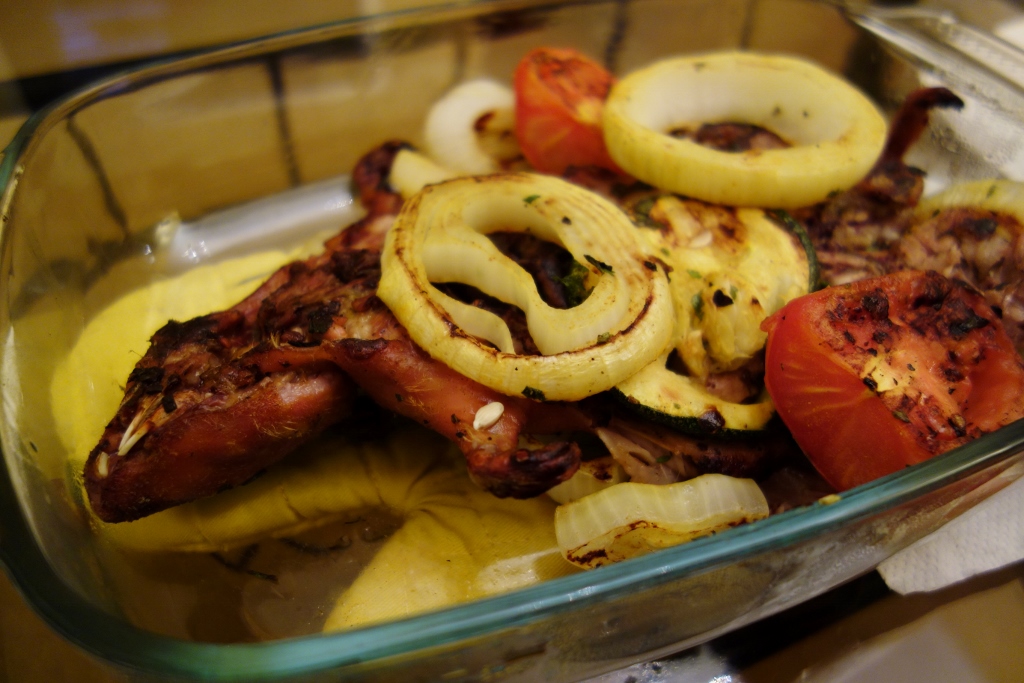
Barbequed cuy (guinea pig) at home in Arequipa

The finished product: barbequed cuy with grilled vegetables.

The guinea pig was actually as described: tasted like chicken and not very meaty. Not my favourite thing to eat, but it was better than expected.

The next night, to make up for the traumatic experience of eating an animal that can be a pet, we went out for a nice, fancy dinner. Date night! Our first one since we started our travels over a month ago.

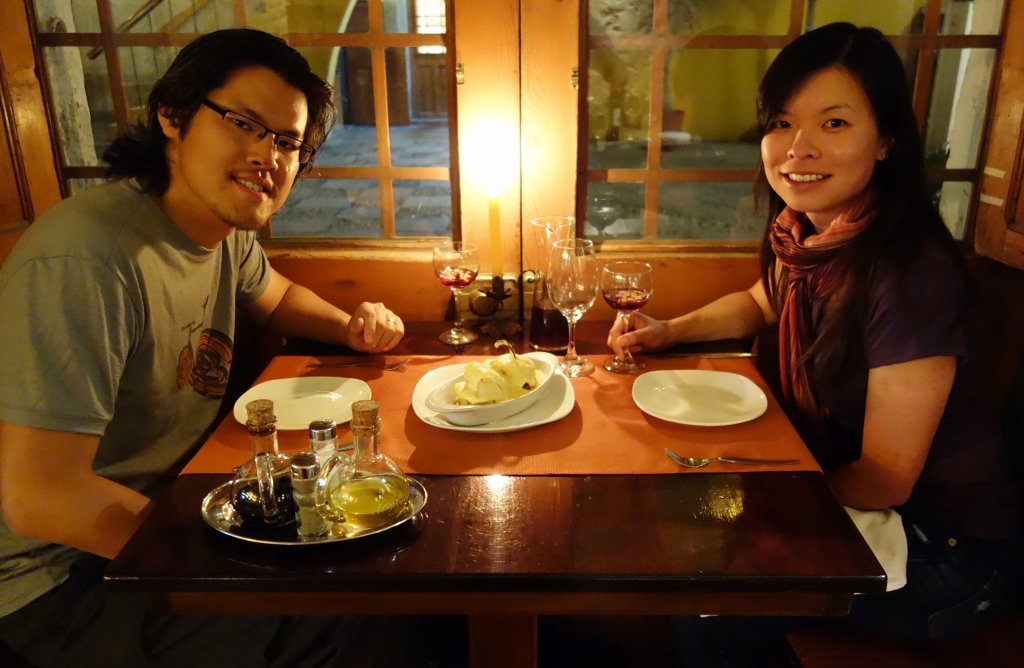
Zingaro in Arequipa, Peru

Date night at Zingaro

Travelling for 6 months means we have to stick to a pretty strict budget. Jason and I typically stick to street stalls, little hole-in-walls, or places that seem to serve mostly locals – which is totally fine by us since we prefer to eat that way. But once in a while, it’s nice to scrub the backpacker dirt off our faces and get all dolled up for a nice night out.

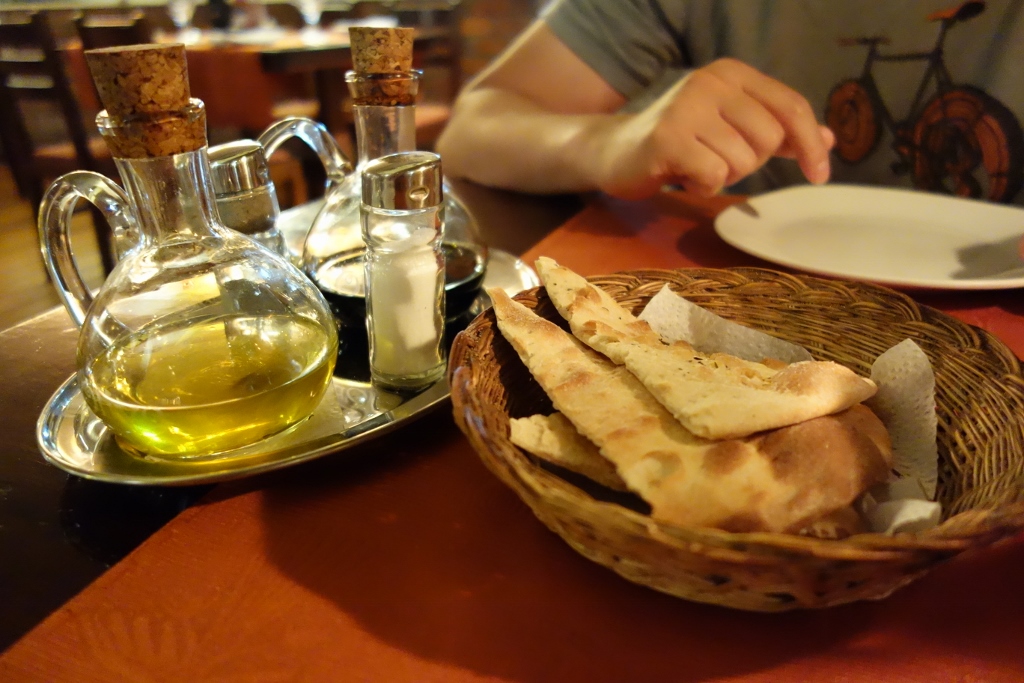
Bread basket at Zingaro (Arequipa, Peru)

Complimentary bread basket! We haven’t seen that at any of our meals since we left Canada. Why yes, I’ll have 5 refills please.

Our rare splurges requires quite a bit of research though, since we don’t want to walk into just any ol’ tourist-trap restaurant. We checked online for restaurant reviews, read through all the comments, cross-referenced it with travel blogger recommendations, and then cross-referenced it some more with other travel literature. Sounds a little obsessive-compuslive, eh? Well, when we only get to splurge once a month, it better be on a really well-prepared meal.

Zingaro kitchen (Arequipa, Peru)

We got a prime spot where we watched the chefs at work in Zingaro. They weren’t messing around – it looks like an episode of Iron Chef in there all night.

We ended up choosing Zingaro for a few reasons: 1) we wanted to have traditional Peruvian cuisine 2) it looked like the restaurant catered to locals and tourists.

Jason and I had slightly different impressions of our the meal. He wasn’t that fond of it, I thought it was fan-frickin-tastic! I’m perhaps a little biased because seafood is probably my favourite food group.

For an appetizer, we ordered the rocoto relleno (stuffed peppers), which is made using the very spicy rocoto pepper (which looks deceptively like a normal red bell pepper). Good thing both Jason and I love spicy food, otherwise we would’ve both been pretty surprised by how spicy the pepper was. It’s stuffed with ground meat, egg, olives, and then covered with melted cheese. It was amazing. I, unfortunately, don’t have a good picture for you, since we gobbled it down before I even remembered to take a picture of it. This is what it looked like, if you’re curious.

I ordered the chupa de camerones (shrimp chowder) – but it actually translates literally to ‘suckage of shrimp’. Which doesn’t sound as appealing….but might be more accurate. Why, you ask? Because this hearty bowl urn of soup is filled to the brim with succulent, suck-able shrimp and crayfish. The aromatic broth seeps into the shells, heads, and tails of the shrimp – just begging you to slurp the deliciousness up with happy abandon. Then, there’s still the flavourful potatoes, corn, egg, and melted cubes of cheese to savour after all the ‘suckage’. Seriously, a bowl of heaven. (Gimme a second while I close my eyes and reminisce).

Chupa de camarones at Zingaro (Arequipa, Peru)

Chupa de camarones (shrimp chowder) – a bowl of deliciousness

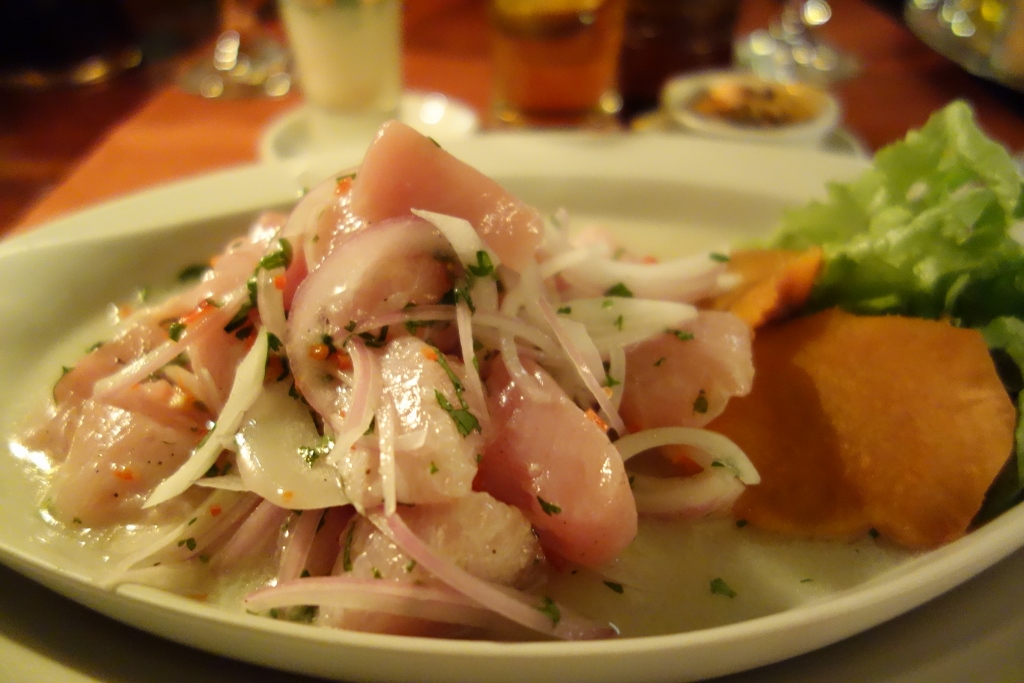
Jason ordered the ceviche – which he thought was too chewy, but I adored. It was the way ceviche is supposed to be prepared – with pieces of raw fish that’s marinated in citrus and hot peppers. I’ve noticed that a lot of ceviche we’ve had uses cooked fish (which might be safer), but a really good restaurant will use sushi-quality fish to prepare it. The few pieces of sweet potato to balance the tartness of the citrus juices was perfection.

Ceviche at Zingaro (Arequipa, Peru)

Delicious and fresh ceviche

Arequipa definitely served up some delicious delights. Some of the ones mentioned above originated specifically from Arequipa (i.e. chupa de camerones, rocoto rolleno, queso helodo), so make sure to definitely seek those out if you’re ever in this wonderfully gastronomic city.

Machu Picchu: It’s All About the Journey…

…and I guess, a little about the destination too.

Having started our 6 months of travel with hardly more planned than a one-way ticket out of Canada, we found ourselves in Peru without anything booked for our visit to Machu Picchu.

There are several ways to see South America’s most popular tourist attraction, but we knew we wanted to trek our way to the famous ruins. (Interesting little tidbit from our guide: most people take the train to see Machu Picchu, only about 20% trek). 
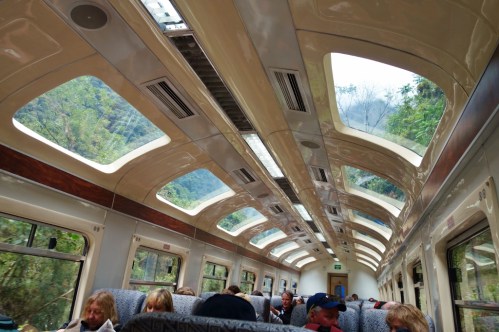
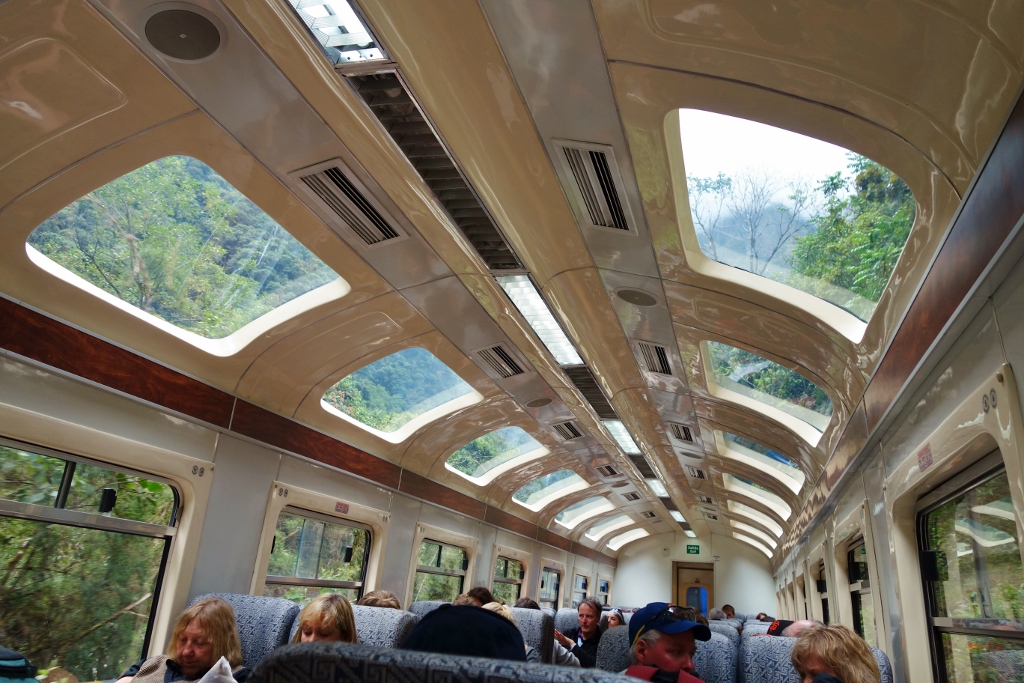
PeruRail - train to Machu Picchu

The train that takes you to and from Machu Picchu (PeruRail). We opted against taking it to Machu Picchu. But there was no way we’d pass up the return trip after 4 days of trekking!

The most popular trek is the classic Inca Trail but since the Peruvian government has restricted the number of Inca Trail trekkers, only 500 people can take that trail up a day (including guides, porters, donkeys…ok, not donkeys).  As a result, it has become nearly impossible to book the Inca Trail unless you’ve done a bit of planning beforehand.  During the high season (which we’re in right now), the trail is booked up months in advance.  And since we had no idea when we’d be in Peru when we first started out travels, we were out of luck when it came to the Inca Trail.

Luckily for us, there are several great alternative trekking routes to Machu Picchu that don’t require booking way in advance.  Jason did some research and after comparing the available routes, we decided that the Salkantay Trek was right up our alley.
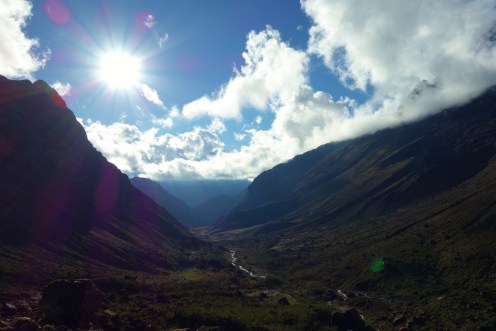
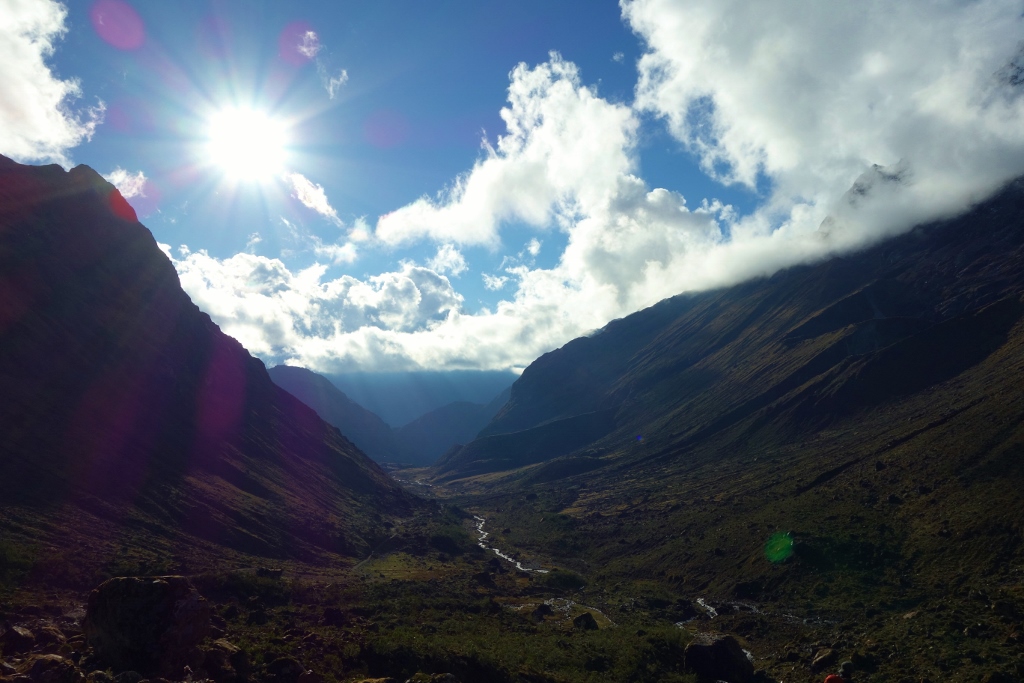
Salkantay Trek, Peru

The Salkantay Trek

It’s a demanding, longer, and more scenic trek to Machu Picchu than the Inca Trail.  Available in a 4D/3N or 5D/4N option, we naively chose the 4D/3N option thinking it may be a little easier.  Wrong!  The shorter trek is more difficult, we discovered –  as we had to cover the same ground but in a shorter amount of time.
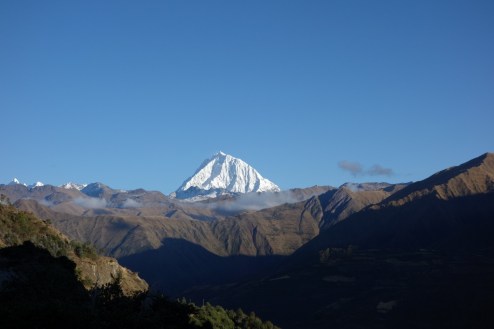
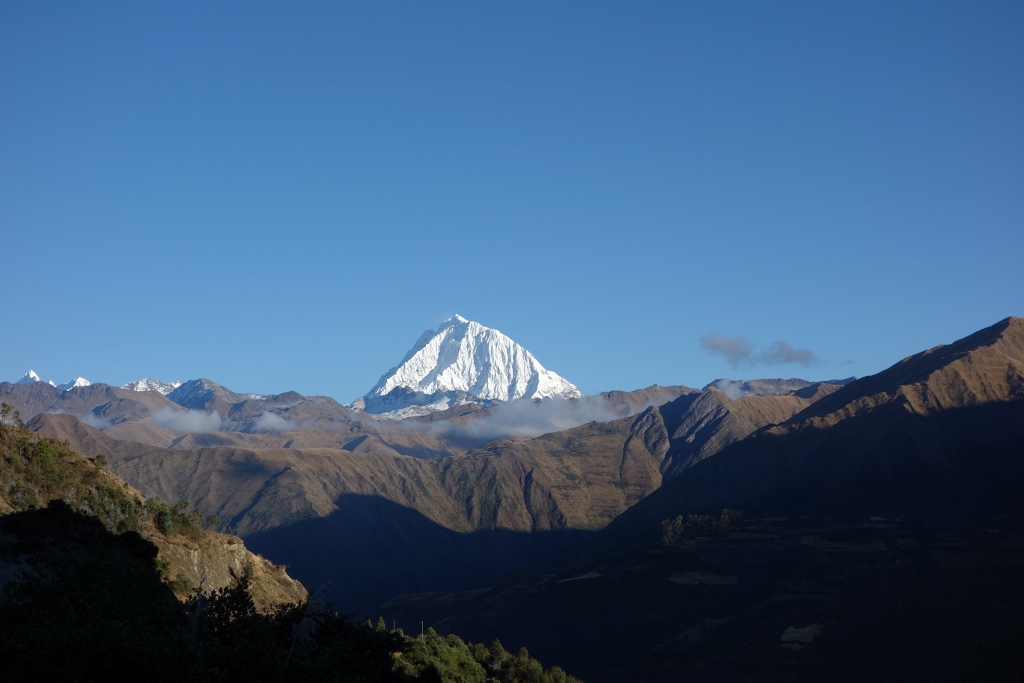
Peak of Salkantay Moutain, Peru

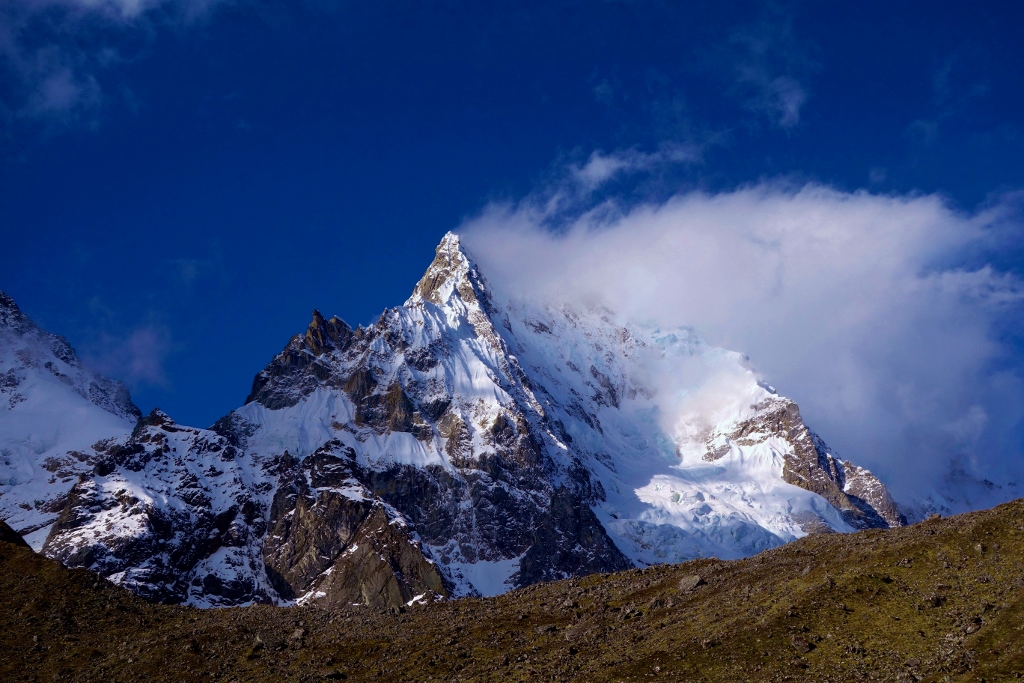
Our first glimpse of Salkantay Mountain from afar. We’ll be coming to within 1500m of its peak.

As for which trekking company to go with, we researched quite a few companies and read tons of reviews, as we wanted to make sure we chose an ethical and eco-friendly trekking company.  There are a lot of trekking companies out there, but not all treat and pay their porters well and some do not care about keeping the environment clean and carrying all the waste back out of the trekking route.  It came down to two companies that seemed to offer all the things we were looking for – the well-established Llama Path and the newer but well-reviewed Inca Trekkers.  After reading up on the differences between the two companies, we decided to go with Inca Trekkers as we felt a newer company would likely ‘go the extra mile’ in terms of offering their clients an excellent experience, as opposed to a well-established company that already had the benefit of building a good reputation (i.e. comments on TripAdvisor confirmed the growing complacency of Llama Path).  Looking back, we really appreciated the things that Inca Trekkers did do to go that extra mile (i.e. holding the briefing session in the comforts of your hostel, bringing you back to your hostel after the trek instead of ending the tour in Aguas Calientes – the town at the foothills of Machu Picchu).

One more bonus: on a tour that typically consists of 12-16 people, it would just be Jason and I! Score!

Oh, and If you want a more detailed itinerary of the 4D/3N Salkantay Trek, click here.

Day 1: It’s all Uphill from Here

On the brilliantly sunny first day, we started off hiking to the highest point of the trek – a breathtaking high pass of 4700m (called Salkantay Pass) right next to the spectacular, snow-covered peaks of Salkantay mountain (6270m).
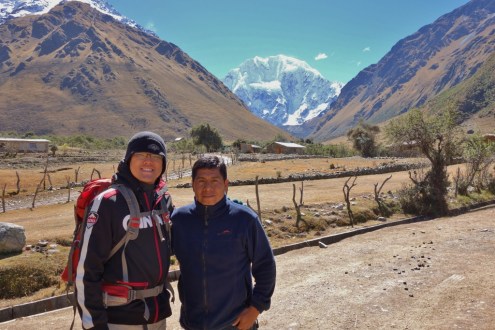
Soraypampa - start of Salkantay Trek

At the beginning of our trek in Soraypampa with our guide, Hugo. You can see the giant peak of Salkantay looming in the background.

This scenery was magnificent – glacier peaks on our right, green mountain tops on our left.  We even spotted a couple of Condors – Peru’s national bird.  (It’s supposedly good luck when you spot one – so we hoped this was a good sign for the upcoming couple of days).

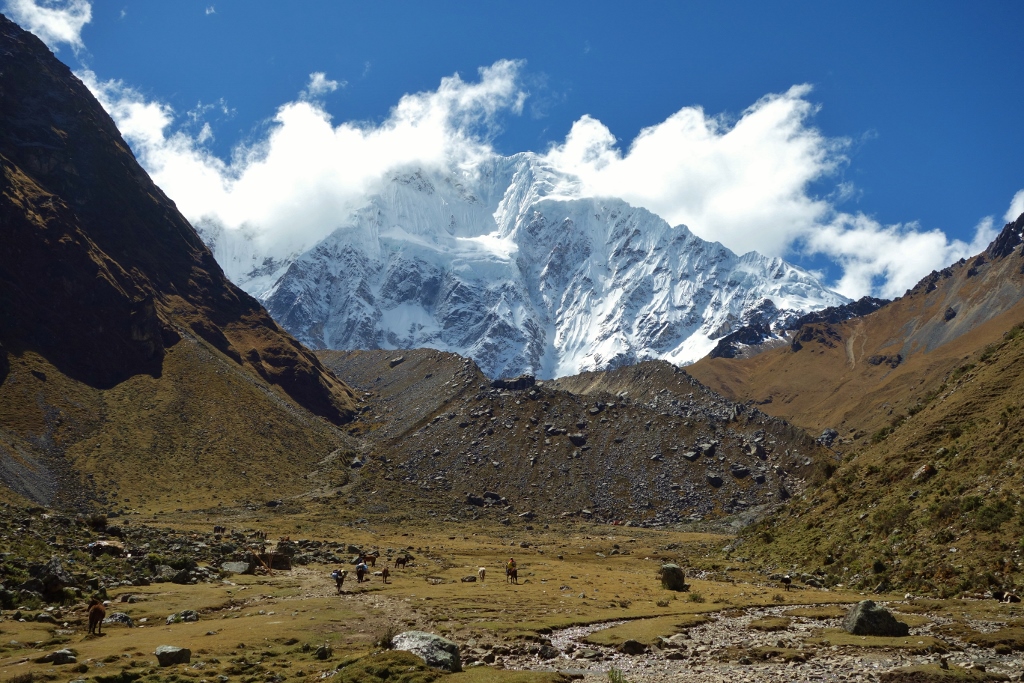
Approaching Salkantay Mountain, Peru

Approaching Salkantay Mountain. You can appreciate the sheer size of the mountain by comparing it to the people on horses at the bottom of the picture.

The 3-hour uphill battle was the hardest part of the 4-day trek.  The incredibly thin air at that altitude (the highest we’d been, at that point) meant that you feel like you’re sprinting up the mountain.  Your heart is racing, you’re gasping for oxygen that doesn’t exist, and your legs can barely plod forward.  We had to constantly stop every couple of minutes to catch our breath.  High altitude climbing is really difficult, even with all the extra precautions we took: taking pills to prevent altitude sickness (soroche, as its known in Latin America), eating chocolate to increase our blood glucose levels, sipping water to stay hydrated. 
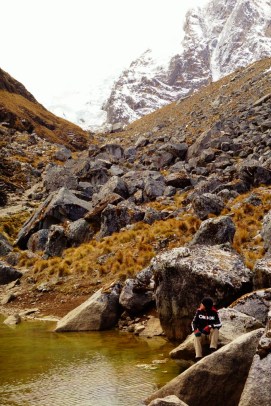
Salkantay Trek to Machu Picchu, Peru

Jason posing for a Salkantay Trek ad 😛

People were not kidding when they tell you to make sure you acclimatize in Cusco (3300m) for a few days before doing this trek.  Otherwise, you might have to turn around and head back down before the trek even starts.

Salkantay Trek to Machu Picchu, Peru

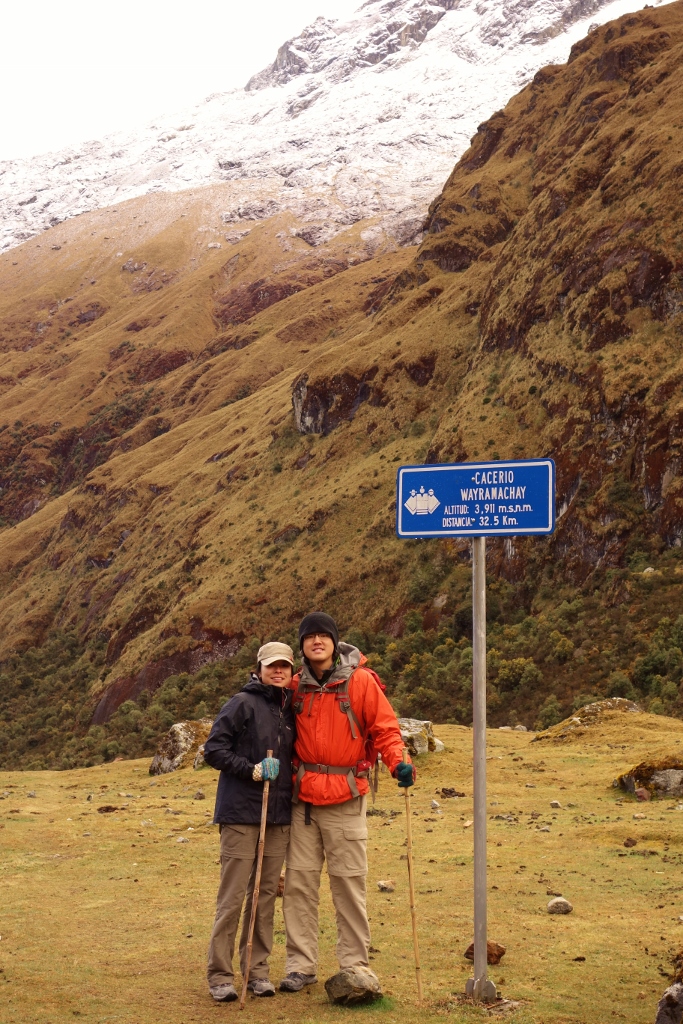
Finally reached our lunch spot! We’re at a breathless 4200m here.

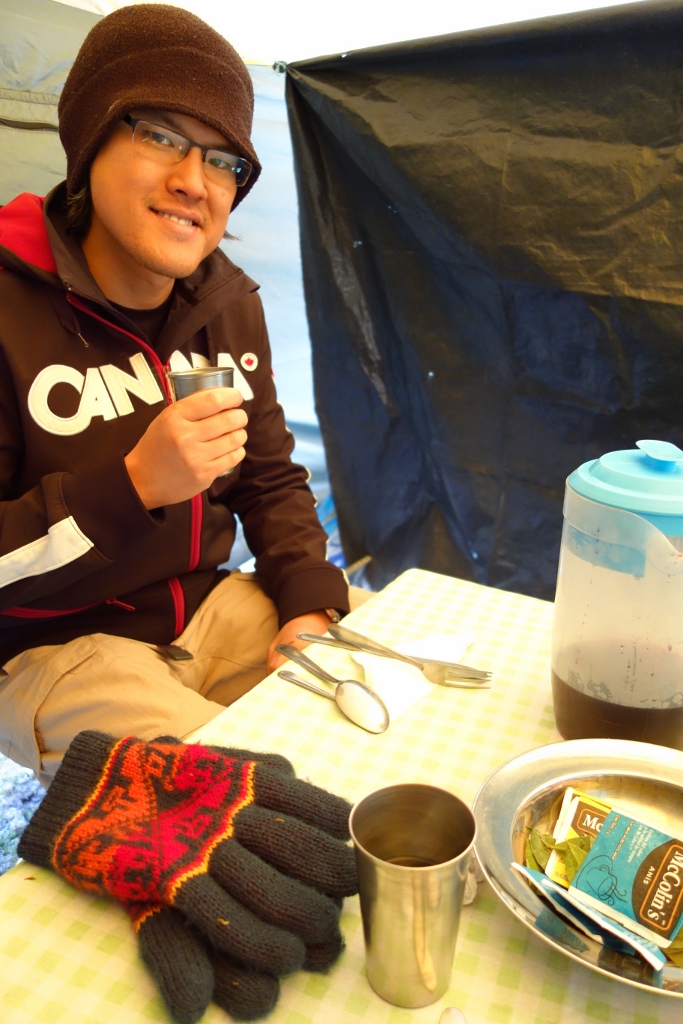
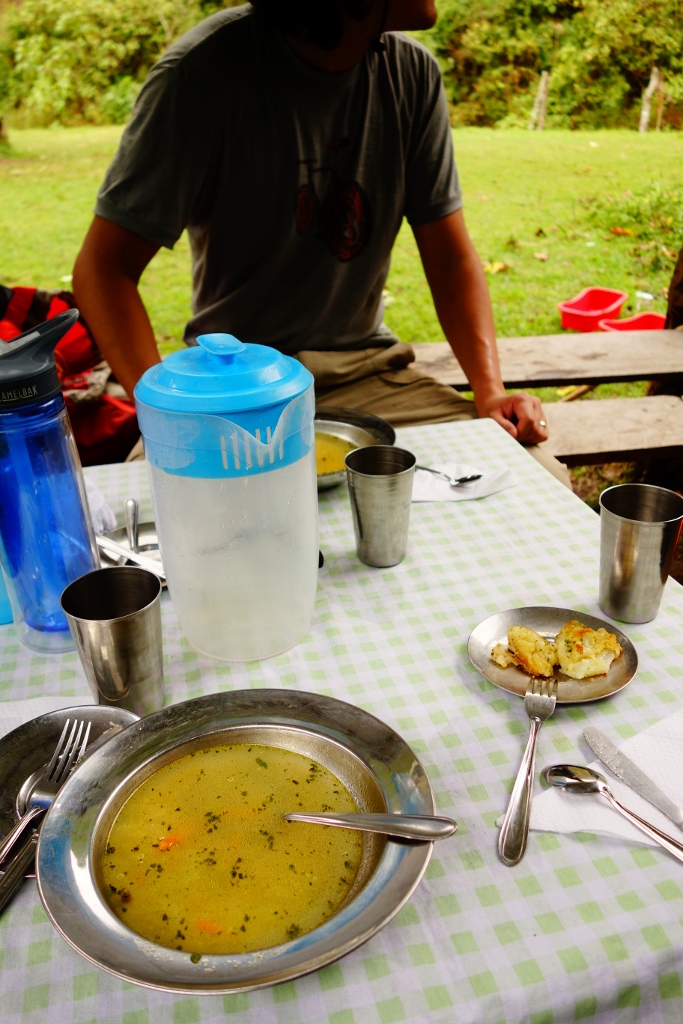
We stopped for lunch at a plateau near the top and had some deliciously hot chicken soup, avocado salad, fried trout and rice, and hot cups of tea.  Quite possibly the best lunch ever after trekking in the freezing cold temperatures for 3 hours.  Our chef was amazing and we had him all to ourselves!
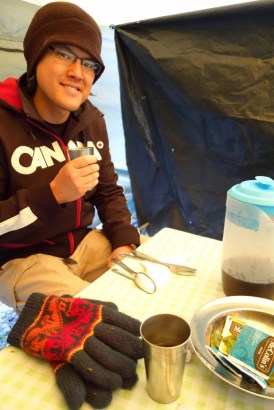
Lunch time during Day 1 of Salkantay Trek to Machu Picchu, Peru

Jason, happy as a clam, as we warmed up with hot tea during lunch.

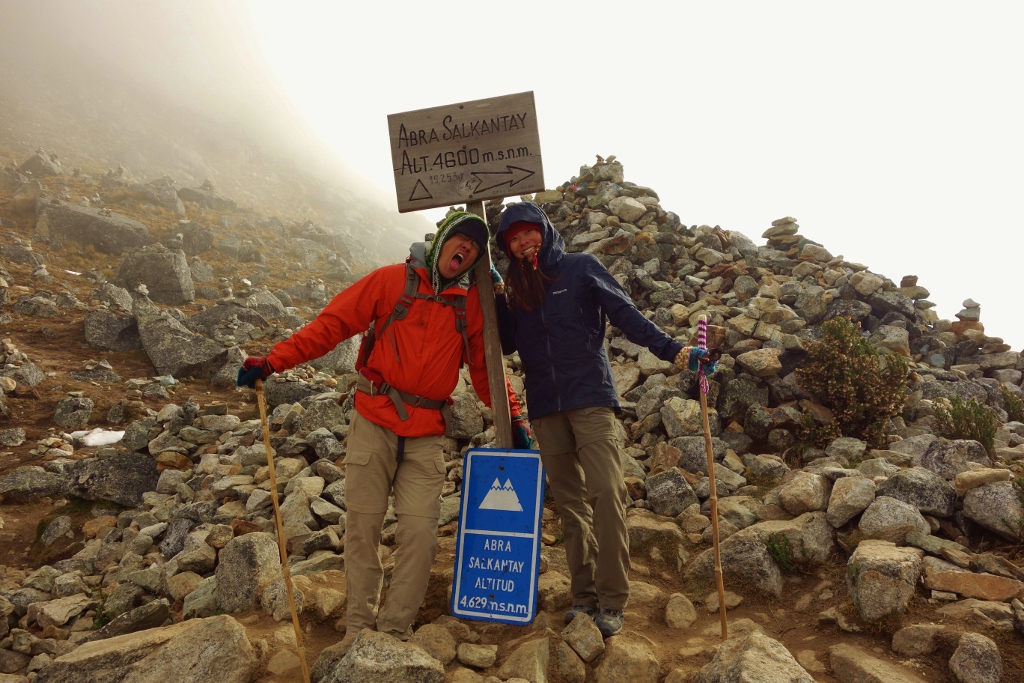
After refueling, we put on a few additional layers of clothing to continue to climb for another hour to reach the top of Salkantay Pass (4700m) – the highest point of our trek.
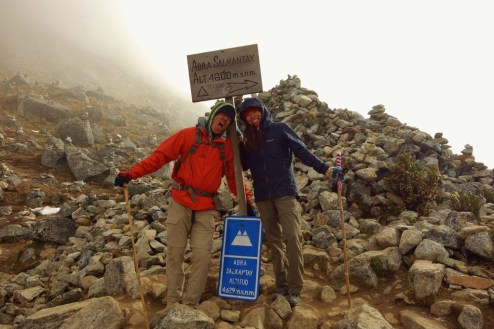
Salkantay Pass, Peru

Jason and I huffing and puffing at the highest point of our trek – the top of Salkantay Pass. We made it! (barely!)

Then it was downhill for another 2 hours until we reached our camp for the night.  Our tent was already set up and there was hot chocolate, tea, and the best salted popcorn we’ve ever had waiting for us!
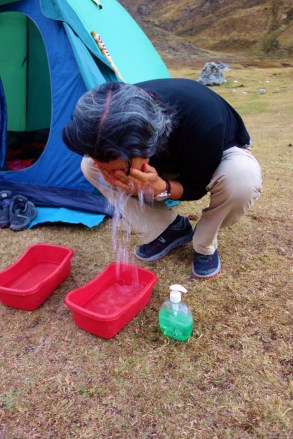
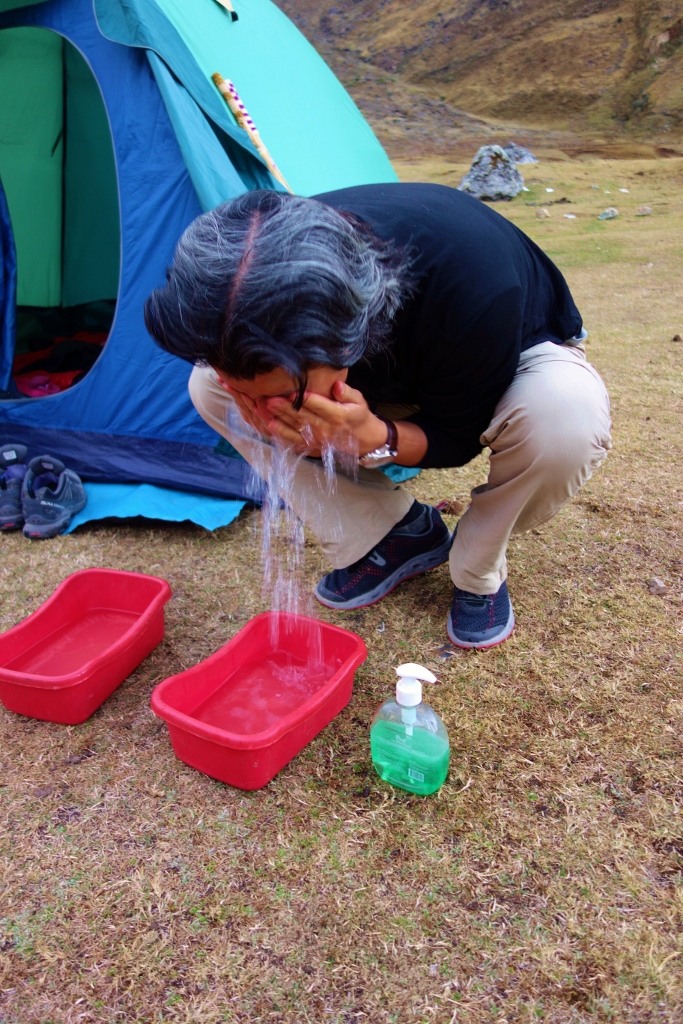
Warm water to wash up on Salkantary Trek to Machu Picchu, Peru

They provided warm water to wash up! Talk about luxury camping.
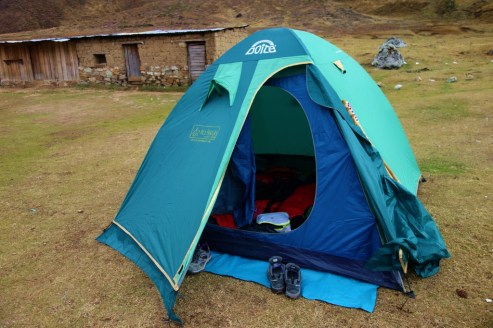
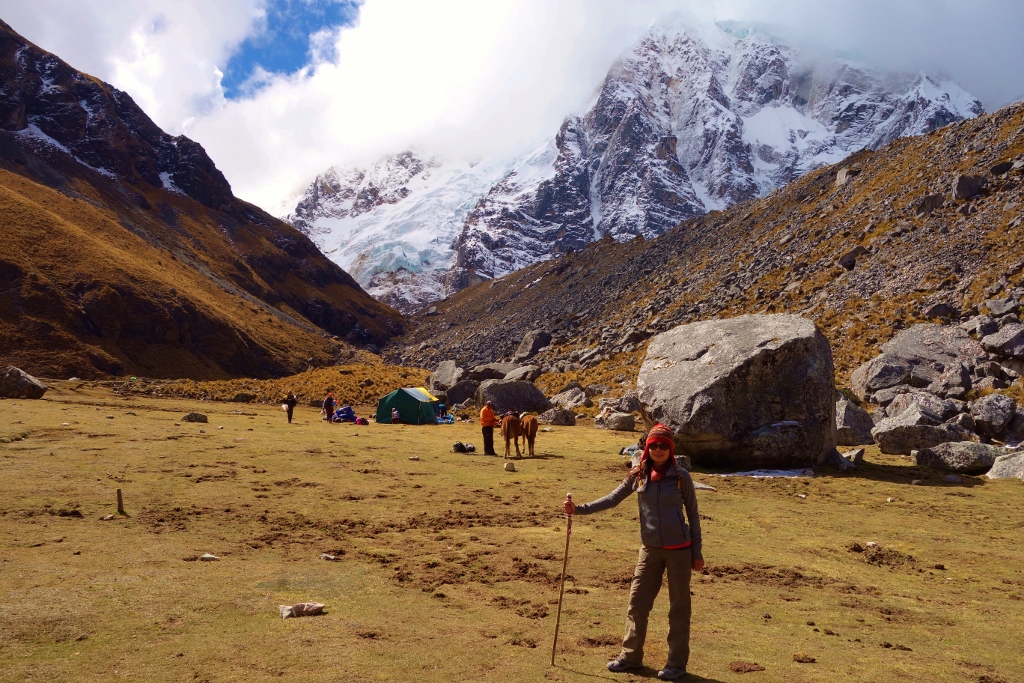
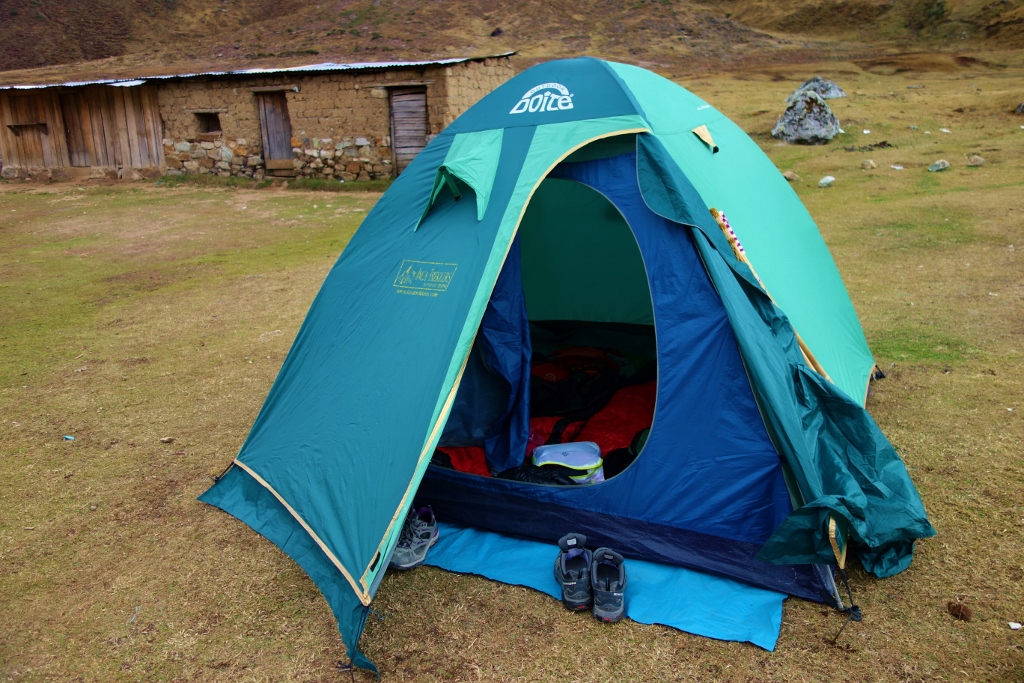
Day 1 campsite on Salkantary Trek to Machu Picchu, Peru

Our home for the next few days. Pretty roomy actually – it had a front “foyer” for us to store our muddy hiking shoes.

Our campsite was at 4200m – the air still really thin and freezing cold!  Once we got into our high-tech sleeping bags, we didn’t want to come back out. I debated for half an hour in my warm sleeping bag before deciding that I really should make one last run to the washroom before heading to sleep.  It was 8:30pm.  When you’re camping with no electricity or even a campfire, it’s pretty  much bedtime when it gets dark.

Day 2: Downhill into the Jungle

Salkantay Peak, Peru

The mountain we slept under and the view we woke up to.

Instead of the usual 6:00am start time, we started at 7:00am since our guide, Hugo, decided that we were actually pretty good trekkers (based on our progress and speed from the first day).  Yay! The extra hour of sleep was very much appreciated since getting out of the warm cocoon of a sleeping back and stepping out into the freezer-like temperatures outside our tent was really REALLY difficult to do.
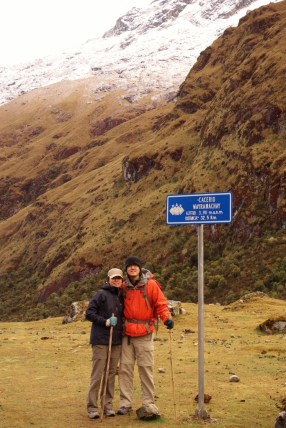
Day 2 of Salkantay Trek to Machu Picchu, Peru

Wearing every single piece of clothing we brought on the morning of Day 2

We started the day wearing every single piece of clothing we brought with us and spent the next 9 hours hiking downhill from the glacier-covered mountains into the jungle.
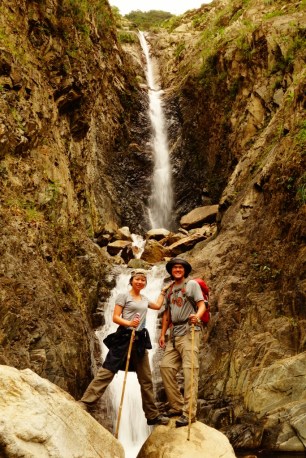
Day 2 of Salkantay Trek to Machu Picchu, Peru

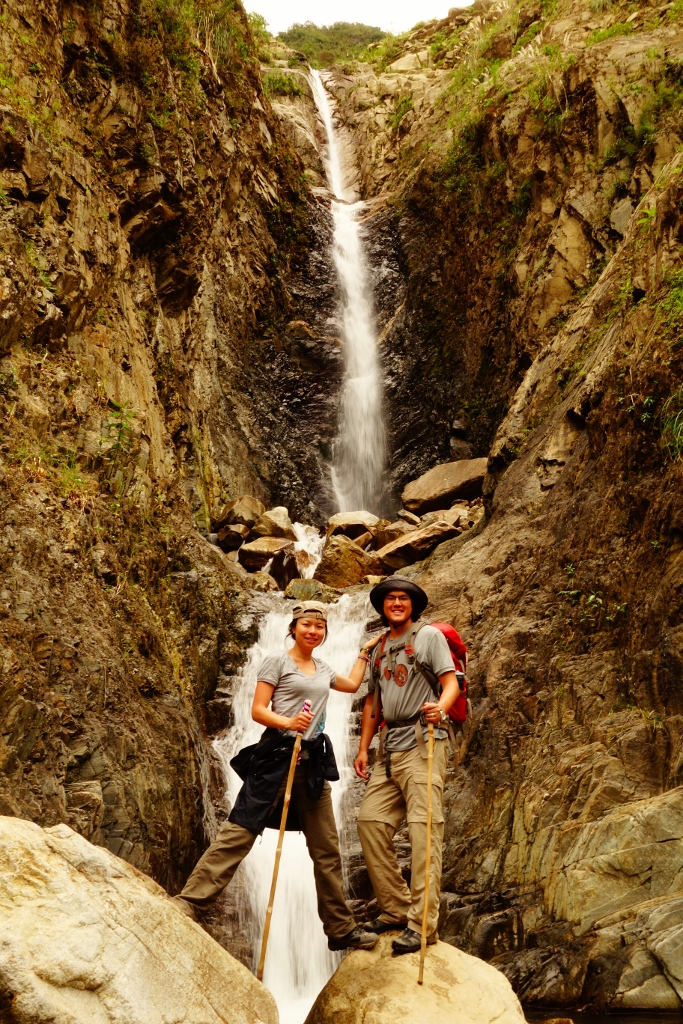
Cooling off at the waterfall

Luckily there was cloud cover, or the jungle would’ve felt even more tropical.  We stopped every hour to shed another layer of clothing as we descended deeper and deeper into the valleys of the subtropics.

Descending into the subtropics of Salkantay Trek

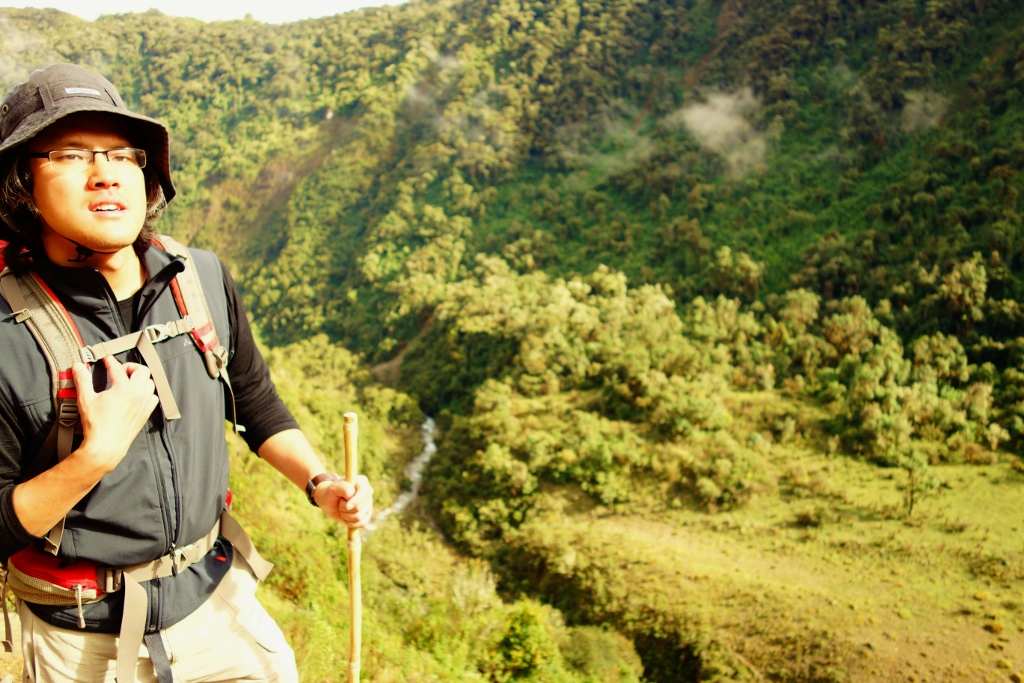
About an hour into Day 2 of our trek, we were already into the beginning of the subtropics of Peru.

We reached our lunch spot on a local farm just before the clouds broke and the rain poured!  We had delicious corn chowder and a platter of protein to help heal our aching muscles.
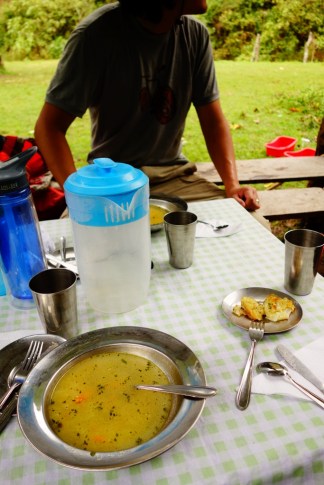
Day 2 of Salkantay Trek, Peru

Another delicious lunch!

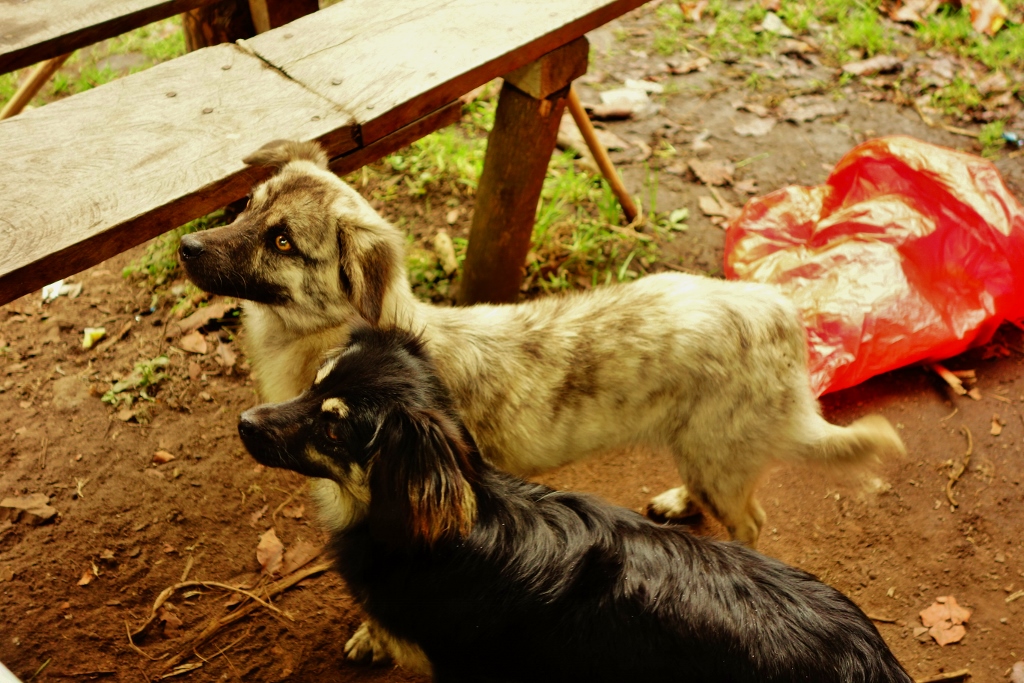
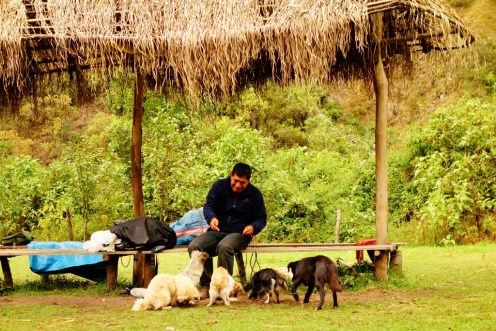
Jason made friends with some of the farm’s cute little dogs.  They had such wonderful little personalities.
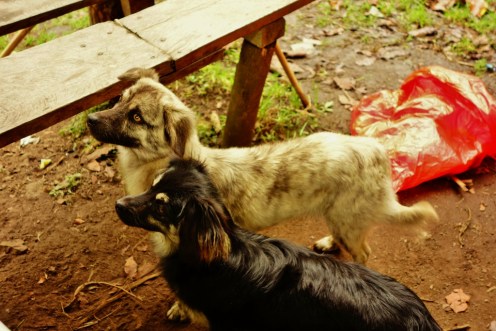
Day 2 of Salkantay Trek, Peru

Adorable dogs at the farm where we had lunch

Awww, we totally miss our dog, Weezer.  Gratuitous shot of Weezer 🙂
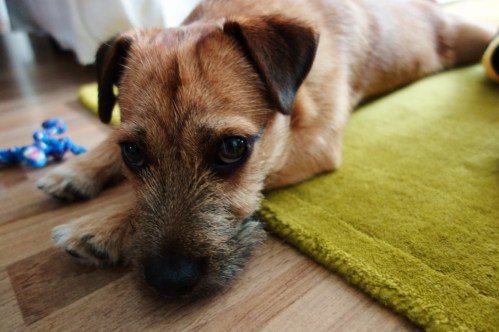
Puggle

Our little guy that we left back at home in Toronto

We set off again just as the sun shot out through the clouds.  Perfect timing.
Day 2 of Salkantay Trek, Peru

Our guide, Hugo, feeding the dogs on the farm at lunch

The grueling 9-hour trekking day came to an end at a small town near the base of the mountain on which the Llactapata ruins lie.
Day 2 of Salkantay Trek to Machu Picchu, Peru

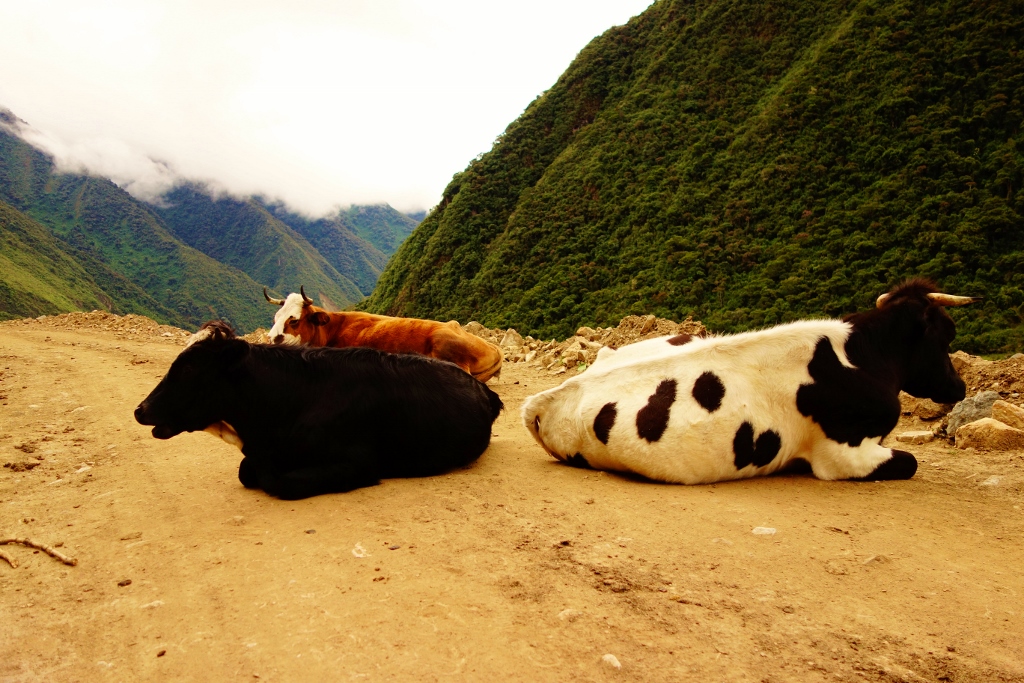
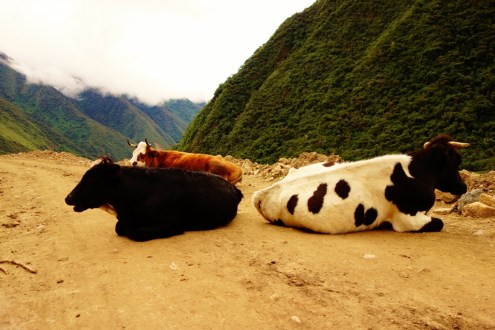
Random cows relaxing in the middle of the road.

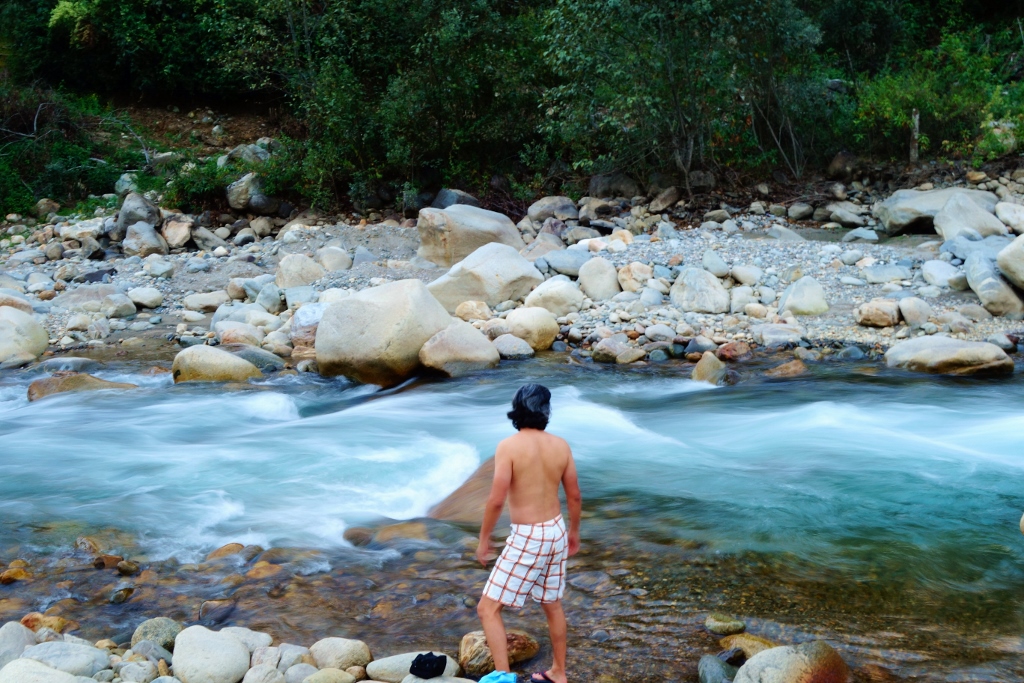
We were hot and sweaty from the long hike through the subtropics, so Jason decided to take a dip in the frigid waters of Rio Urubamba.
Day 2 of Salkantay Trek to Machu Picchu, Peru

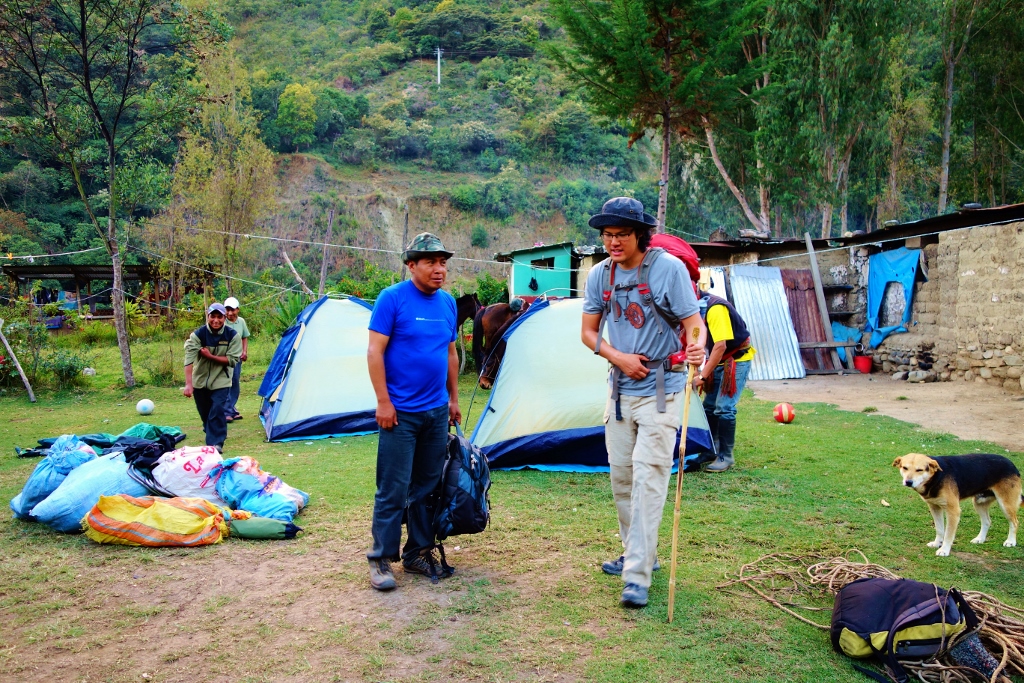
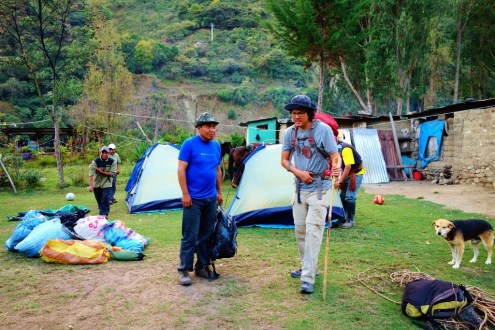
Setting up camp the night of Day 2

He also brought along a bar soap since we hadn’t showered in a couple of days 😛  He said it was actually really refreshing.  By refreshing, he meant his skin felt like it was on fire after dipping into the icy cold waters.

Rio Urumbamba, Peru

Jason debating whether to jump into the icy waters of Rio Urubamba

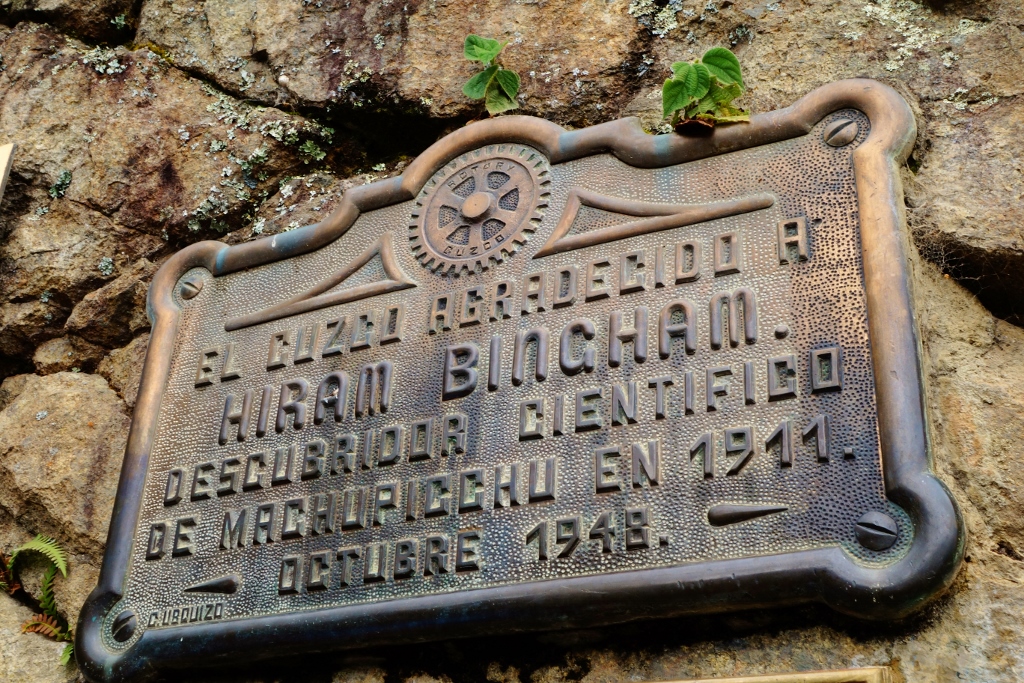
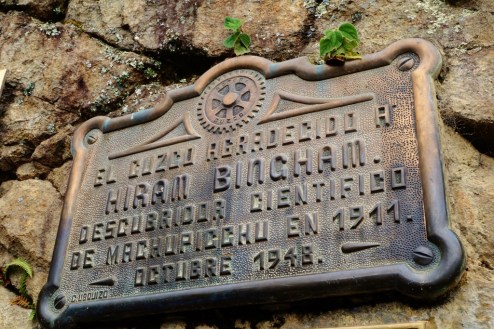
Before dinner, we talked with our guide, Hugo, as to whether we want to do the 7-hour climb over Llactapata the next day (4 hours up, 3 hours down in poor weather conditions).  It would be a very difficult climb and descent as it was very steep and can be dangerous when it’s rainy.  Jason really wanted to do it since the site of these ruins was part of Hiram Bingham’s original route, but my toes had taken a beating from the entire day of trekking downhill and were in a lot of pain.  Before we arrived in Peru, both Jason and I had read an excellent (and funny) book by Mark Adam called Turn Right at Machu Picchu (2010).  We had wanted to read up more about the history of Machu Picchu and the famous explorer Hiram Bingham who “rediscovered” the ruins in the early 1900s and the book provides an excellent layman’s account of Inca history and a first-person view of the Inca Trail and the alternative routes.
Plaque of Hiram Bingam at Machu Picchu

Plaque of Hiram Bingham (Taken at the entrance of Machu Picchu)

Having read all about Llactapata and its ruins, we both wanted to climb and see the ruins.  It’s been called the “suburb of Machu Picchu” since it’s so close to the forgotten Incan city – you can actually get a clear side view of the entire site of Machu Picchu from Llactapata.

Since Hugo was leaving the decision up to us, I was leaning towards skipping the climb to Llactapata and meeting Jason and Hugo on the other side at the Hydroelectric station.  However, over dinner, Hugo made the executive decision that all three of us would be doing the climb the next day.  He told me that I was a good trekker and was in good shape for the climb since it wasn’t my knees that were bothering me.  If I had any trouble descending from Llactapata then Jason and himself could always help me down.  His confidence in me, along with the finality of his decision, renewed my own confidence in myself.  I was actually excited for the climb now!
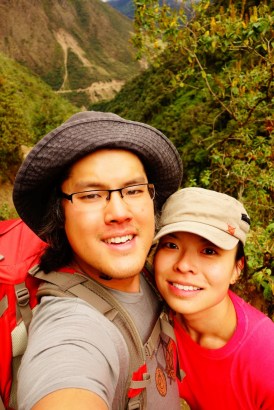
Day 2 of Salkantay Trek to Machu Picchu, Peru

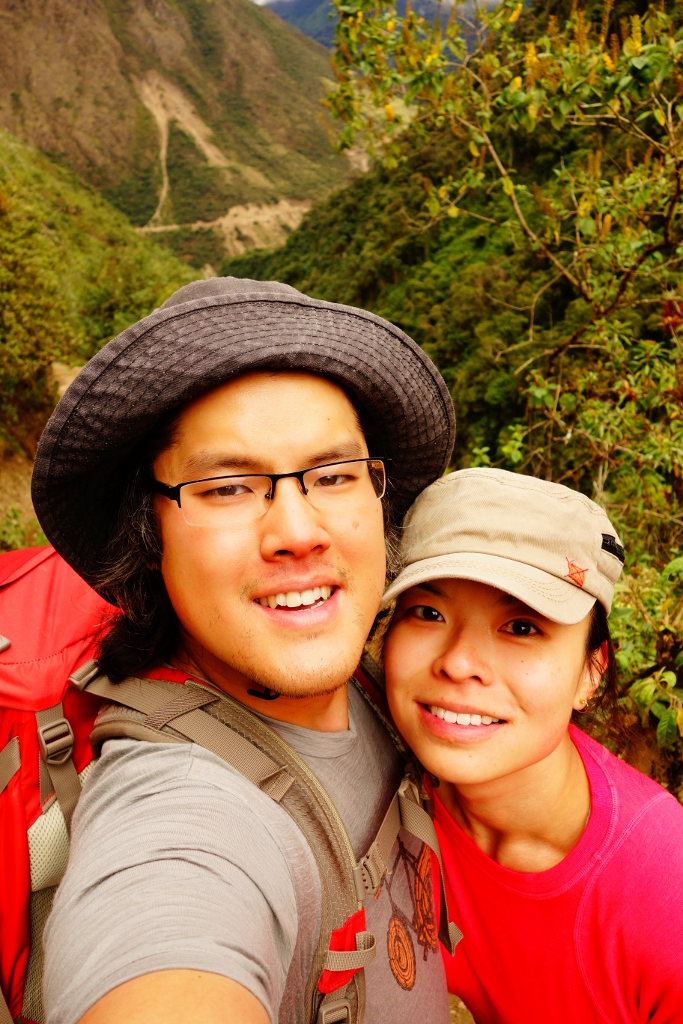
Self-portrait on Day 2 of the trek

After another incredible meal by our chef, Mario, we watched the stars for a bit before settling into our sleeping bags.  It was so much nicer not being in sub-zero temperature. 🙂   We slept early knowing that we had a tough day ahead of us.

Day 3: A Steep Climb up to Llactapata
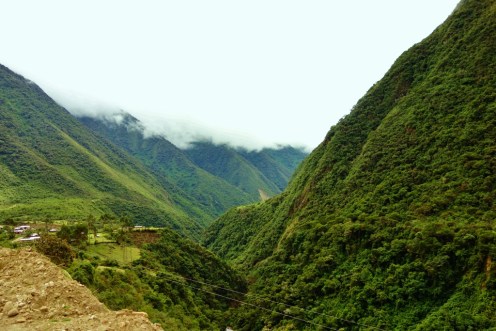
Salkantay Trek, Peru

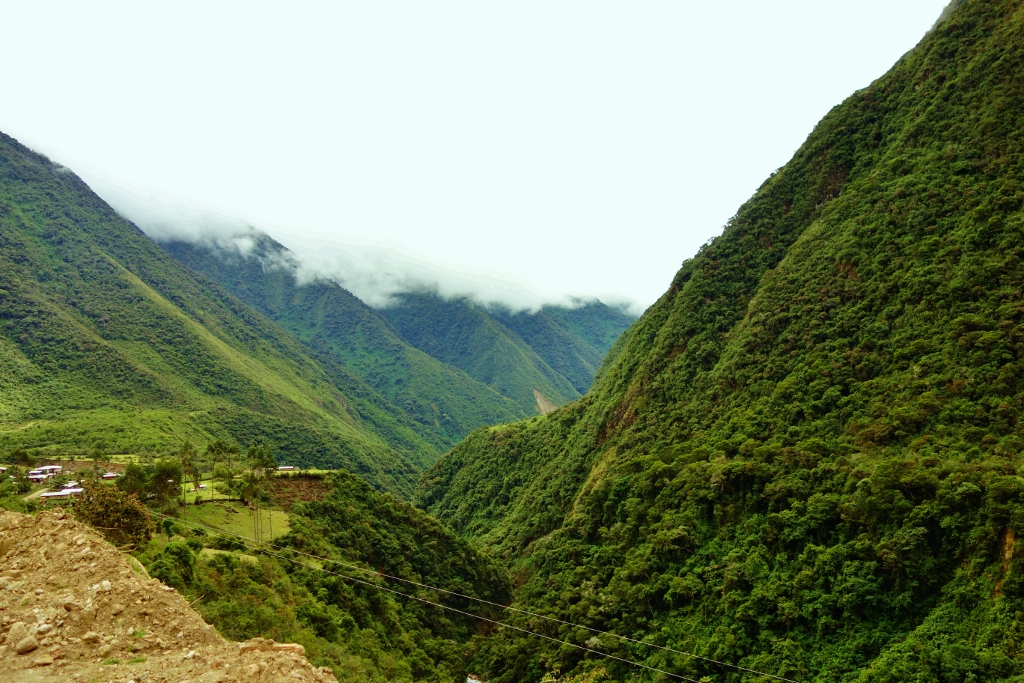
Gorgeous mountain scenery on the Salkantay Trek

We started at 6:30am the next morning after a hearty breakfast of sausage, omelettes, and bread.  We got off to a good brisk start and made it up to the top of Llactapata in just under 3 hours.  It was a hot, sunny day so I’m glad we started in the cool, early morning air.  The view of Machu Picchu at the top was pretty awesome – our first glimpse of the famous city!

Machu Picchu from Llactapata

The view of Machu Picchu from Llactapata.  You’ll need to squint a bit, it’s a little hard to see.

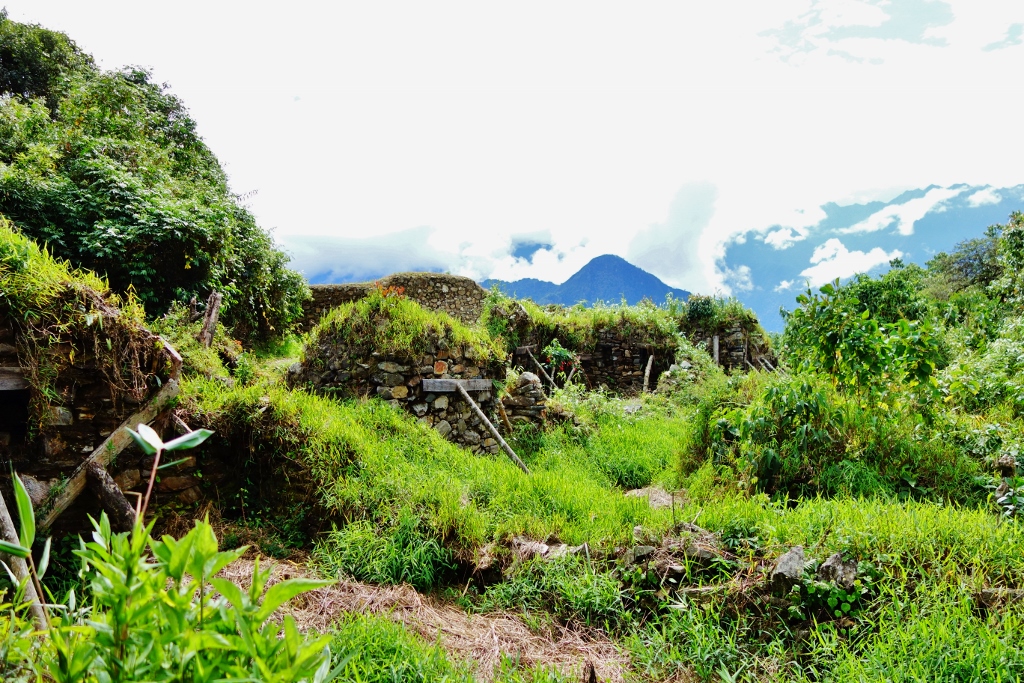
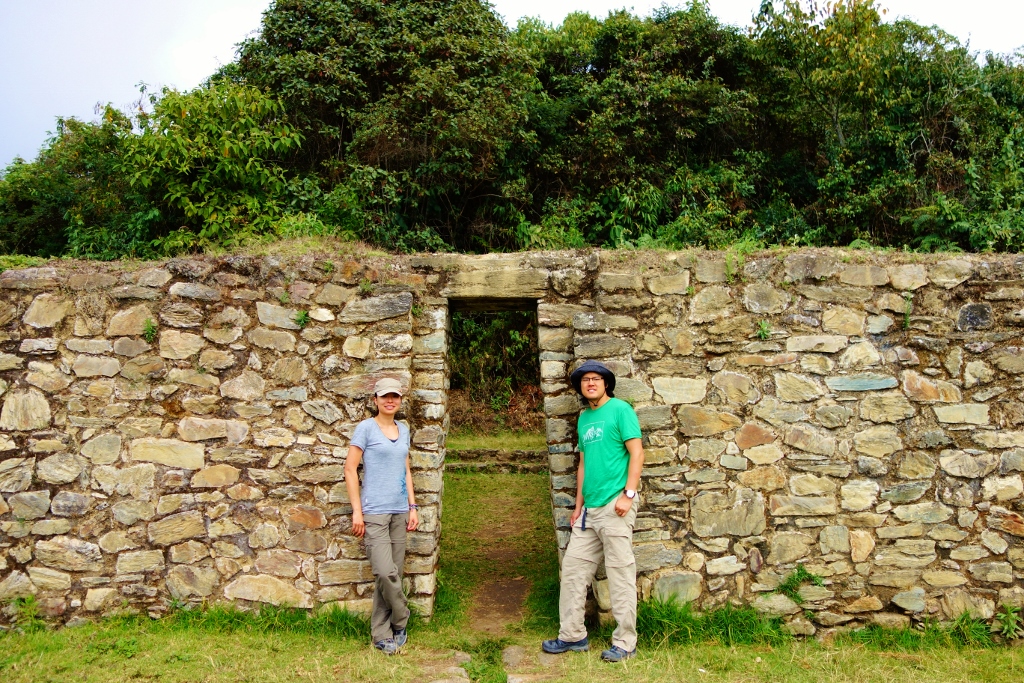
The Llactapata ruins themselves were pretty cool – it showed us what Machu Picchu would’ve looked like prior to its rediscovery and restoration.
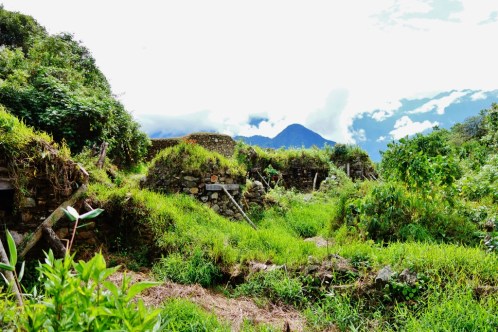
Llactapata Ruins

The Llactapata ruins – overrun with flora

We sat in the shades of the ruins while Hugo gave us a little Incan history lesson.

Llactapata Ruins

Llactapata Ruins

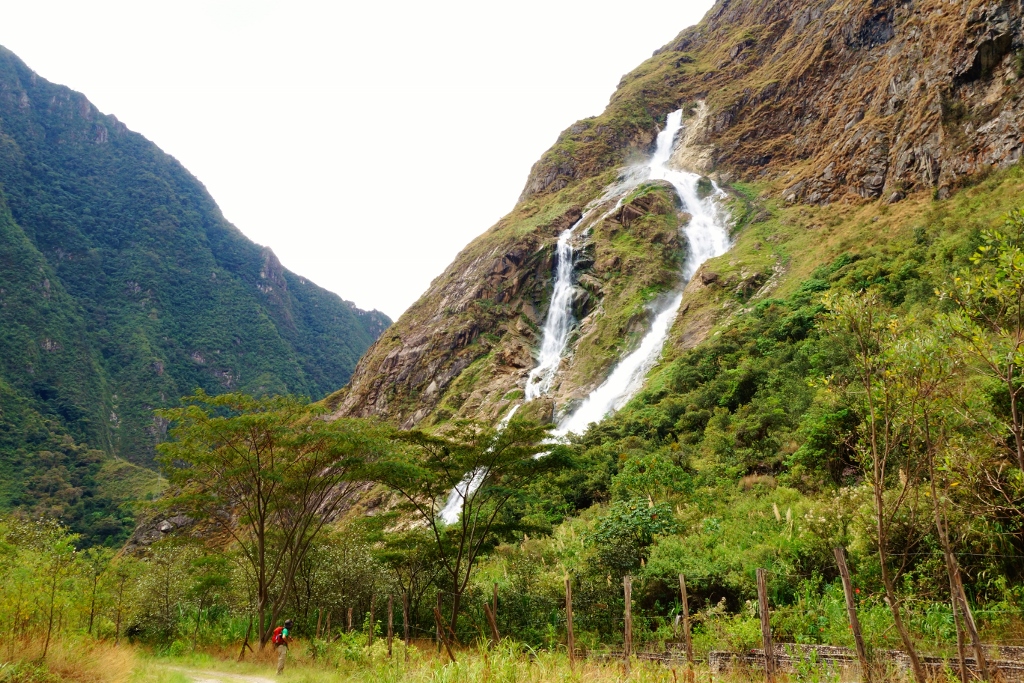
We then made it back to the bottom in 2 hours (we had the ideal trail conditions – sunny and dry) and then continued for another hour along the river to the Hydroelectric station for lunch.

Day 3 of Salkantay Trek

Trekking towards the Hydroelectric station on Day 3.

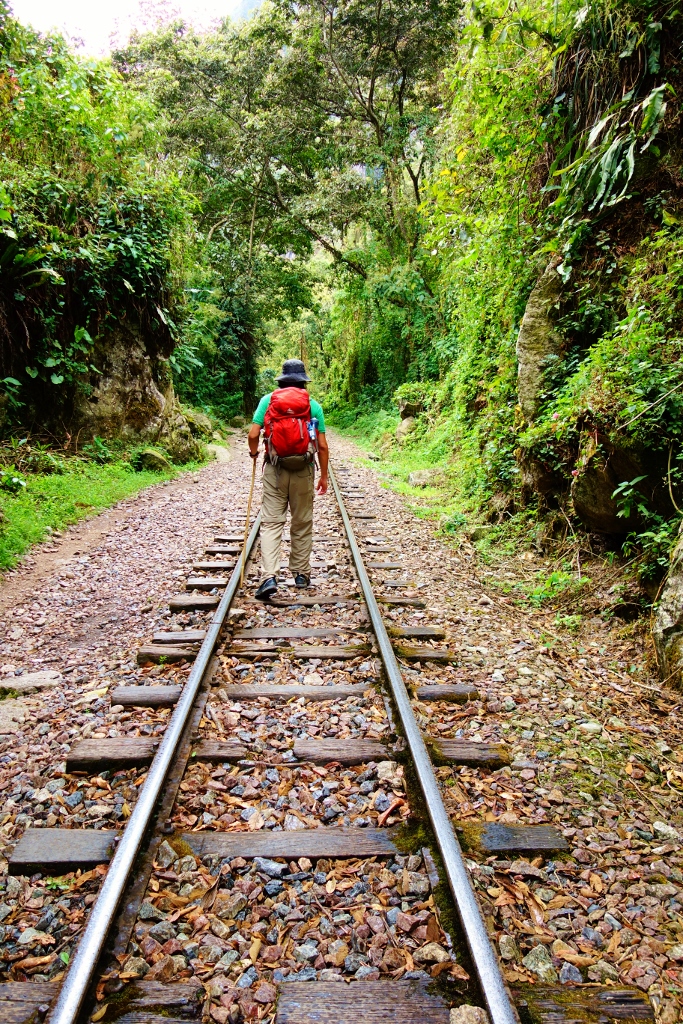
After lunch was the last leg of our trek.  After all the uphill through sub-zero temperatures and downhill through the subtropics, you would think the final leg of our trek would be easy – a flat hike in a mild climate along the train tracks from the Hydroelectric station to Aguas Calientes (the small town at the base of Machu Picchu that everyone has to pass through to get to the famous Incan site).  Turns out that the final 3 hours was much harder than anticipated.  By then, our bodies started really complaining from all the abuse.  Our muscles started stiffening up and screaming in pain and we pretty much hobbled our way through the final excruciating hours.
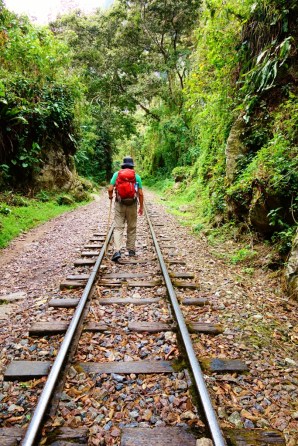
Railroad tracks leading from the Hydroelectric station to Aguas Calientes - Salkantay Trek

Hobbling along the railroad tracks to Aguas Calientes

We finally made it into town around 4pm where we flopped down on a patio and had the coldest, best-tasting beer we’ve ever had in our lives.  We checked into our hostal, had our first shower in 3 days, and met Hugo for dinner.  We cleaned up pretty well…Hugo hardly even recognized us.
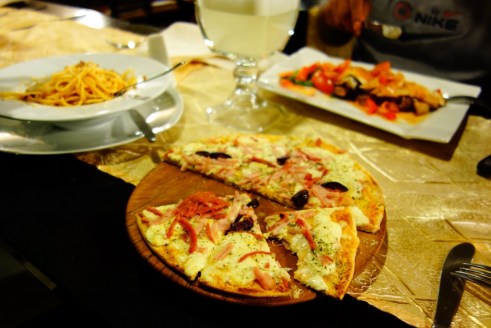
Dinner at Aguas Calientes

Dinner at Aguas Calientes

Day 4: Machu Picchu

Some people who like to remain purists prefer to hike up from Aguas Calientes to Machu Picchu.  After 3 grueling days of the Salkantay trek, I was so relieved that Hugo had planned for us to take the 20-minute bus ride up from the town to the steps of Machu Picchu.  We lined up on a rainy morning outside the bus stop to catch the 7am bus up.

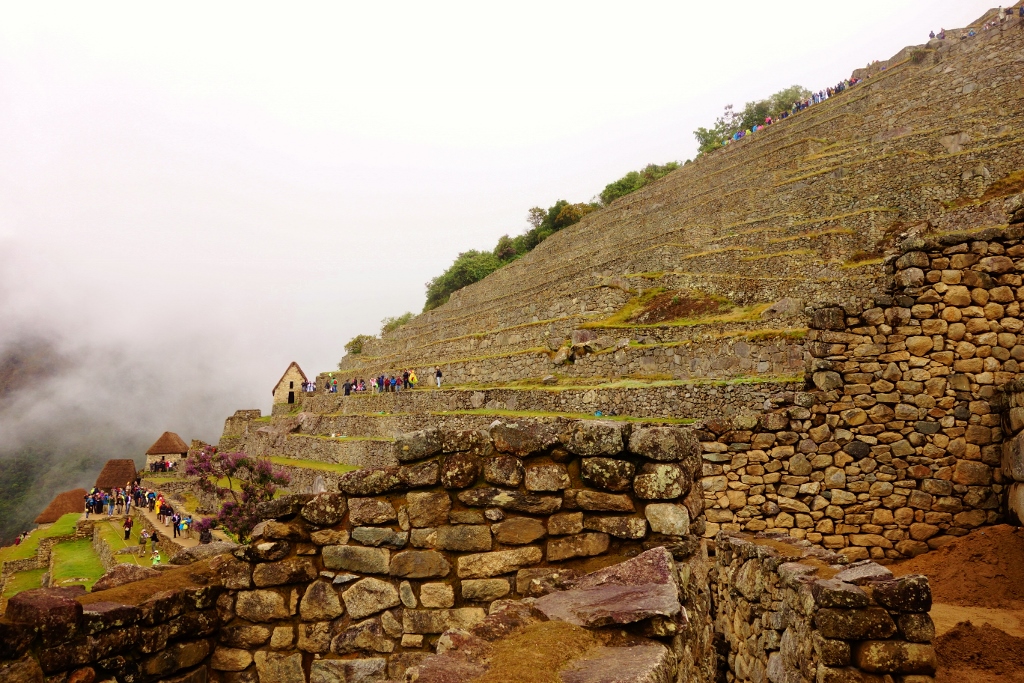
Terraces of Machu Picchu

Terraces of Machu Picchu

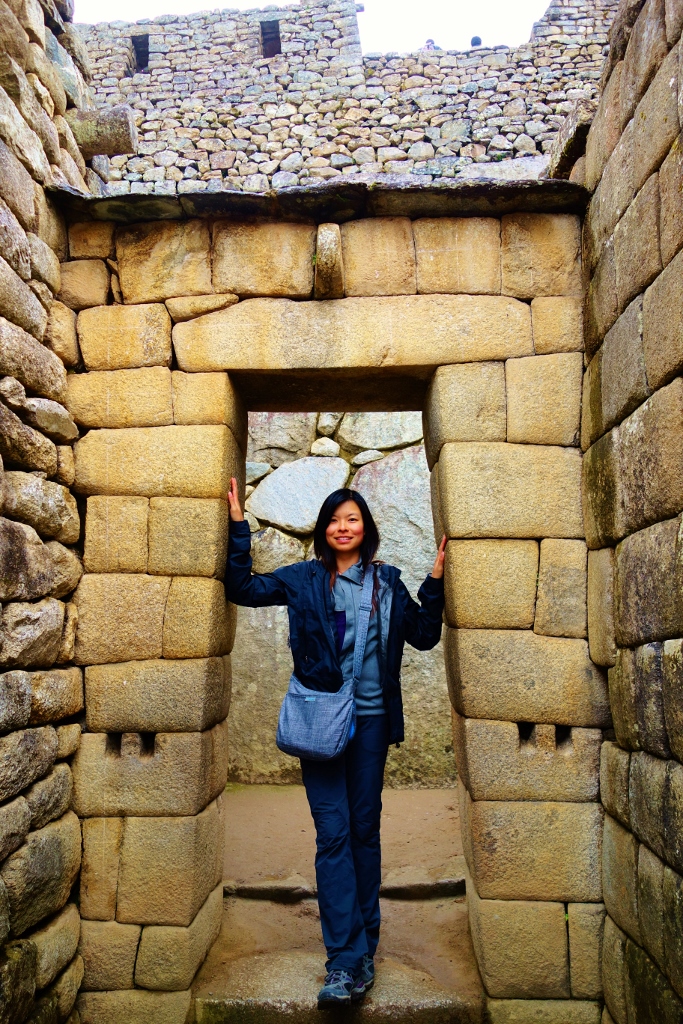
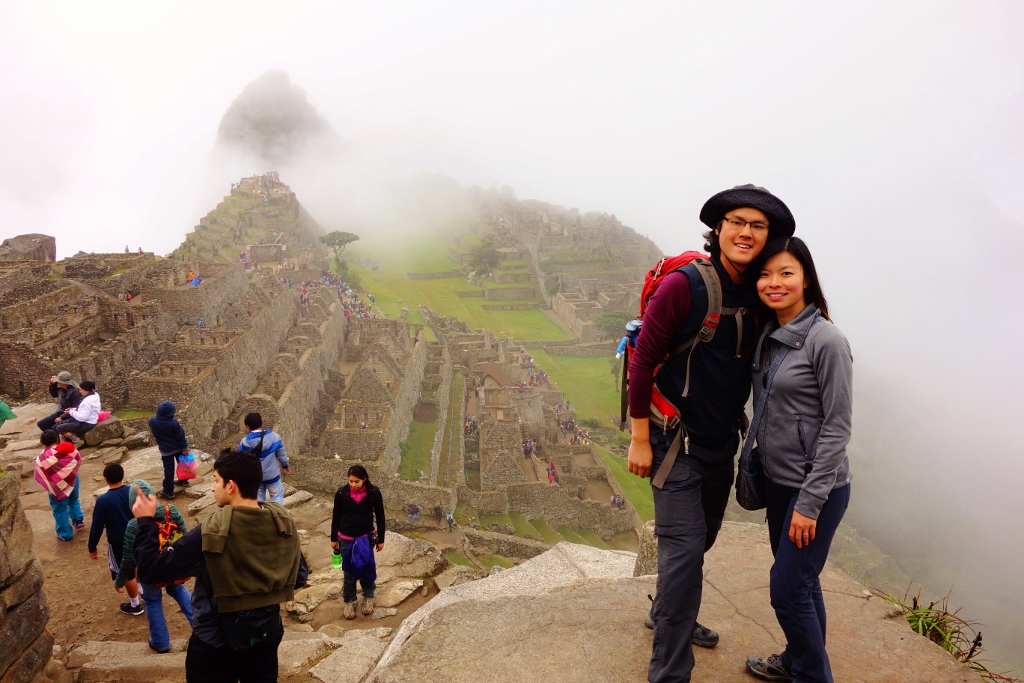
The sky was overcast and drizzly as we entered Machu Picchu.  Hugo decided not to take us out to the look-out spot yet as the entire site was still under cloud cover.  We walked around the site, while Hugo provided us with wonderful little tidbits of information and history.
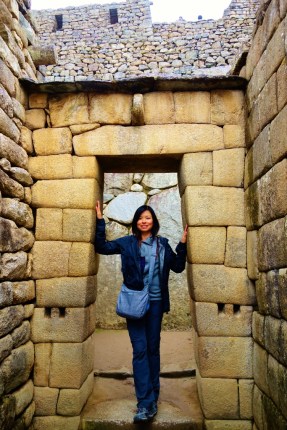
Perfect Incan stonework at Machu Picchu

Perfect Incan stonework at Machu Picchu – you can’t even fit a knife between the stone blocks.

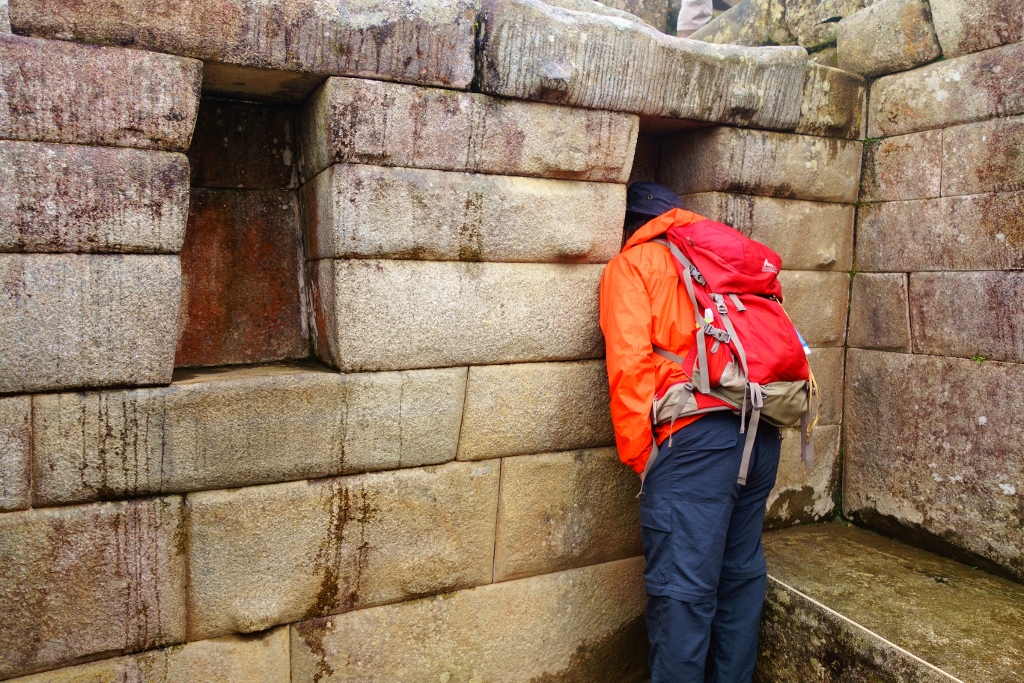
He’s actually writing a book about certain parts of the ruin  – specifically an acoustic room that allows sound captured in any of the window alcoves to be clearly transmitted to any other window alcove in the room – kind of like transmitting sounds through tin cans and string but…without any tin cans or string 😛
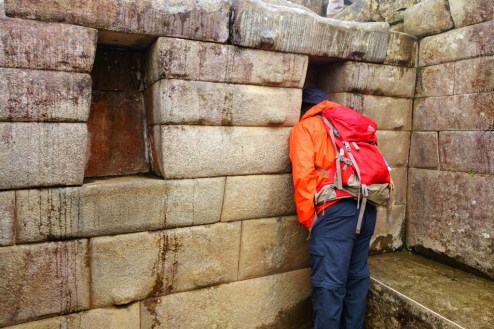
Acoustic Room in Machu Picchu

Jason appreciating the sounds of the Acoustic Room in Machu Picchu

After the tour, Jason and I had time to wander around the site by ourselves.  We waited patiently for the cloud cover to lift so that we can take a few photos of the entire site.
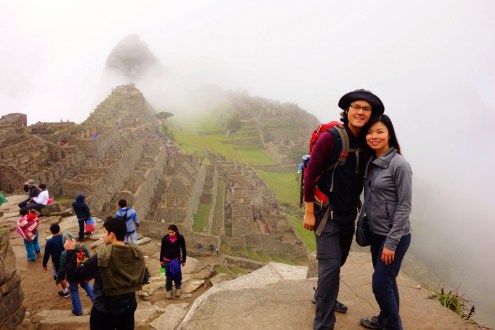
Foggy Machu Picchu

Waiting for the cloud cover to lift at Machu Picchu

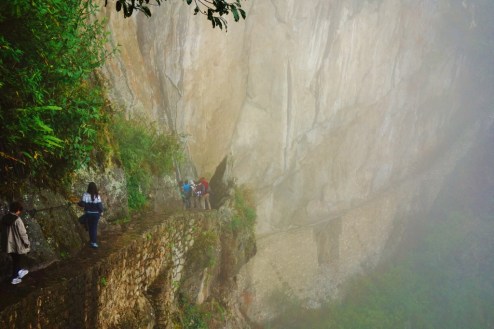
We trekked the 20-minutes to the nearby Incan drawbridge. Pretty scary trek as there are parts that that are only 2 feet wide and then a sheer drop into oblivion.  Jason, who is quite afraid of heights, caressed the rock wall the entire route there.

Incan drawbridge, Machu Picchu

Jason timidly peeking beyond the drop, on the way to the Incan drawbridge

You can only take a picture of the bridge from afar now, since in 2005 a visitor crossed the bridge and sadly fell to his death.
Incan drawbridge, Machu Picchu

The Incan drawbridge can be seen in the lower right part of the photo

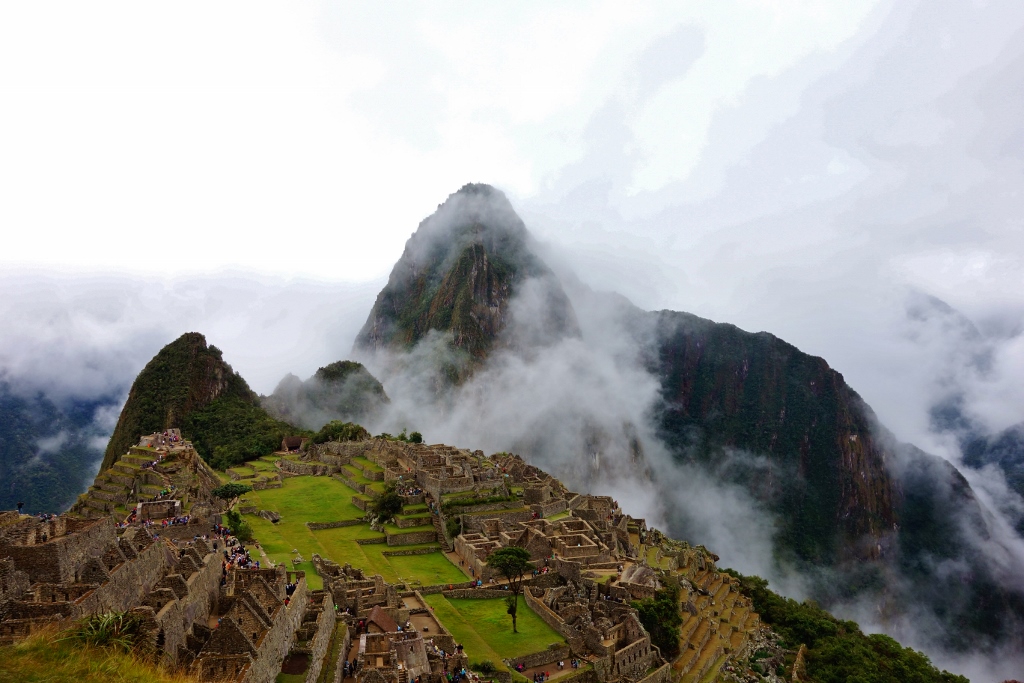
We wandered back to the Machu Picchu ruins to discover the clouds slowly lifting!  Hugo had told us that sometimes, the clouds  never lift and disappointed guests have to go home without ever glimpsing the ruins in full.
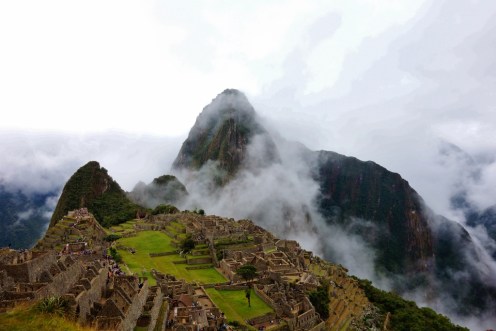
Machu Picchu

Fog lifting over Machu Picchu (finally!)
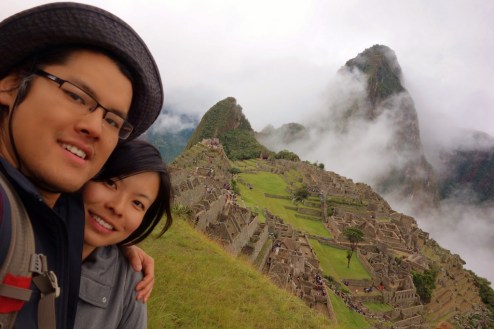
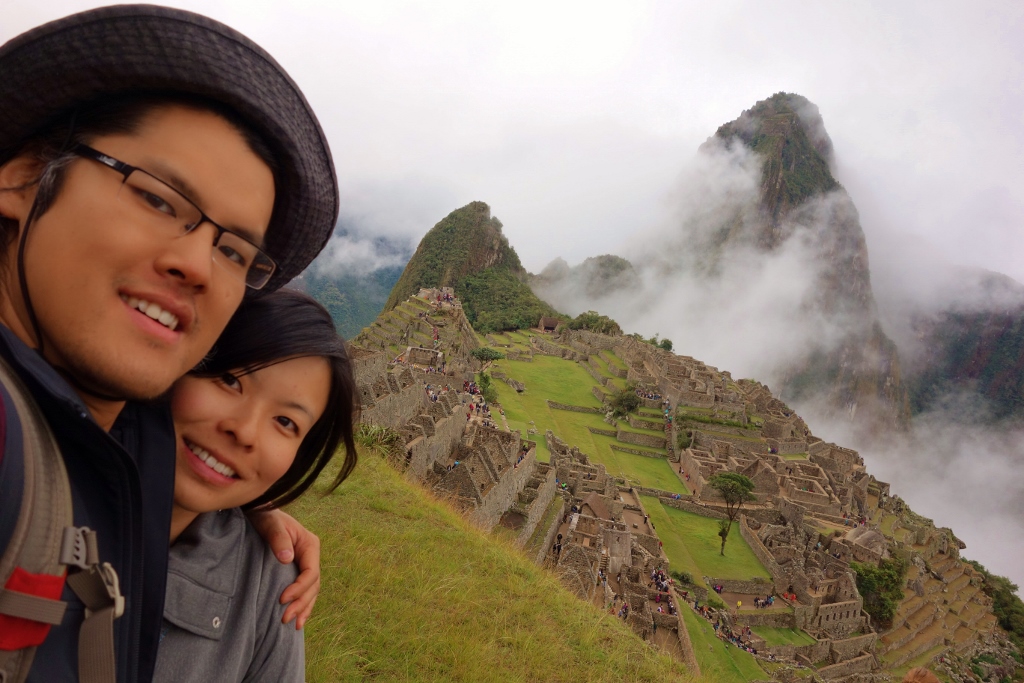
Machu Picchu

Another selfie in front of Machu Picchu

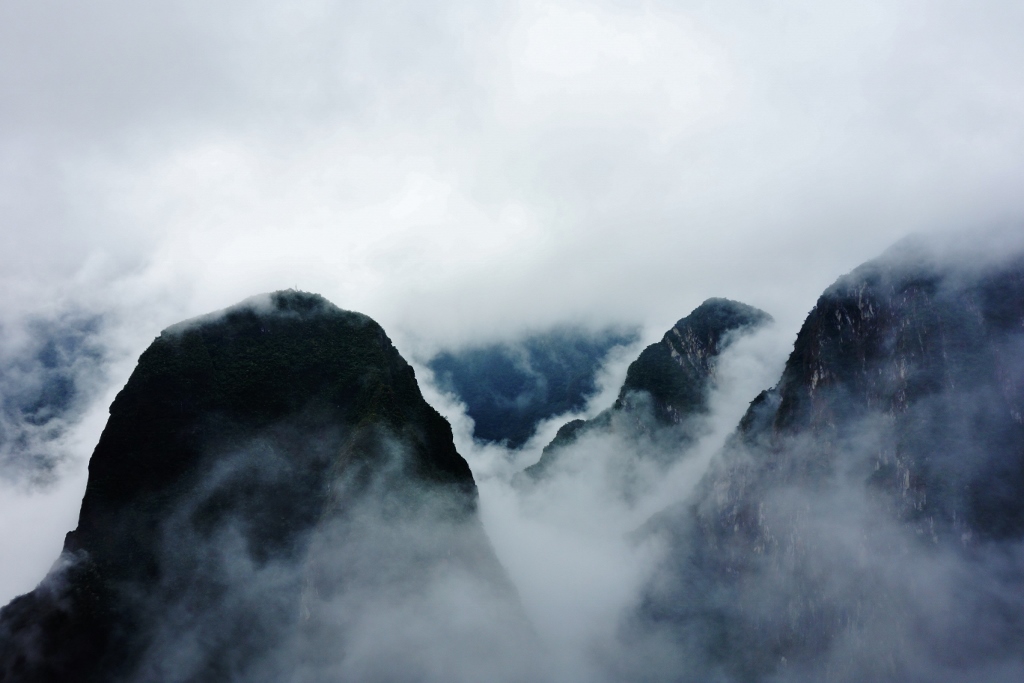
The views are really quite spectacular up there.  The clouds that linger around the mountain tops lend such a mysterious aura around the entire lost city.  It’s interesting to think that experts are still trying to accurately figure out why this place was built in the first place.
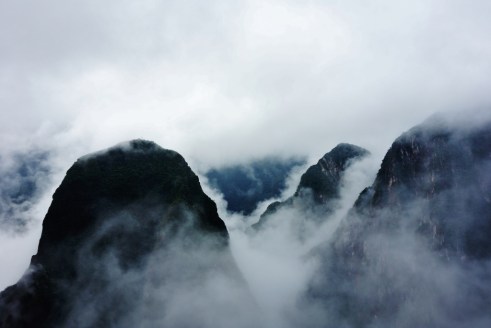
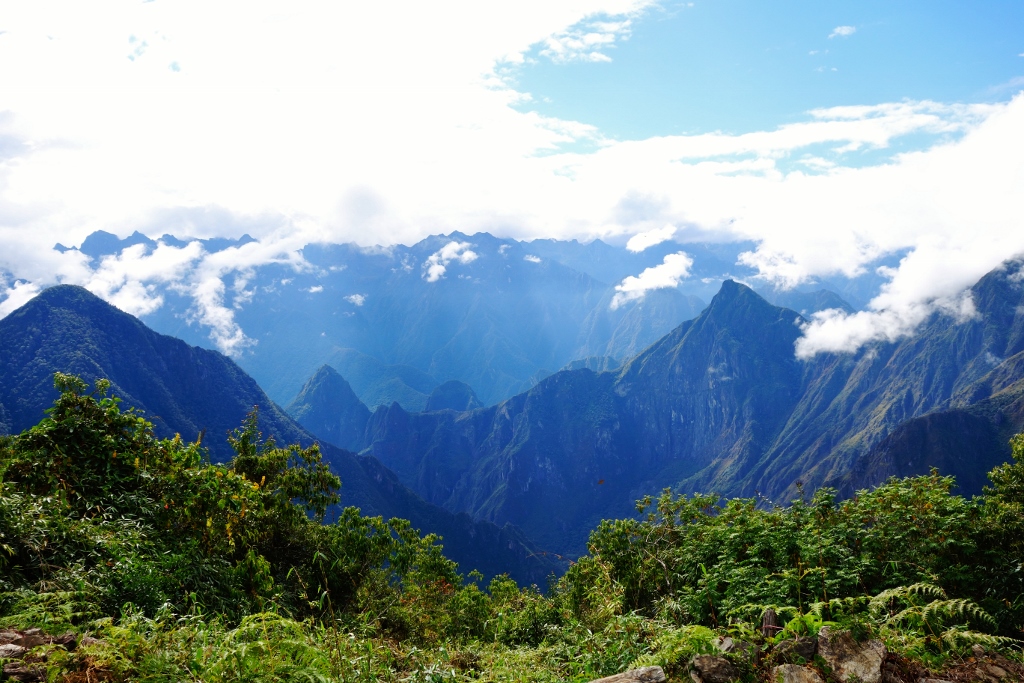
Cloud-covered mountains near Machu Picchu

Mysterious cloud-covered mountains near Machu Picchu

Even with the crowds of tourists swarming around the site, Machu Picchu still manages to remain mysterious and full of secrets.

Eating: Nazca Street Food

I would never have guessed that Nazca would be such a good street food destination. Jason and I were reminiscing about our honeymoon in Vietnam and how the street food there was so delicious.  We missed being able to walk down a street, stop at a stall to gawk at what the locals were eating, and then order whatever they were having. Colombia and northern Peru didn’t have much of a street food scene – which happens to be our favourite way to sample local food.

However, when the sun dipped below the horizon in Nazca, street food vendors started coming out of nowhere and setting up shop along the main streets (much to our surprise and delight!).

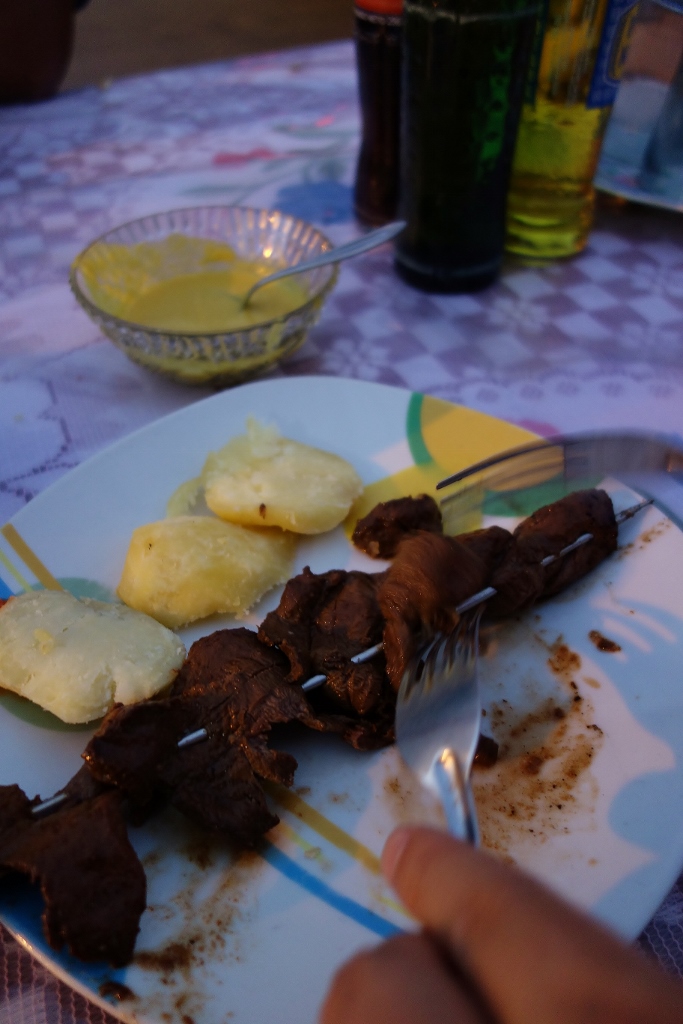
The first vendor we saw setting up at twilight was a woman who was grilling mystery meat.  We ordered a skewer and was surprised by how delicious it was.  Super tender and tasty! Yum!

Nazca Street Food

Grilled mystery meat in Nazca

We followed our noses down the street (FYI, all the street vendors were within a 2-block radius of each other), and discovered a guy grilling more mystery meat.  This time, the street vendor was serving miscellaneous grilled chicken parts (i.e. liver, feet, hearts, etc).  It was really tasty, but Jason wasn’t too fond of the crunchiness of the cartilage. I thought it was delicious though.

Grilled chicken everything (Nazca, Peru)

Grilled chicken everything (feet, cartilege, heart, kidneys)

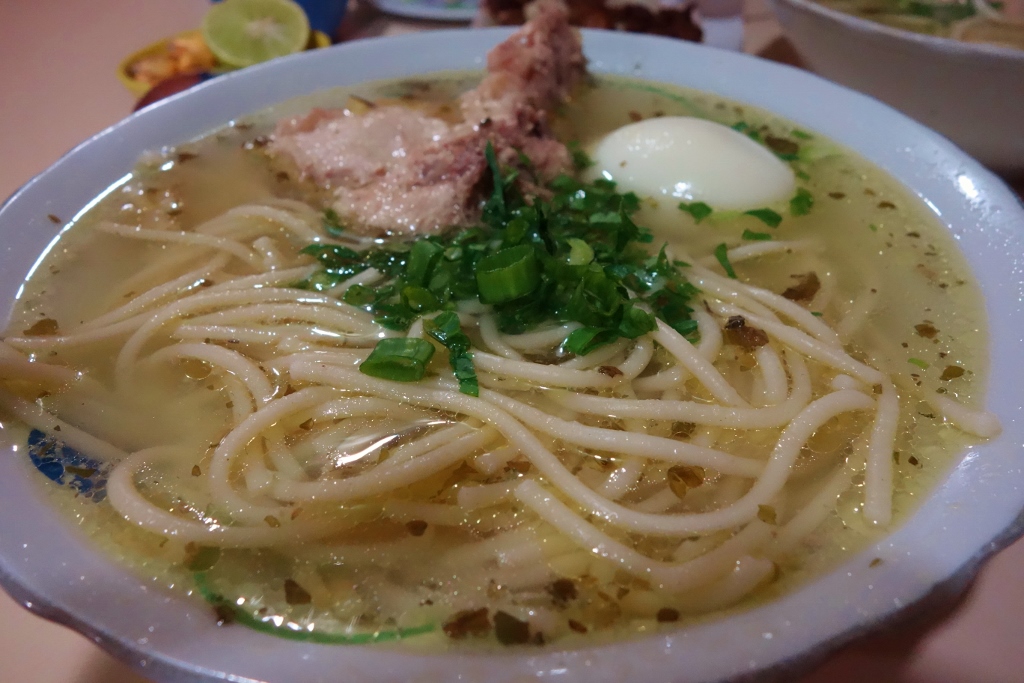
My favourite street food find was a Chicken Noodle Soup (Caldo de Gallina).  Her stall was packed with people. so we knew that was a good sign.  She served the huge bowls of noodle, chicken, and hard-boiled egg in a delicious herbed broth, along with a bowl of maize kernels, and homemade hot sauce.  At this point in our travels, I was really craving noodle soup like crazy (noodle soup being one of my favourite meals).  And this really hit the spot.  Really reminded me of Vietnamese street food actually.  Steamy, delicious goodness.

Caldo de Gallina - Nazca, Peru

Caldo de Gallina – Chicken noodle soup

Our last street food stop was a woman who had set up a deep-fryer on the street.  She was deep-frying rings of dough into the lightest, fluffy, homemade doughnuts.  She included a packet of honey, which you drizzled over top of the crispy delights.  She was even cool enough to pose for my picture 🙂

Homemade donut (Nazca, Peru)

The woman made the most addictive donuts right on the street. Fluffy, light, and crispy on the outside.


The amazing street food experience in Nazca definitely upped the overall appeal of this sunbaked little town.

Nazca Lines vs. Sandboarding Cerro Blanco

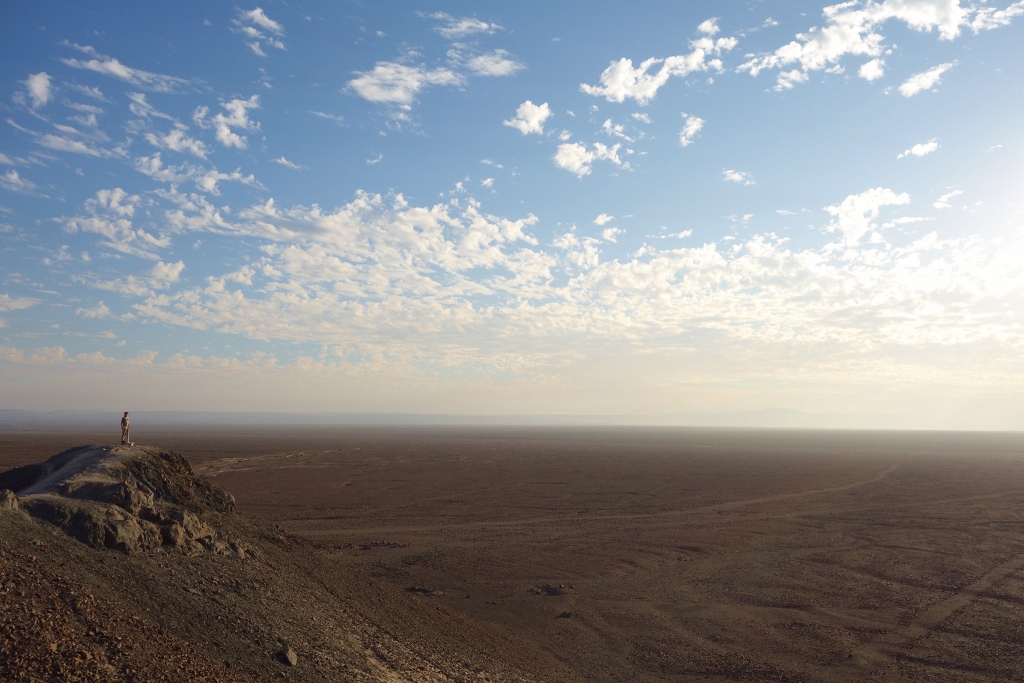
Natural mirador in Nazca, Peru

The natural look-out point in Nazca

We were told that visiting Nazca without seeing the Nazca Lines is like visiting Cuzco and not seeing Machu Picchu.

Or for a more Canadian reference, it’s like visiting Toronto and not seeing the CN Tower (But that’s actually very difficult to do since the CN Tower is pretty impossible to miss if you visit Toronto, so that’s probably not a great analogy).

Anyways, Jason and I have indeed managed to visit Nazca and not see the Nazca Lines.  Which we did not regret at all.

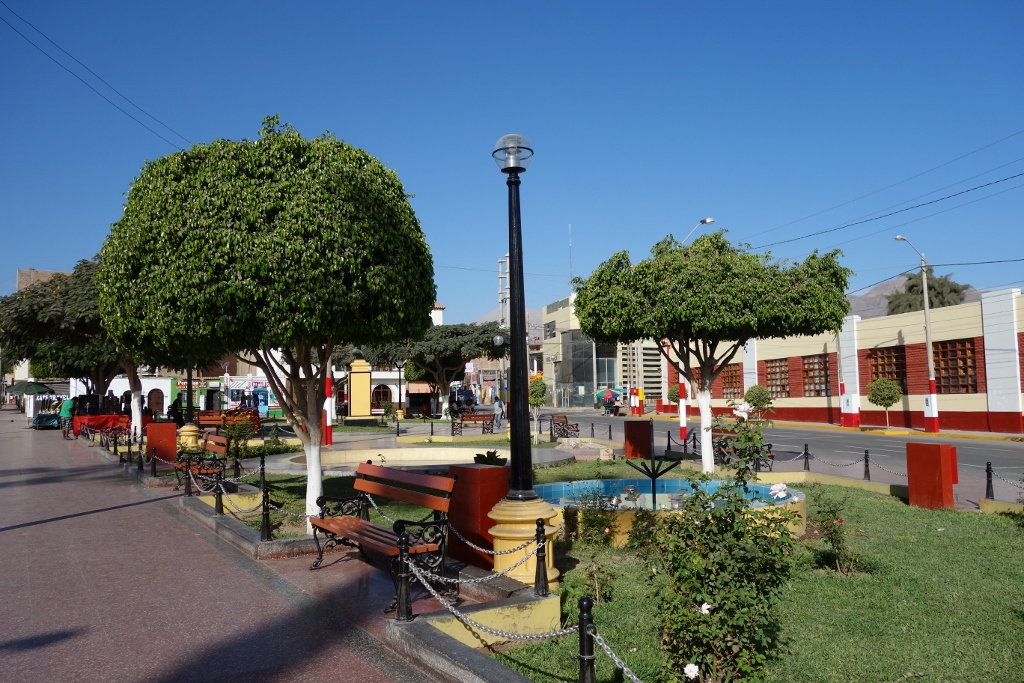
One of the little plazas in Nazca, Peru

Little plaza in Nazca

Nazca is a small, sun-baked town in Peru’s southern coastal region.  Its star attraction is the Nazca Lines, a series of mysterious lines forming various animal and geometric shapes (like the monkey, spider, or hummingbird) – some as big as a football field.  You can only really see them clearly from the air, and the town is full of airline companies waiting to take you on a 40-minute flight over the lines.

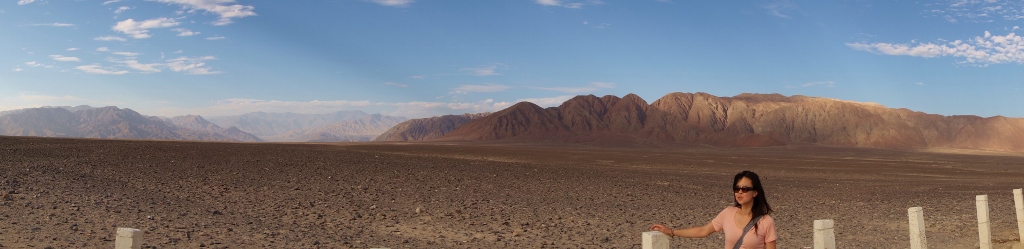
View of the Nazca desert from the PanAmerican Highway

Panorama of Nazca desert

During the high season, the cost of a flight over the Nazca Lines is about CDN $90/pp.  While Jason and I both share the belief that, when traveling, you shouldn’t let costs prevent you from doing something you really want to experience – after weighing the benefits vs. costs of seeing the lines from the air, we both came to the conclusion that we were totally okay with skipping the Nazca Lines flight.  We did some additional research that confirmed our suspicion that, although the sight of the lines during optimal conditions are pretty amazing, there were a lot of discouraging stories of crowded planes, poor context-setting by the guides (if any), crazy motion sickness on the tiny aircrafts, and just a general let-down after seeing the lines.

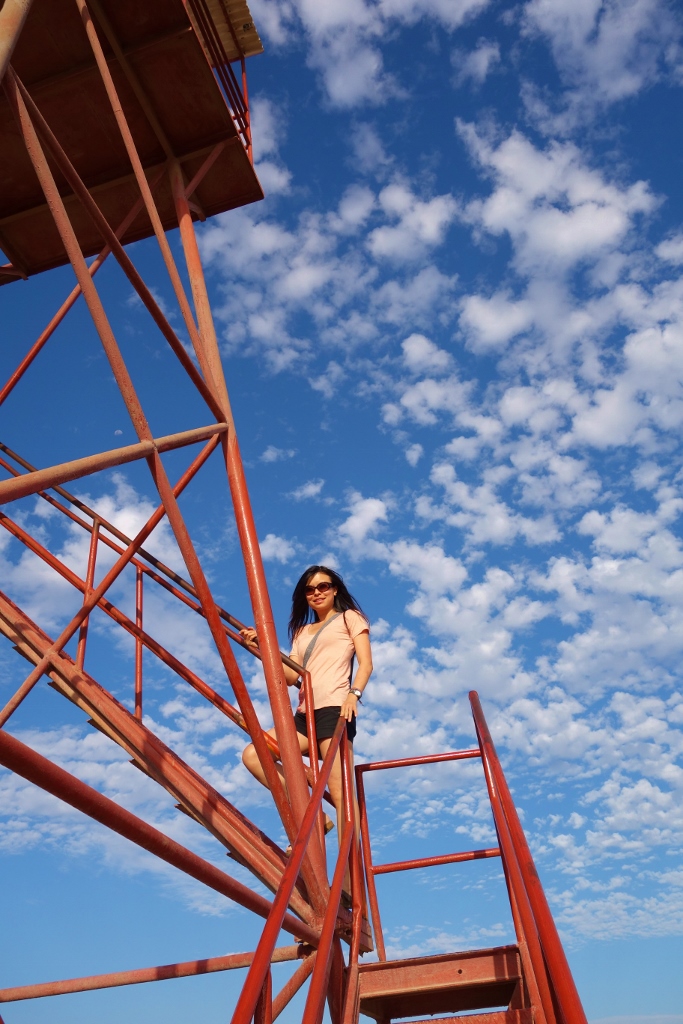
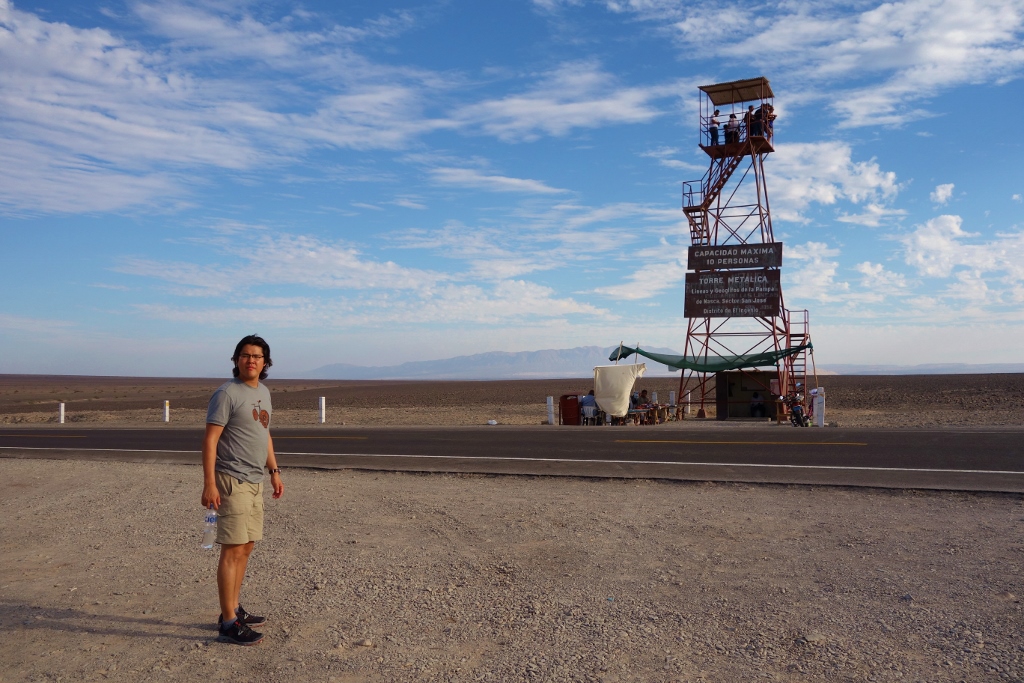
Mirador viewing tower in Nazca, Peru

Mirador viewing tower

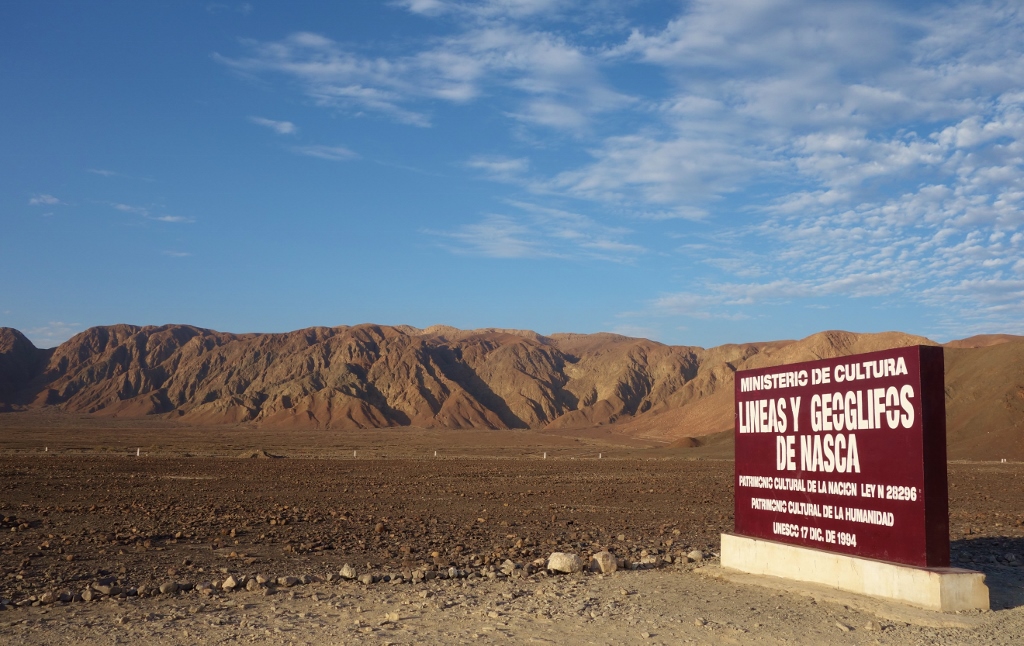
We found out that you can catch a (slightly askew) glimpse of three of the Nazca line figures from the Mirador viewing tower just 20 minutes out of town, so we caught a local bus and paid 2 soles (CDN $0.70) to climb to the top of the tower.

Mirador viewing tower in Nazca, Peru

Mirador viewing tower – the next best thing for viewing the Nazca Lines

Nazca Lines from the Mirador Viewing Tower in Nazca, Peru

Our view of the Nazca Lines from the top of the Mirador Viewing Tower.

The view of the lines wasn’t that great but we could definitely appreciate the enormity of the shapes.  The landscape of the desert itself was worth the trip to the Mirador viewing tower.

On the natural mirador in Nazca, Peru

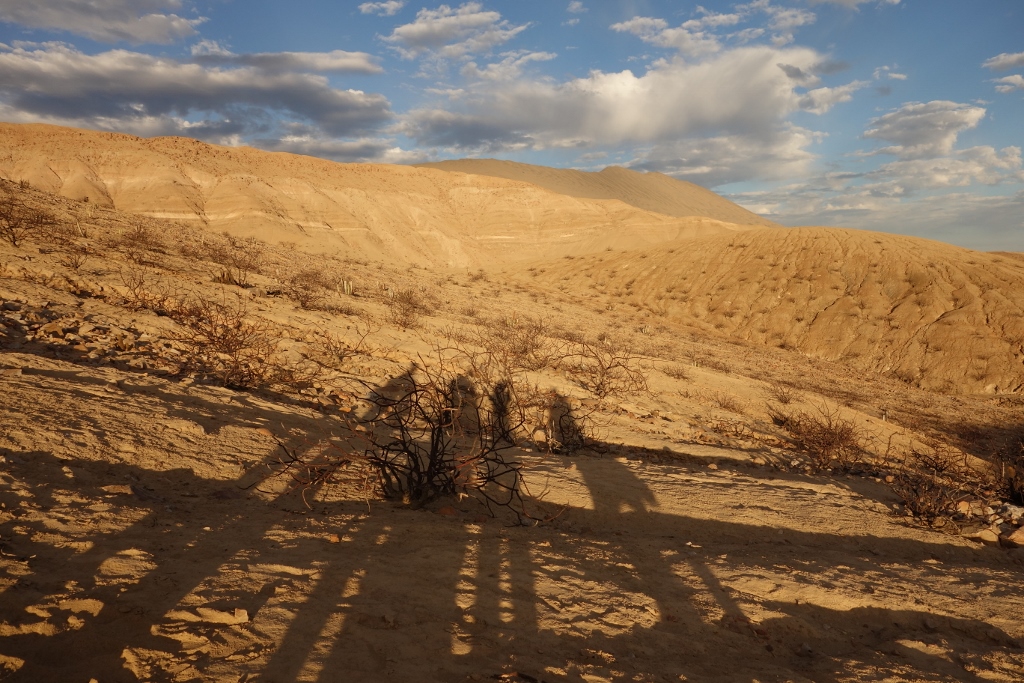
Awesome desert scenery

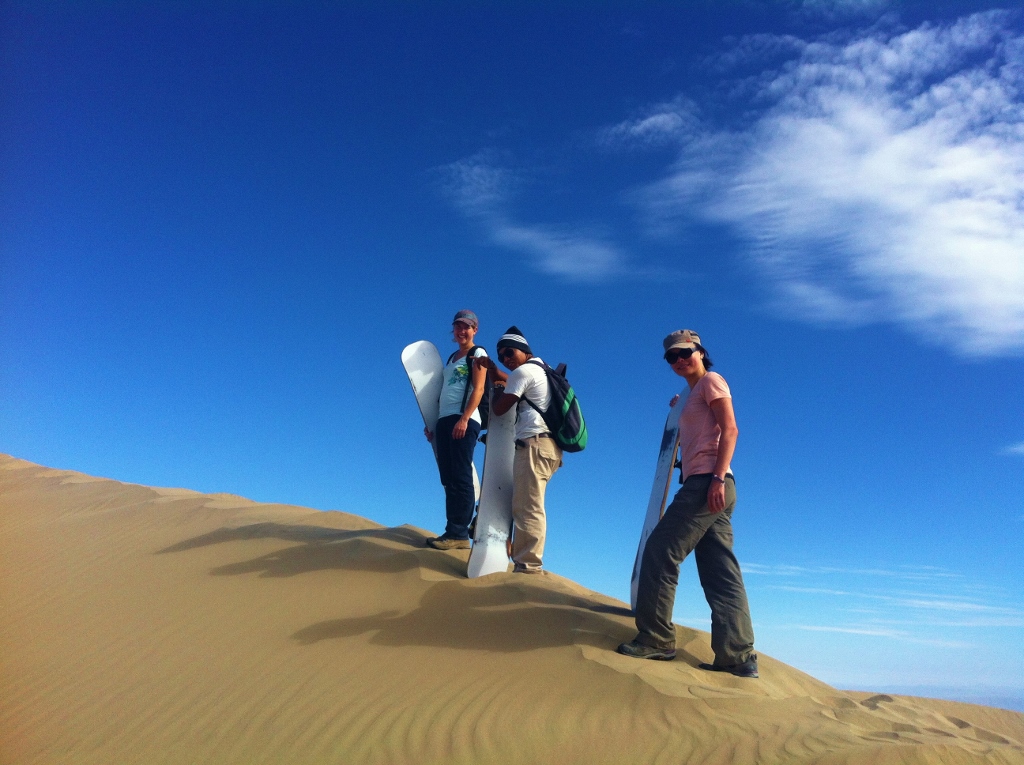
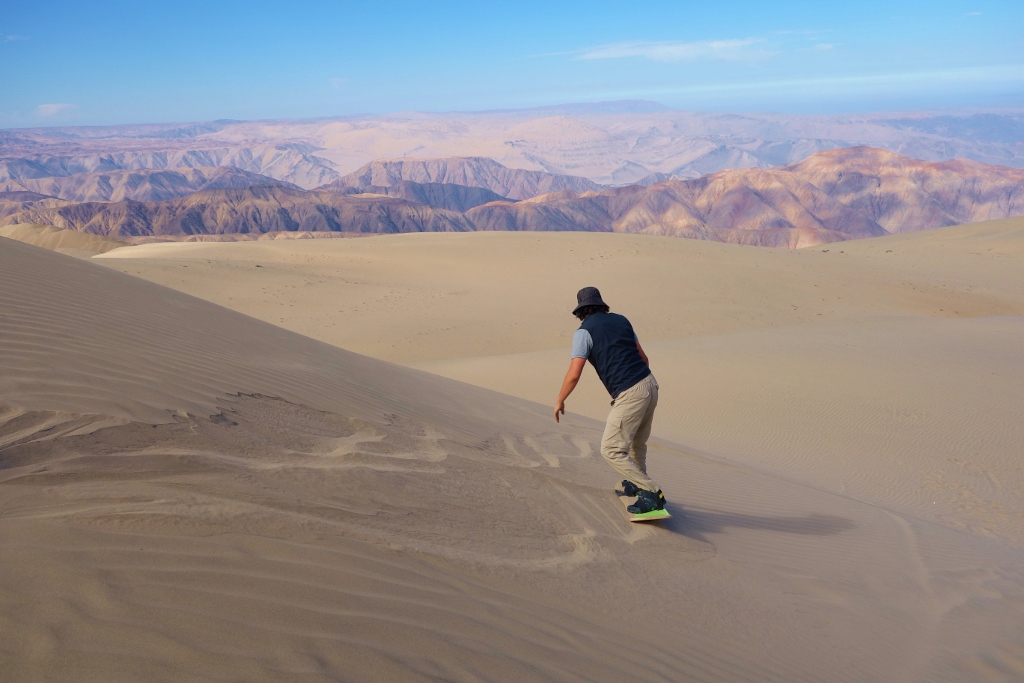
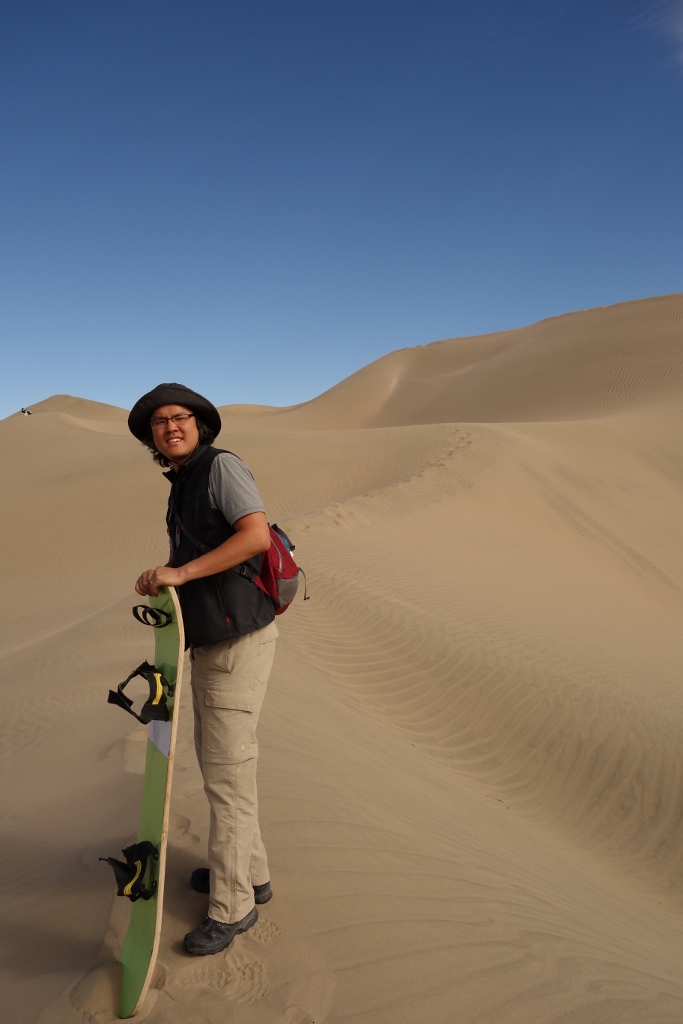
The next day, we used the money we saved on something we both really wanted to try: sandboarding on Cerro Blanco – the world’s largest sand dune!  Standing at an impressive 2078m, it’s just roughly 100m shy of Whistler Mountain in British Colombia, Canada.

Cerro Blanco in Nazca, Peru

Near the peak of Cerro Blanco

Our trip started at the ungodly hour of 5:30am, where we were driven to the edge of the mountains that surround the sand dune.  Inaccessible by sand buggies, we would have to hike at least 3 hours to get to the top of the behemoth.

Cerro Blanco in Nazca, Peru

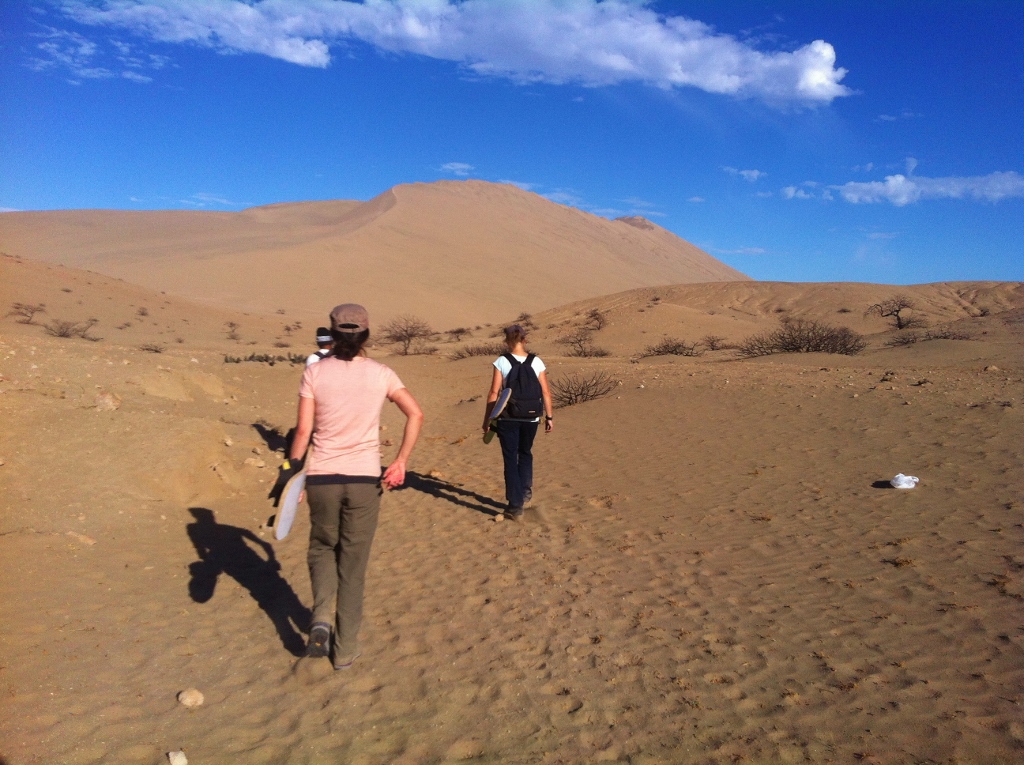
On our trek to Cerro Blanco. You can see the Cerro Blanco, the highest sand dune in the world, far off in the background.

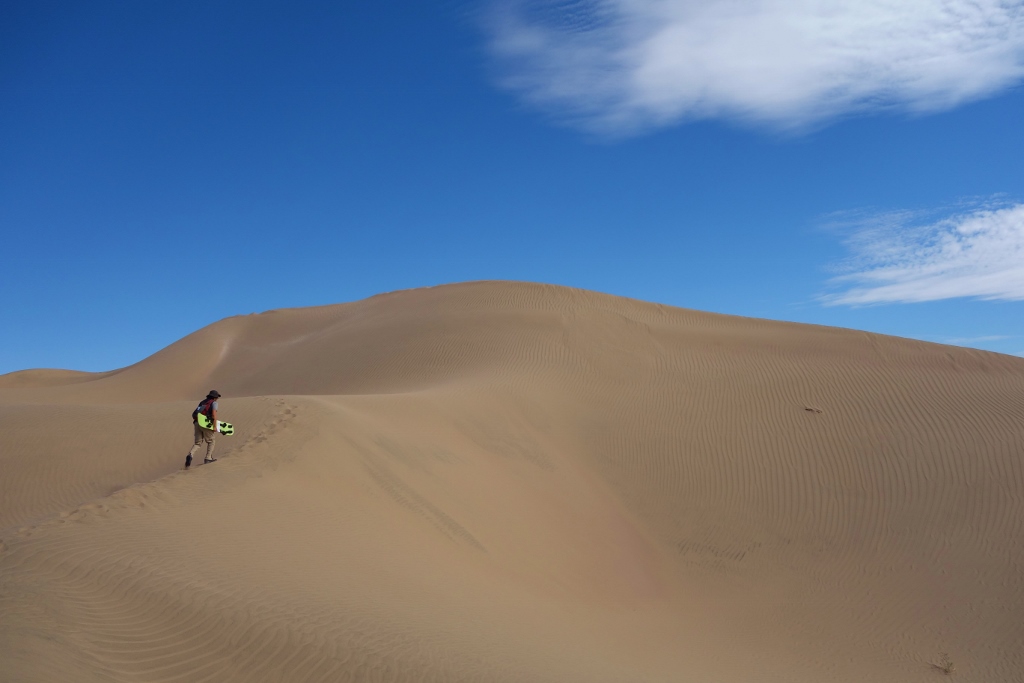
Combine searing desert heat with the high elevation, it’s quite a dizzying hike up to the top.  It takes about 1.5 hours just to get to the base of the sand dune and as you look up to the top of monster sand dune, it takes every effort just to not turn around and go home.

Approaching Cerro Blanco

Approaching Cerro Blanco. Trust me, it’s a lot bigger in person! (TWSS – for you, Kpoo)

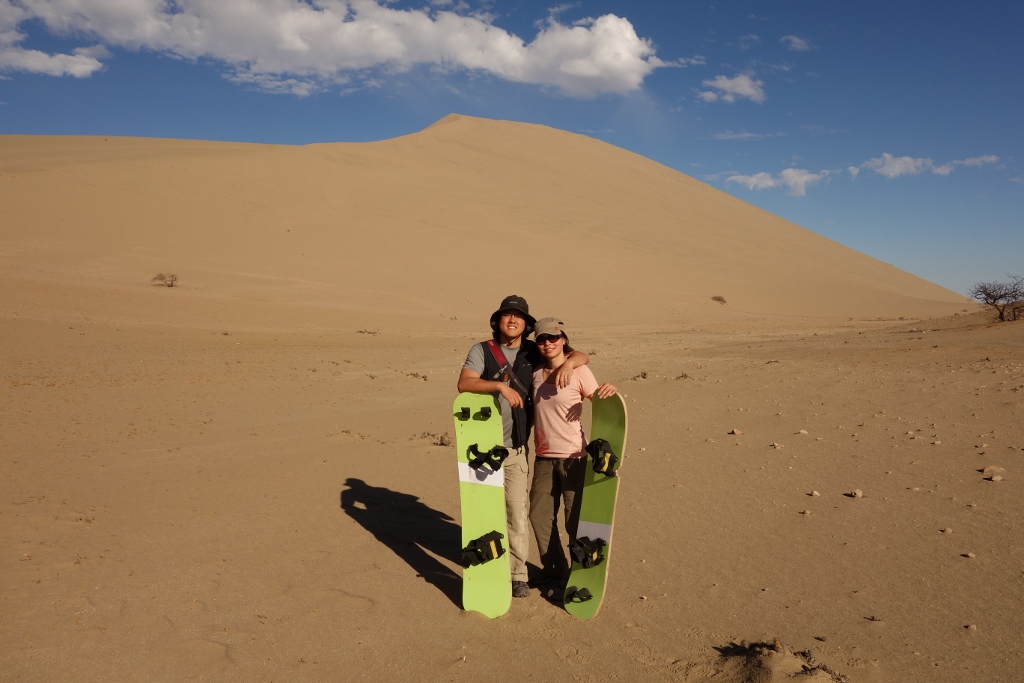
At the foot of Cerro Blanco

Cerro Blanco looks like a small pile of sand behind us. To accurately picture its size, imagine a sand-covered version of Whistler Mountain in the background.

But as we neared the top and starting taking in the eye-popping views, we were glad to have soldiered on.

Climbing up the sand dunes on Cerro Blanco

Climbing up one of many sand dunes

Climbing up the sand dunes on Cerro Blanco

Climbing up one of many sand dunes

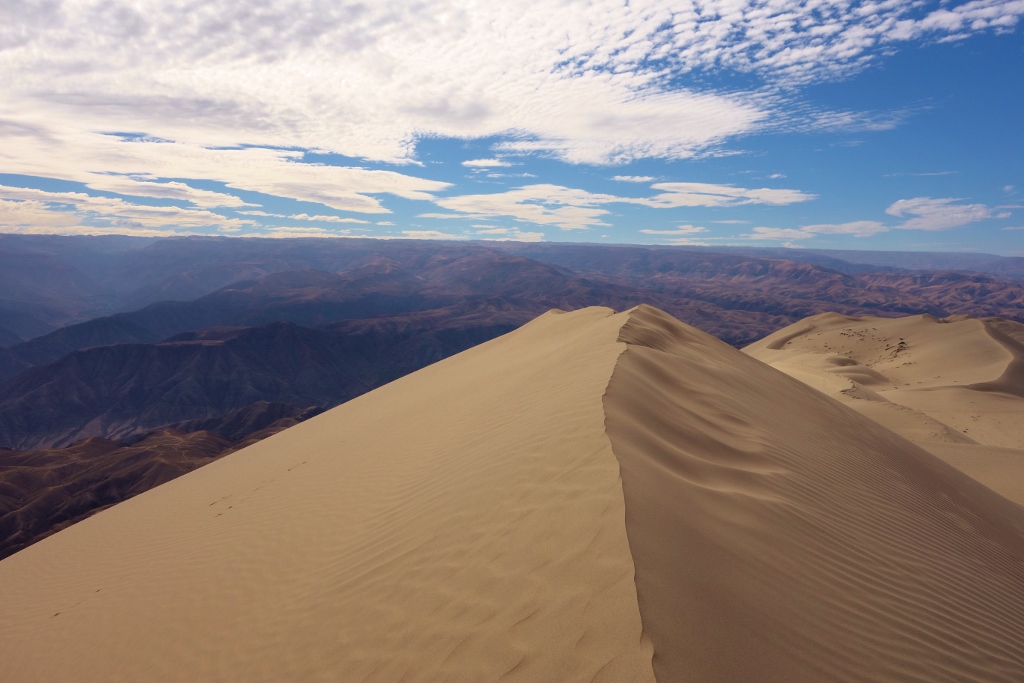
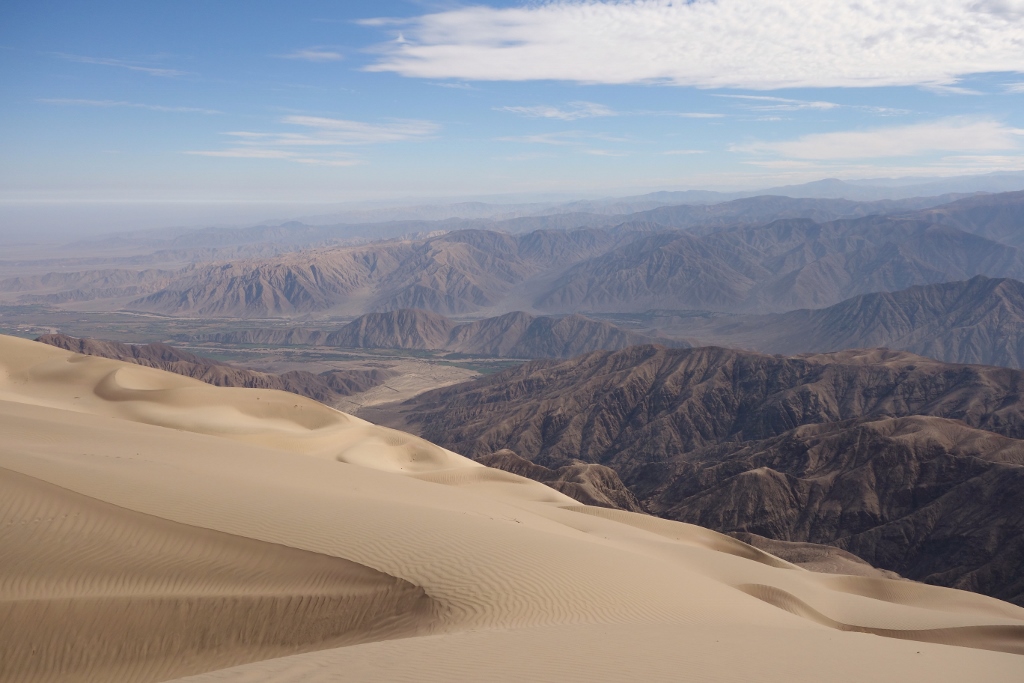
The smooth sand dunes against the dry Andean mountain ranges made for some surreal landscapes.

On top of Cerro Blanco in Nazca, Peru

Gorgeous view from atop the sand dune

On our way to the top, we practiced on some smaller dunes.

Sandboard practice on Cerro Blanco

Trying not to fall

Sandboard practice on Cerro Blanco

Trying not to eat sand

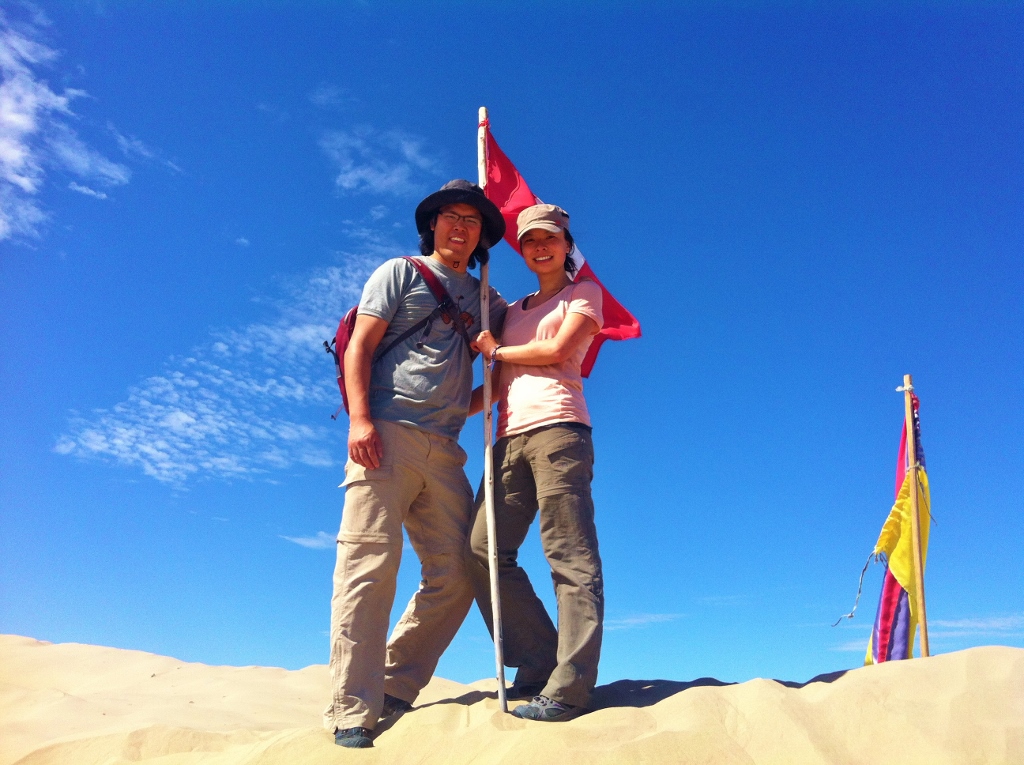
When we finally reached the top, we strapped in for the crazy vertical drop.

On top of Cerro Blanco in Nazca, Peru

Finally! We made it!

Our guide quickly made the sign of the cross with his hands before dropping off (what seemed like) the edge of the earth.

At the top of the highest vertical drop on Cerro Blanco

Smiling to hide the intense fear!

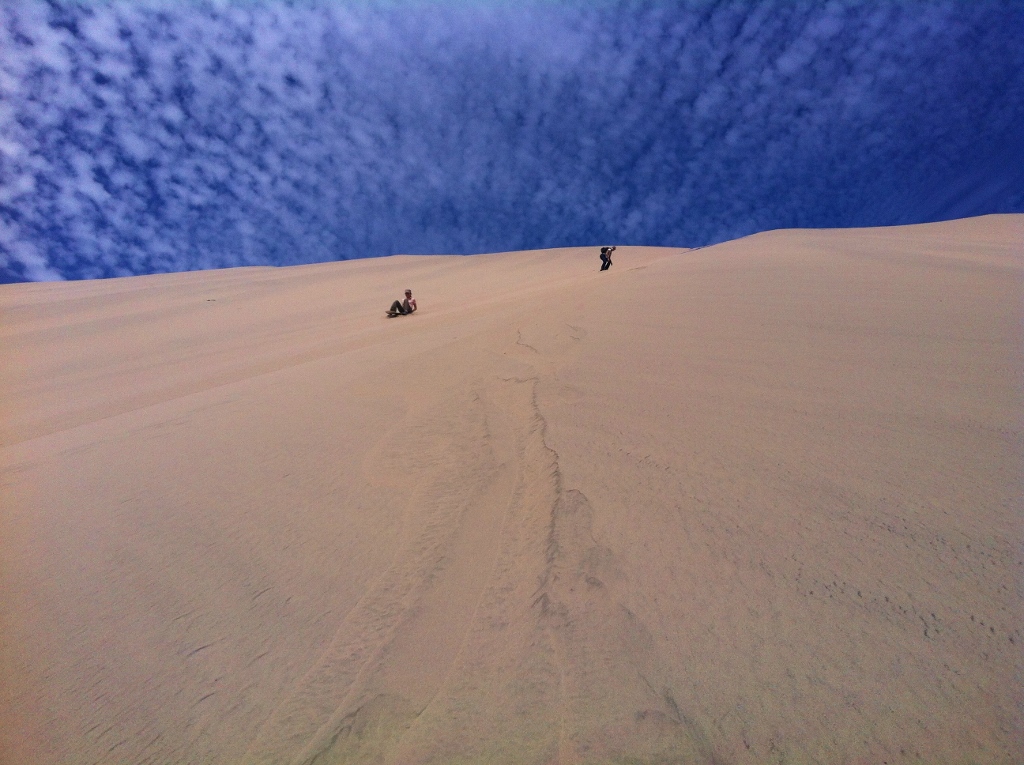
We had no choice but to follow him.  From the top to the bottom, it takes 25 minutes going at top speed.  We took over an hour to get down 😛

From halfway down Cerro Blanco

The view up  from halfway down Cerro Blanco. It was so steep!!

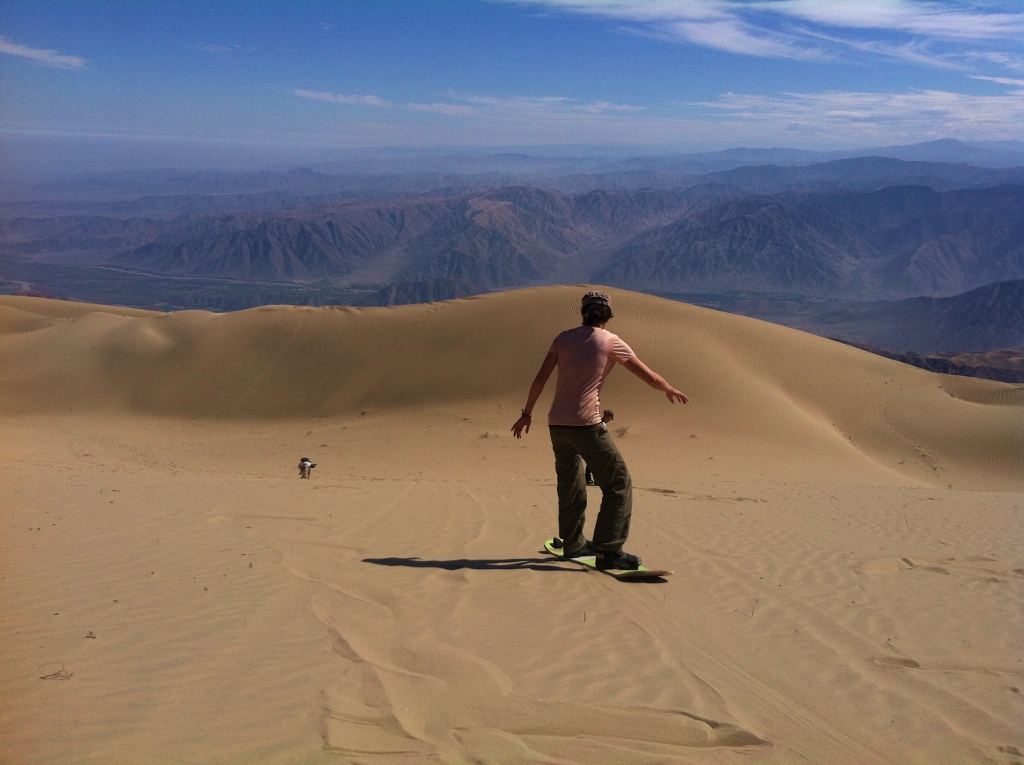
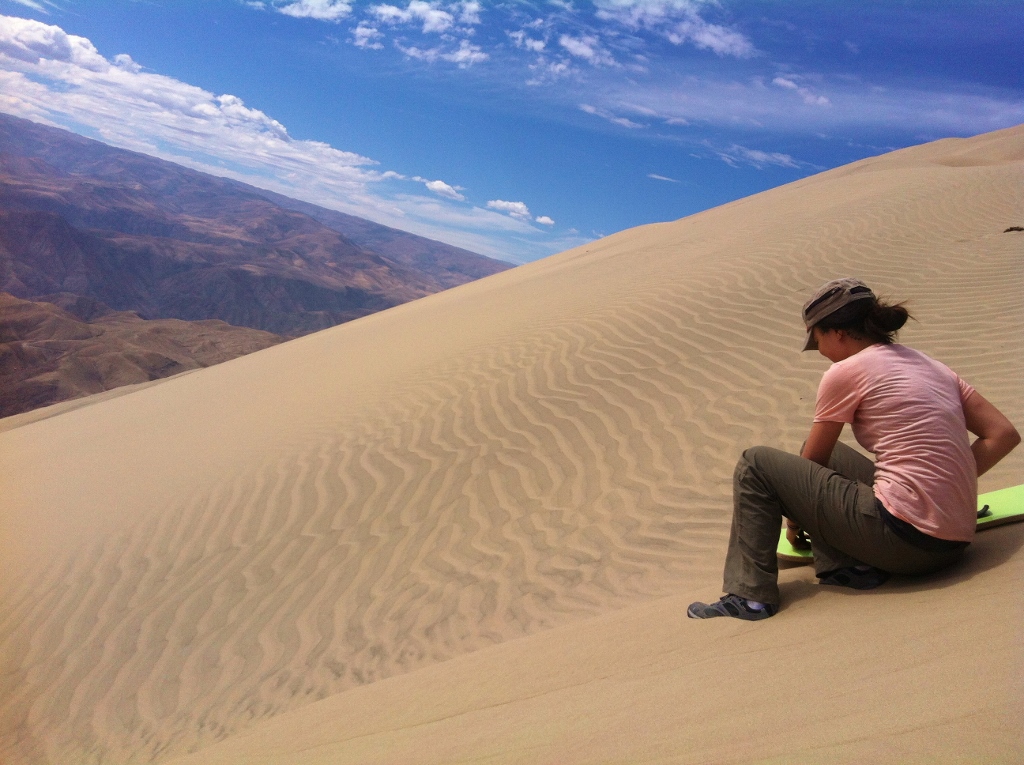
Sandboarding is not at all similar to snowboarding (with the exception of strapping a wooden plank to your feet).  The wooden board sticks to sand like ‘a fat kid on cake’.  Our guide gave us a piece of candle to apply wax  to the bottom of the board.  Every couple of minutes, we would come to a standstill – requiring us to unstrap our boards and re-wax the board.  The clunky board is also pretty difficult to control.

Re-waxing my board halfway down Cerro Blanco

Spending more time sitting on top than cruising atop the sand

We also had to constantly remind ourselves to keep our mouth shut, lest we wanted mouthful of sands when we fell.  It’s pretty difficult to remember to keep your mouth shut though, when you’re screaming your lungs out as your hurtle down the monster sand dune.

I half-expected to be a superstar sandboarder (you know, since I’m a superstar snowboarder back in Canada..haha), but my expectations were quickly quashed  when I realized that I would be spending more time rolling around in the sand than cruising atop it.  I got sand in places I never thought possible (and continued to discover bits of sand days later!)

Sand dunes near the top of Cerro Blanco

Love the contrast of the sand dunes against the clear blue sky

Regardless, it was a really fun (albeit grueling) experience.  In total, we spent 3 hours trekking up, 2 hours sandboarding, and another hour trekking out of the desert to where a car picked us up and dropped us back at our hostel.  I’m glad we tried sandboarding, for our first and likely last time.  At least until they install ski lifts that take you to the top.

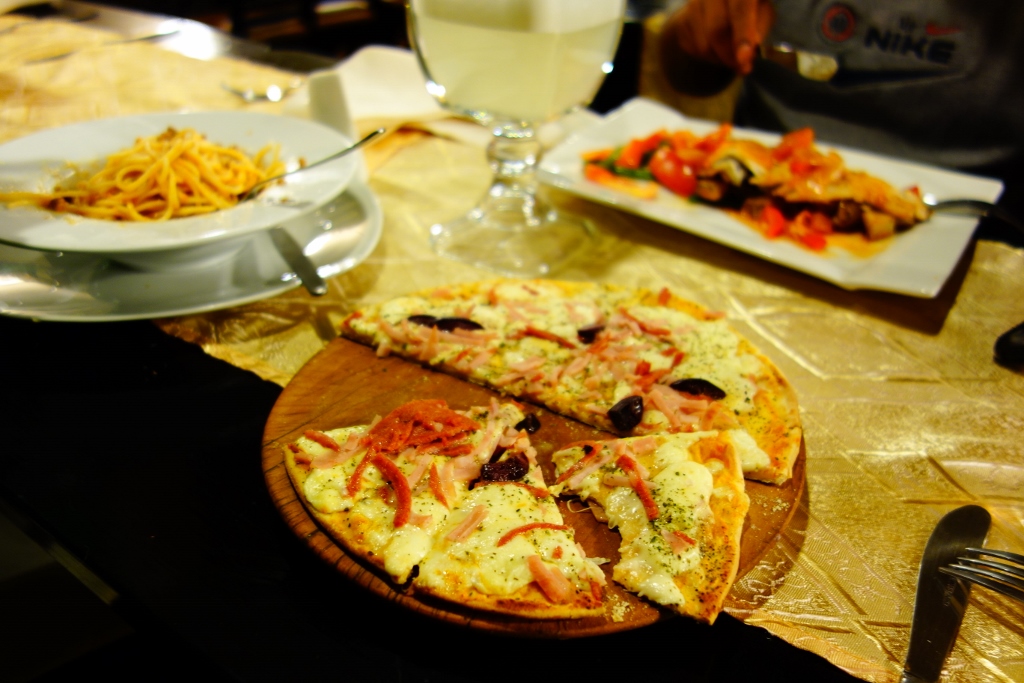
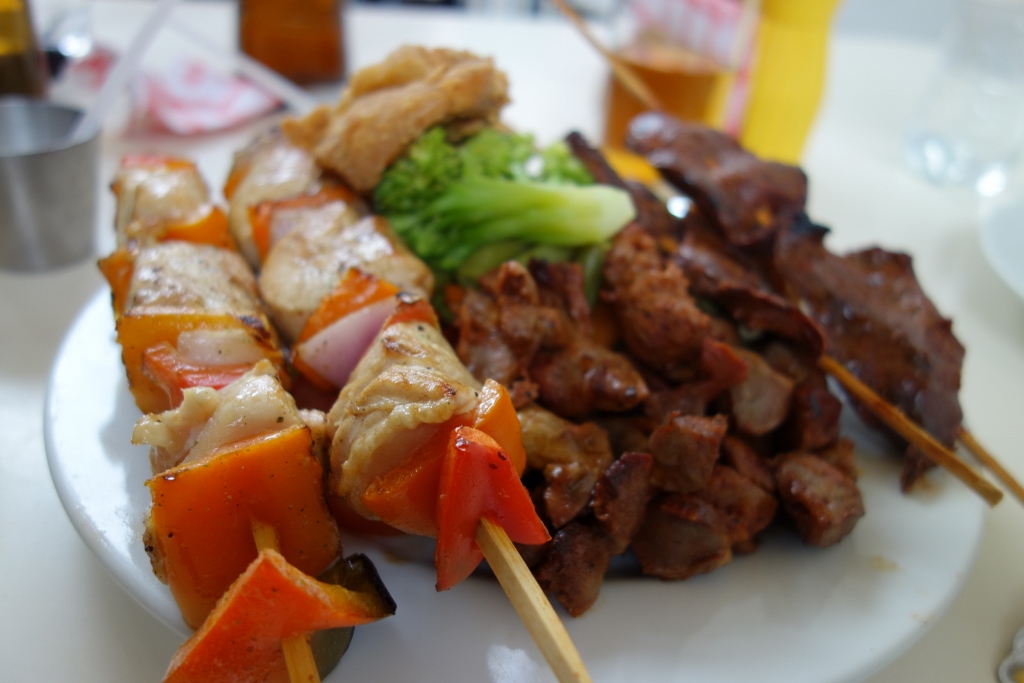
To mend out aching muscles, we decided to gorge ourselves on protein and ordered a monster platter of meat and a couple litres of beer when we got back in town.

Huge meat platter in Nazca, Peru

Our pile of muscle-healing protein

Ok fine, the litres of beer had nothing to with mending our muscles.  It was more for rinsing the sand out of our mouths.

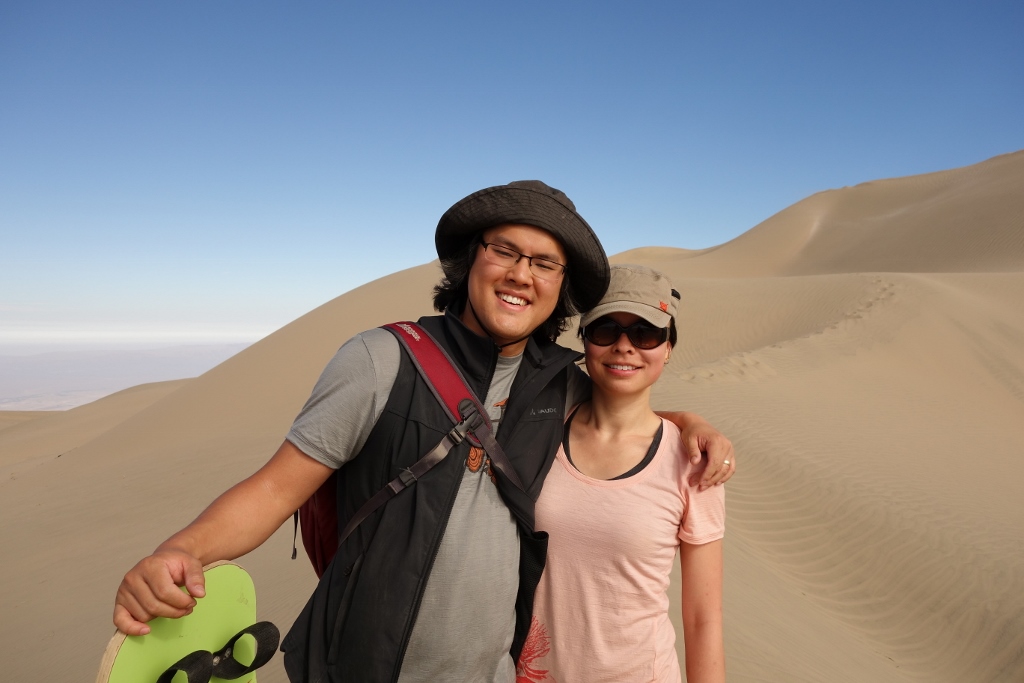
Sandboarding on Cerro Blanco in Nazca, Peru

Our last time sandboarding 😉


Pretty Pueblos Part II: Jardin (of Eden)

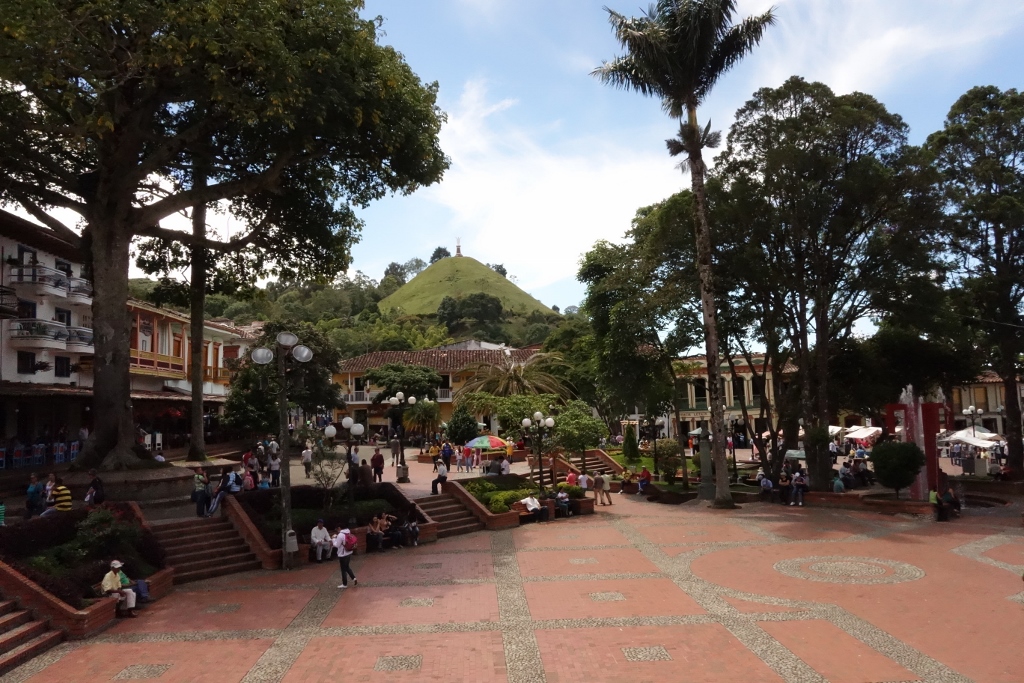
Central plaza (Jardin, Colombia)

Colourful chairs and tables fill the central plaza

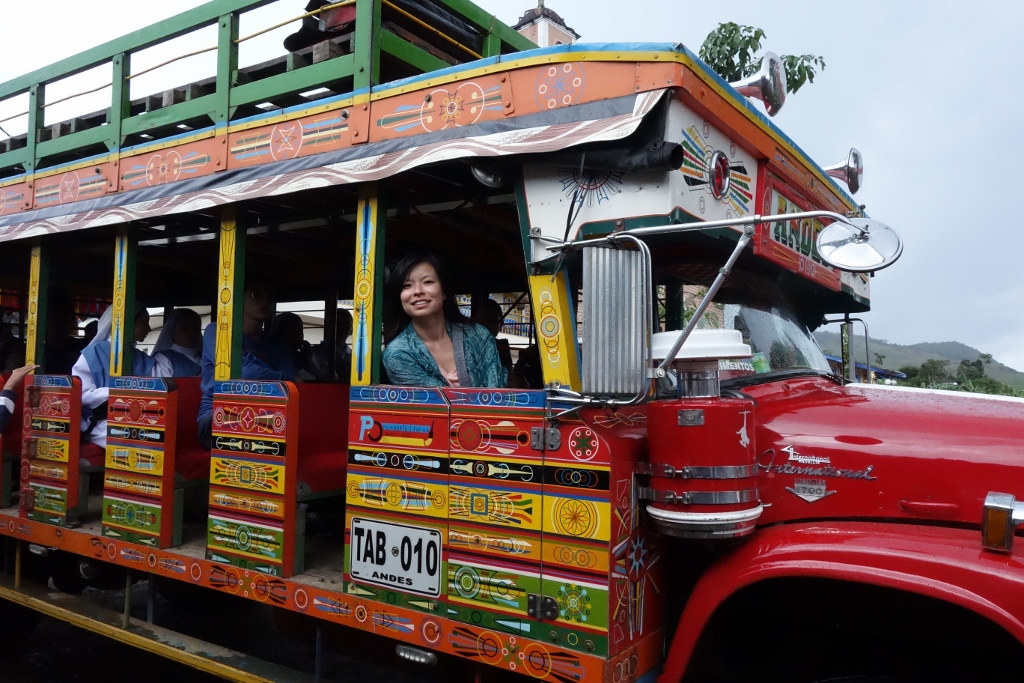
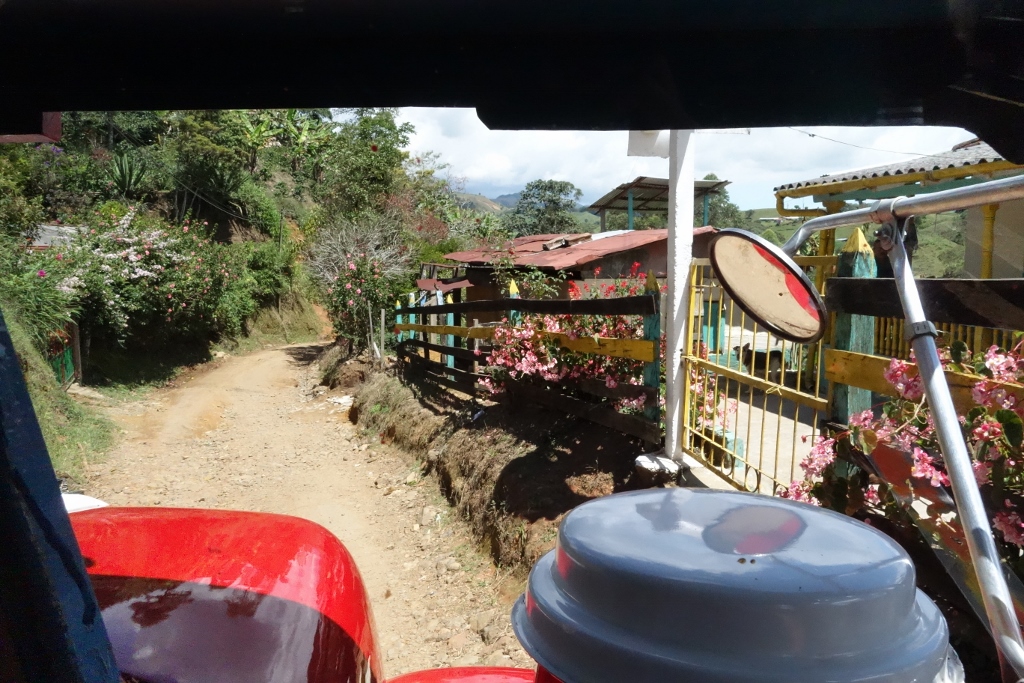
From Jericó to Jardin, we embarked on a 3-hour adventure via the traditional ‘chiva’ bus to the nearby village Andes (COP 11,000/pp), and then took a 30-min taxi (COP 4,000/pp) from Andes to Jardin.

Cathedral in central plaza (Jardin, Colombia)

The central plaza

After we got off the crazy bus (and just so we’re clear, I’m referring to the crazy-colourful bus and its crazy driver..not the passengers), we arrived at the closest thing to paradise on Earth.

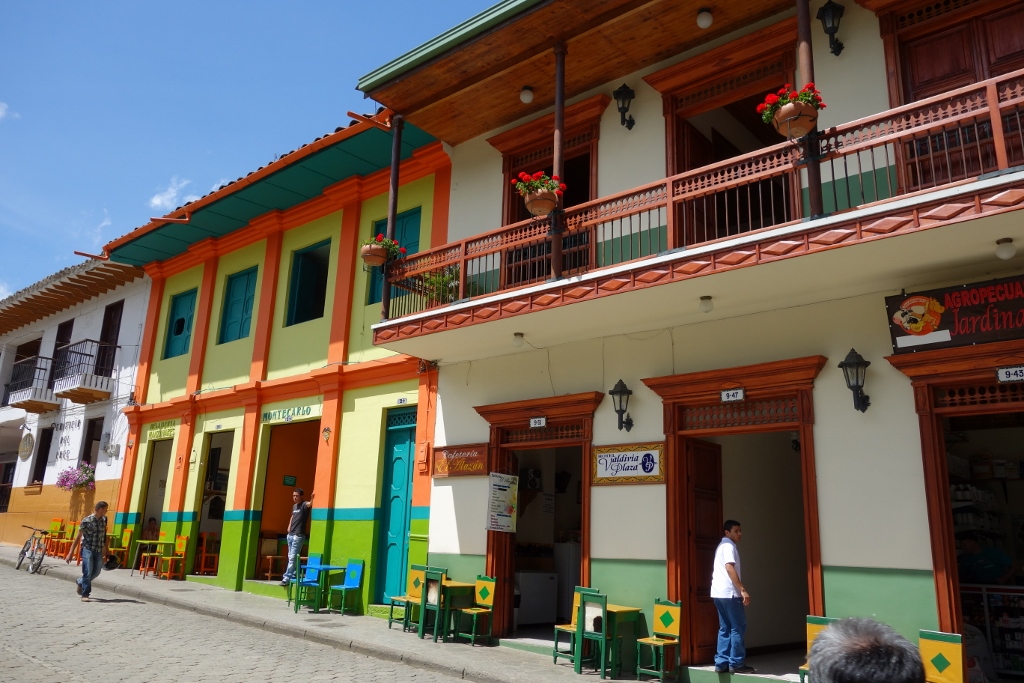
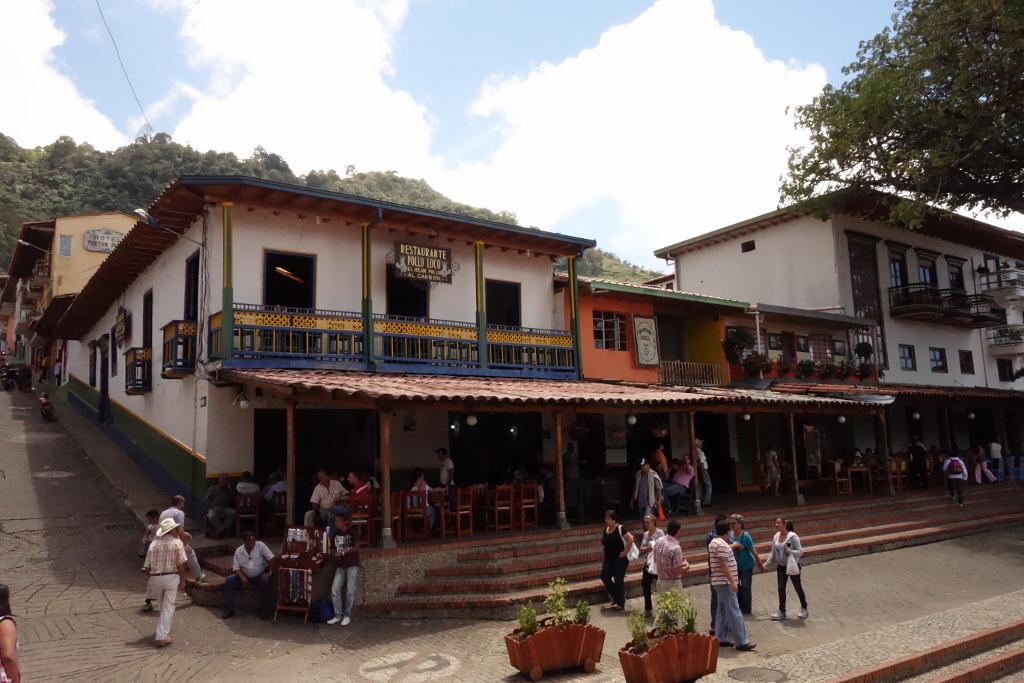
Colour buildings (Jardin, Colombia)

Colourful building of Jardin

We had arrived at our next pueblo: Jardin. It was rumoured that the earliest discoverers of this village stumbled across it and, amazed by its natural beautfy, called it a garden. And I can see why – its literally a modern-day Garden of Eden. Mountain vistas, lush green valleys, and crystal clear mountain rivers from all angles.

Mountain vistas (Jardin, Colombia)

Beautiful mountain vistas

As was with Jericó, neither Lonely Planet or Rough Guides makes any mention of the pueblo, so foreign tourists rarely visit.

Curious locals (Jardin, Colombia)

Jason and I were mild celebrities in Jardin. These kids came up to us and asked if they can take pictures with us. We happily obliged. They didn’t ask for our signatures though.

This perfect combination of breathtaking natural beauty, mild climate, and ‘not-a-single-souvenir-shop-in-sight’ makes this village an ideal place to stay for a couple of nights.

Cathedral in central plaza (Jardin, Colombia)

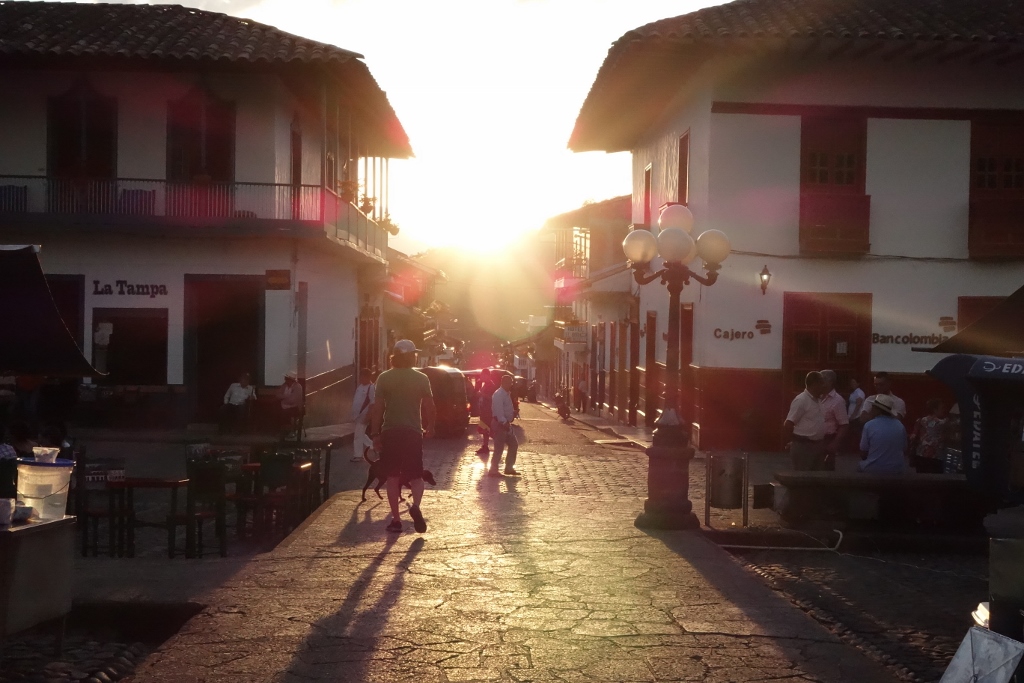
Sunset over the central plaza

Jason and I took a quick ride out of the village centre on one of the (what locals affectionally call) “motoratones” or motor-rats, because they resemble little rats on wheels.

Motoratones (Jardin, Colombia)

One of several motoratones in the village

We arrived at ‘La Trucheria’ or the trout farm which I thought was going to be kinda cheesy. I was totally proven wrong when we discovered we got to fish for our own trout!

La Trucheria (Jardin, Colombia)

La Trucheria (or trout farm)

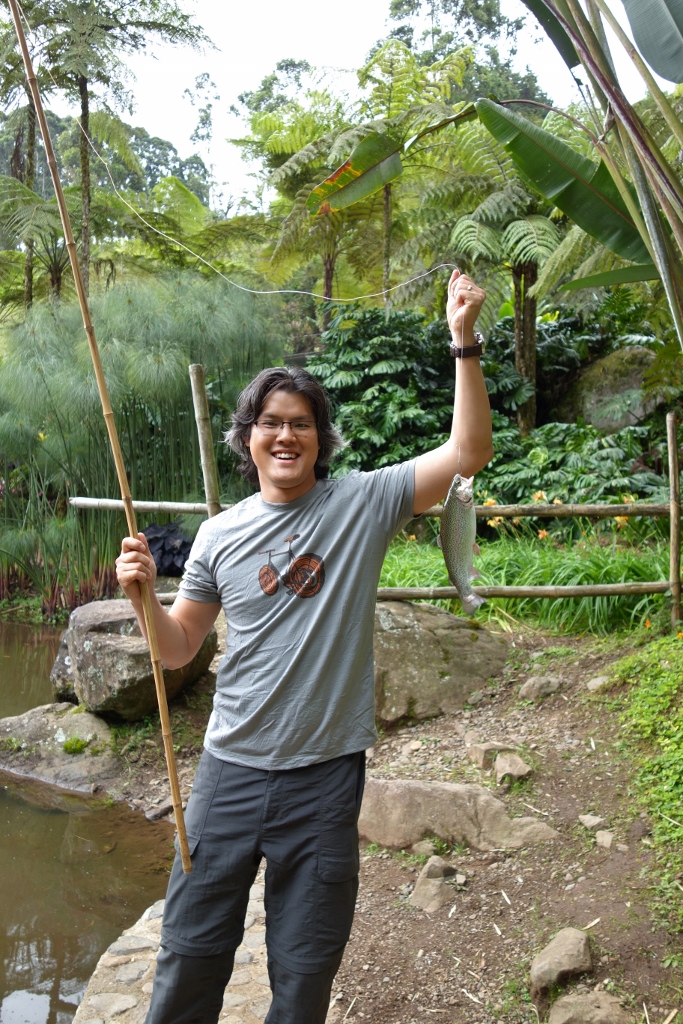
Jason finally caught the ever-elusive fish that’s haunted him since last summer!

Fishing for trout (Jardin, Colombia)

That is one proud man!

I technically caught a trout first but I screamed so loudly in excitement that I think I scared the fish off the hook and onto the ground, where he flopped around for a few frantic seconds before gratefully escaping back into the pond.

Fishing for trout (Jardin, Colombia)

I caught one too (before Jason did!)

Cleaning the trout (Jardin, Colombia)

Cleaning station

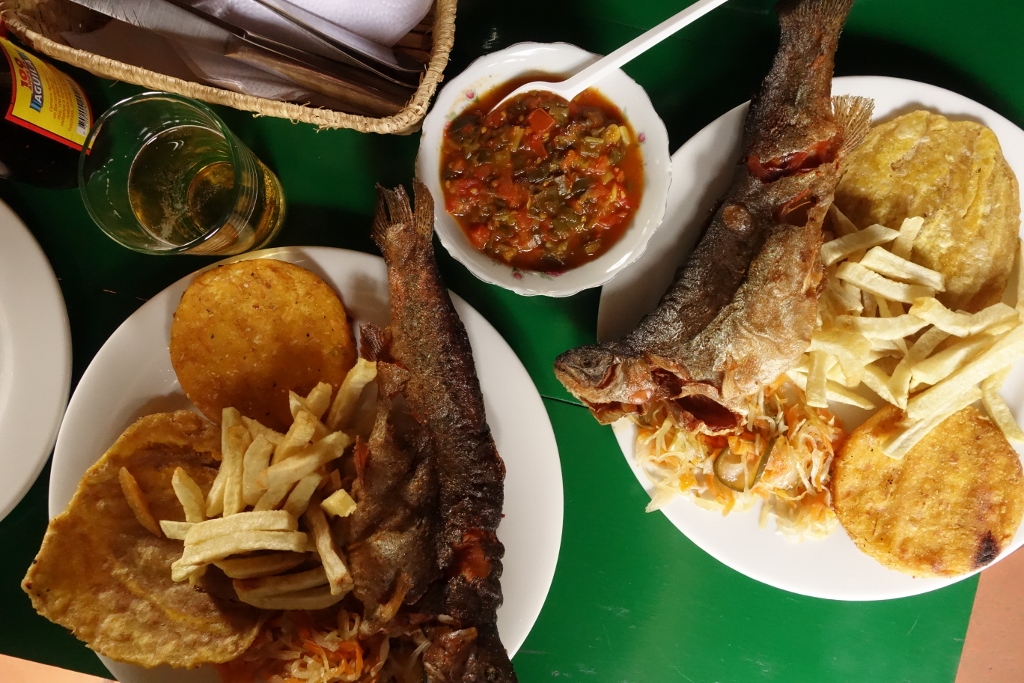
We got the fish cleaned right there, and afterwards, brought the fish to the restaurant on site for them to prepare the freshest, tastiest trout I’ve ever had!

Trout bounty (Jardin, Colombia)

Me holding up our bounty!

Our just-caught trout meal (Jardin, Colombia)

The mouthwatering trout we had for lunch. This was only half of it, since we caught 4 trout.

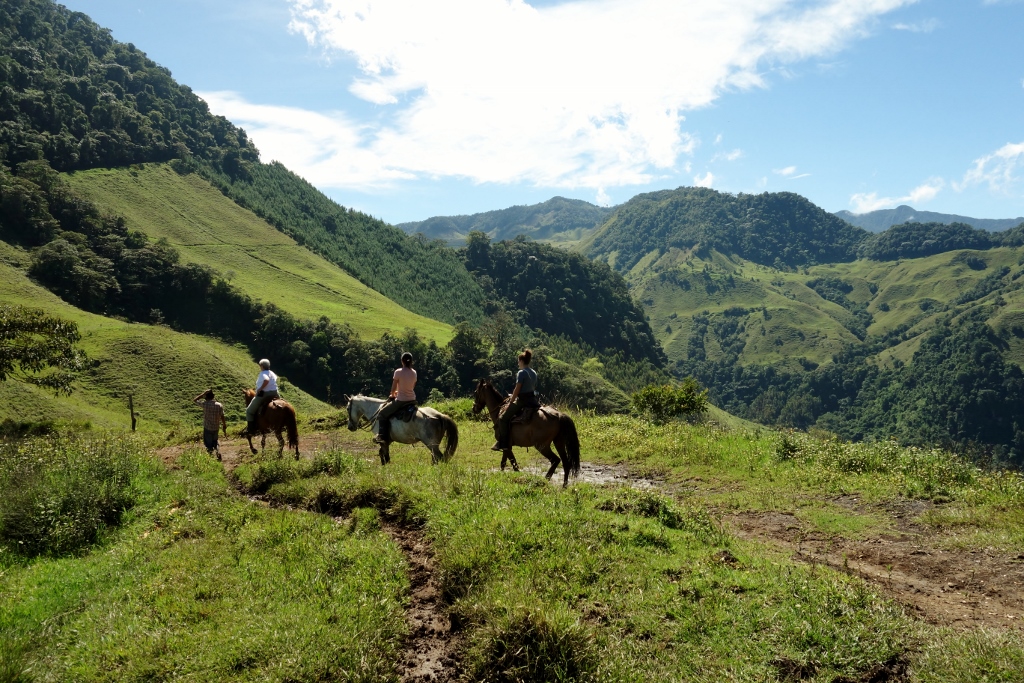
One of the top hiking destinations nearby was to ‘La Cueva del Esplendor’ (Cave of Splendour). There are number of ways to get to the destination: hike, horseback ride, rappel down the waterfalls. We booked our horseback ride to the cave through a local guide, Jaime (pronounced HY-mee). (Ask around town for him – there appeared to be only 2 main guides who offer this tour.) I was excited to try my hand at horseback riding again…my last experience was pretty scary and I got eaten alive by mosquitoes so I didn’t really enjoy it that much.

Jaime's finca (Jardin, Colombia)

At our guide’s finca

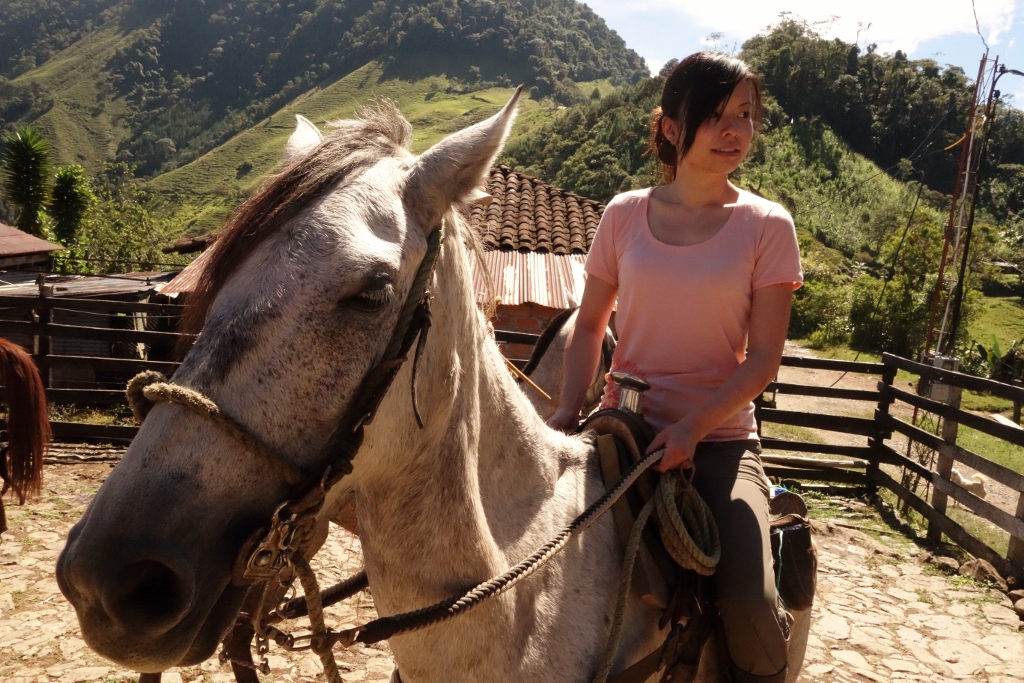
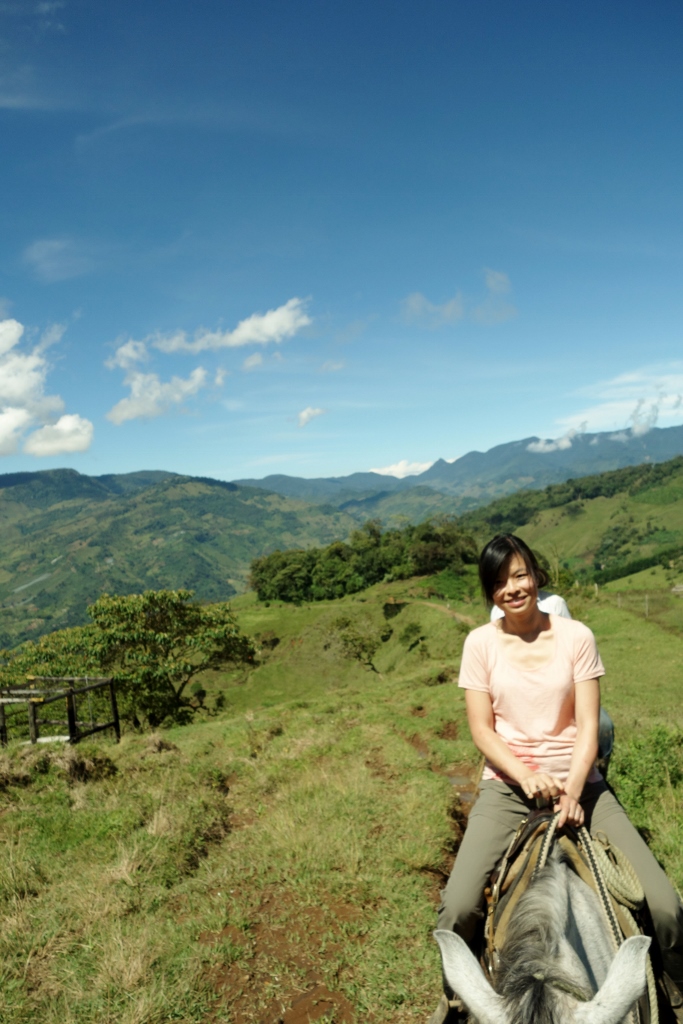
We arrived at Jaime’s finca (or coffee farm) and he paired us up with our horses. I got paired up with a handsome white horse named Leonardo. He turned out to be the sweetest horse – responsive and wouldn’t go faster than a trot unless I directed him to.

Jenn on horseback (Jardin, Colombia)

Me looking like I’ve been riding all my life (not!)

The trail we took was a different story…it was slippery, muddy, steep, and at times incredibly narrow. I have a new-found respect for horses. I thought the slippery trail was going to do my horse (and as a result, me) in, but Leonardo was so sure-footed. He never let me down (well, not until we reached end of the ride).

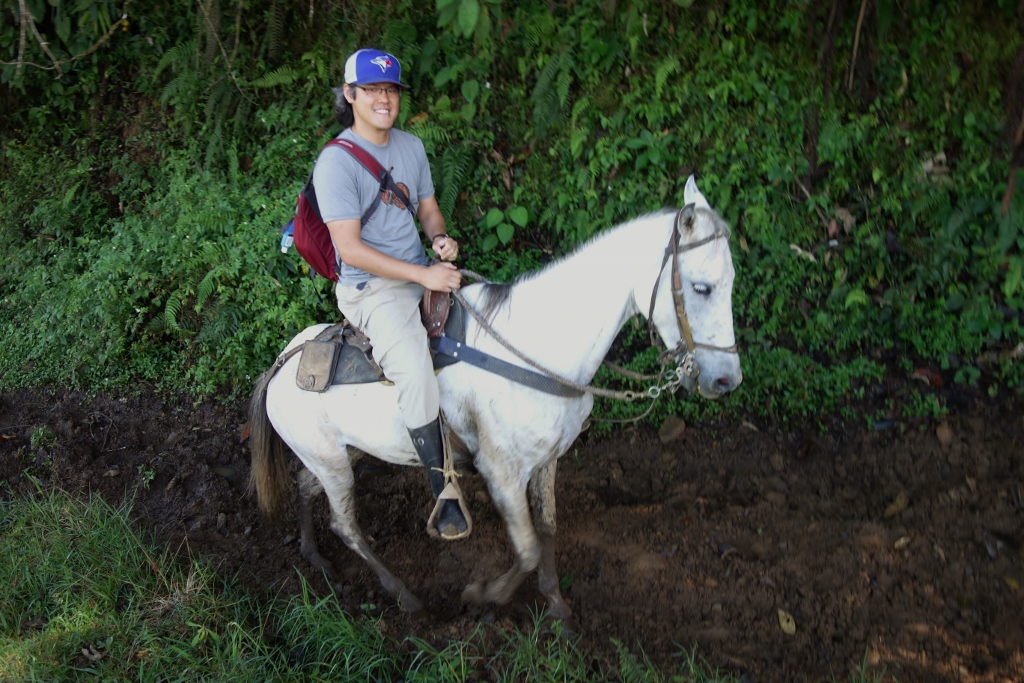
Jason's steed (Jardin, Colombia)

Jason on his steed

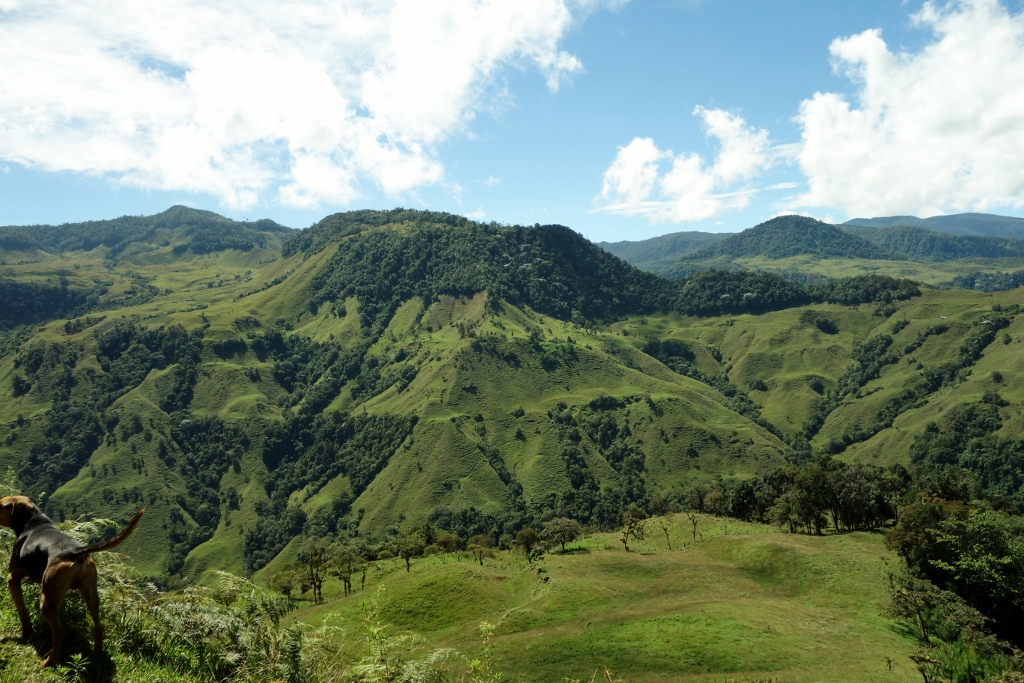
The actual views we took in during the horseback ride was breathtaking (or perhaps it was the altitude?). The views of the endless Andean mountain range were spectacular. Pictures do not do them any justice whatsoever.

Andean scenery (Jardin, Colombia)

Andean scenery

Horseback trails through Andean mountains (Jardin, Colombia)

Horseback trails through Andean mountains

When we reached the end of the trail at another finca, we tied up our horses and took a pretty difficult trail through the dense foliage to get to the waterfall. The trail by foot was equally slippery and muddy, and we found ourselves having to hang onto nearby vines and branches for dear life. An older American lady that was with us had to be lead down personally by our guide. Jaime was great – really patient and wanted to make sure the entire group was always safe.

Jaime the guide (Jardin, Colombia)

Our guide, Jaime.

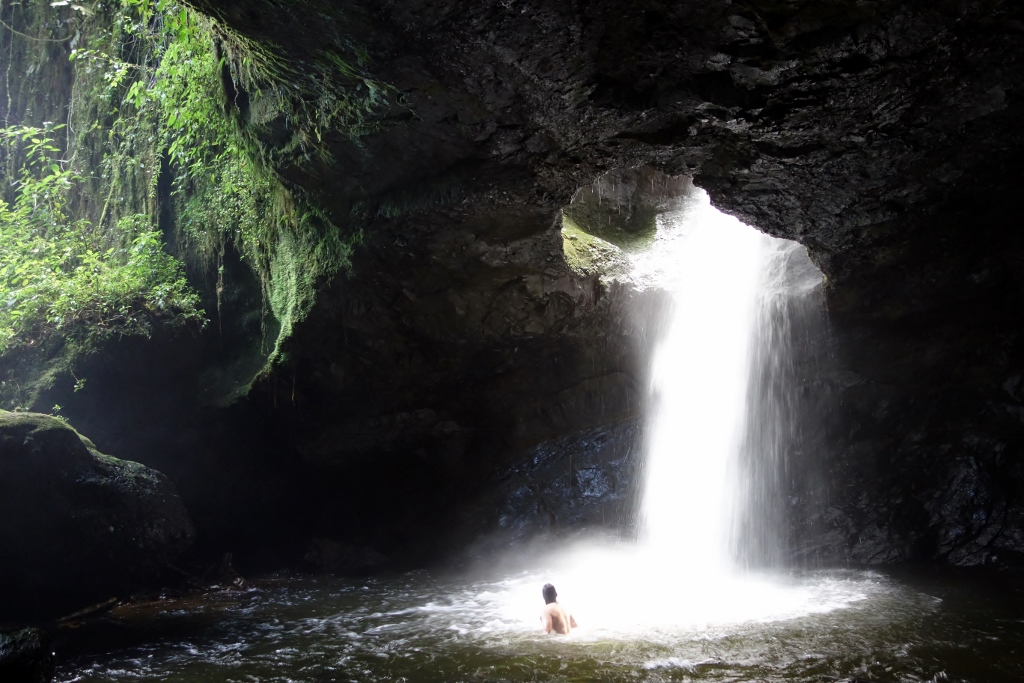
But all the work was worth it. The sight that greeted us was breathtaking – seriously our group took in a collective gasp. Like a ray of light, the waterfall rushed down through a hole in the roof of the cave, sending up misty droplets into the air.

The cave of splendour (Jardin, Colombia)

The cave of splendour

Jason was the only one brave enough to face the icy cold water and he took a quick dip under the falls. Crazy, this guy! 🙂

Waterfall swimming (Jardin, Colombia)

Jason shivering swimming in the waterfall

The cave of splendour (Jardin, Colombia)

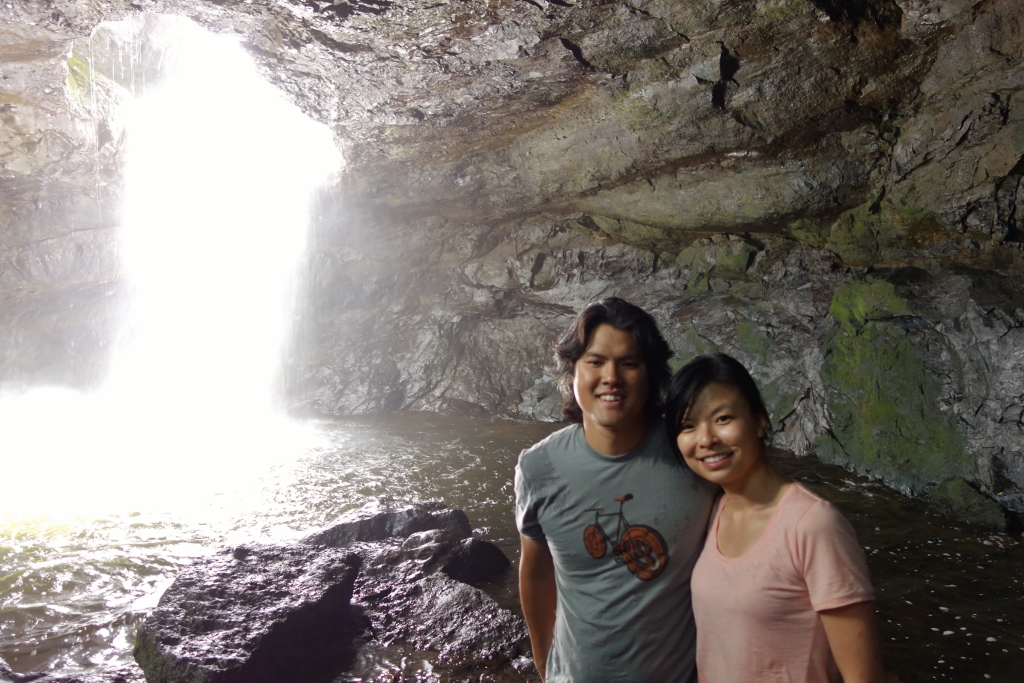
Jason and I in front of La Cueva del Esplendor

Instead of taking the same muddy trail back up to the second finca, a small group of us (the two of us and a young American couple who were spending a few months in Central America and Colombia) were allowed to walk up a section of waterfall. Pretty cool and, at times, a little scary as we jumped from rock to rock in our borrowed galoshes.

Climbing up the waterfall (Jardin, Colombia)

Climbing up the waterfall

We met up with the guide and the older American couple at the second finca and remounted our horses for another beautiful ride back through the mountains. This time, Leonardo decided to be a bit more daring and would often walk right on the edge of the trail, so there was nothing but a steep drop on one side of us. He lost his footing briefly at one point, and I nearly peed my pants! After that, I led him away from the ledge.

Riding through the Andean mountains (Jardin, Colombia)

Riding through the Andean mountains

We had a wonderful lunch of chicken, yuca, potato, rice, cornbread – all wrapped up within banana leaves when we returned to Jaime’s finca. Sooo good!

Our delicious homemade lunch (Jardin, Colombia)

Our delicious homemade lunch

Sunset over the central plaza (Jardin, Colombia)

Farewell Jardin, Colombia

Jardin has definitely been one of the highlights of our trip so far. Make sure to stop in for a few days if you’re ever in Colombia.

Psst: Missed Part I of Pretty Pueblos? Click here.

Pretty Pueblos Part I: Jericó

Jerico, Colombia

Overlooking the village of Jerico

From the advice of other travel bloggers, we decided to spend some time off the beaten path in the Antioquia region. This region contains an endless number of pueblos (or villages) that will allow the weary traveller to kick back and enjoy a slower pace.

Jericó is one of the many pueblos in the coffee zone, just 3.5 hours south of Medellin. We spent a day in the little village (approx population 13,000) enjoying the sunshine, the mild climate, and the company of incredibly friendly people.

Parque Reyes (Jerico, Colombia)

Most cities or villages have a central plaza where all the locals congregate to catch up on gossip or just to people-watch. Jericó had a very pretty central plaza, named Parque Reyes.

People-watching at a cafe (Jerico, Colombia)

We drank a lot of coffees at this cafe. It had the perfect vantage point for people-watching people in the central plaza.

This charming little village also had a meticulously-maintained botanical garden, ‘Los Bolsos’.  It was pretty impressive.

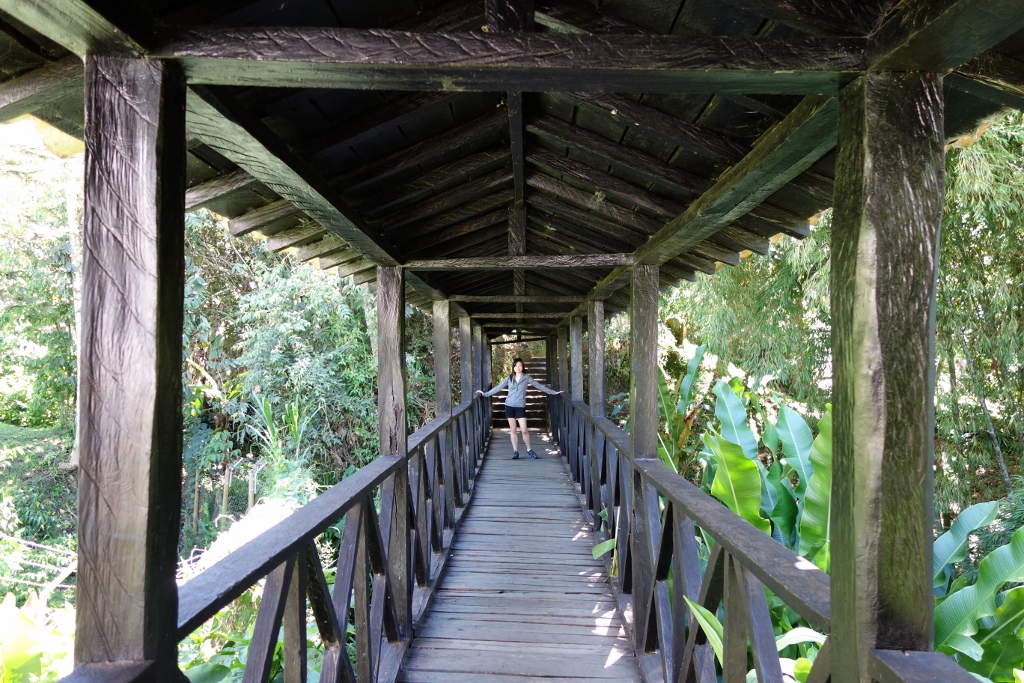
Bridge to botanical garden (Jerico, Colombia)

The bridge that led from the village to the botanical garden.

Botanical garden (Jerico, Colombia)

Flowers in the botanical garden

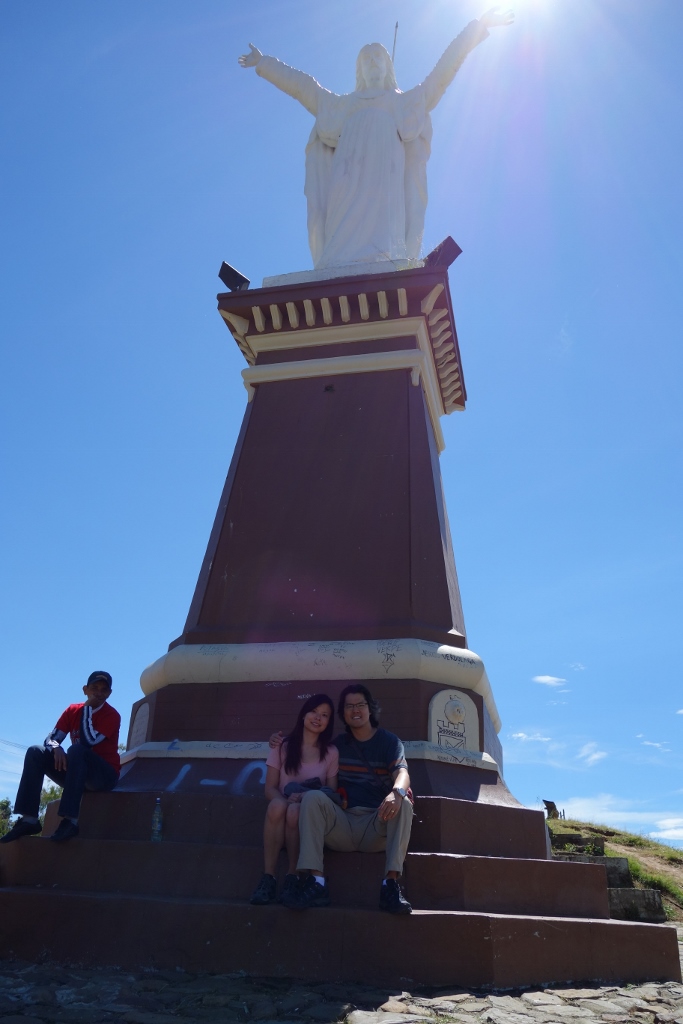
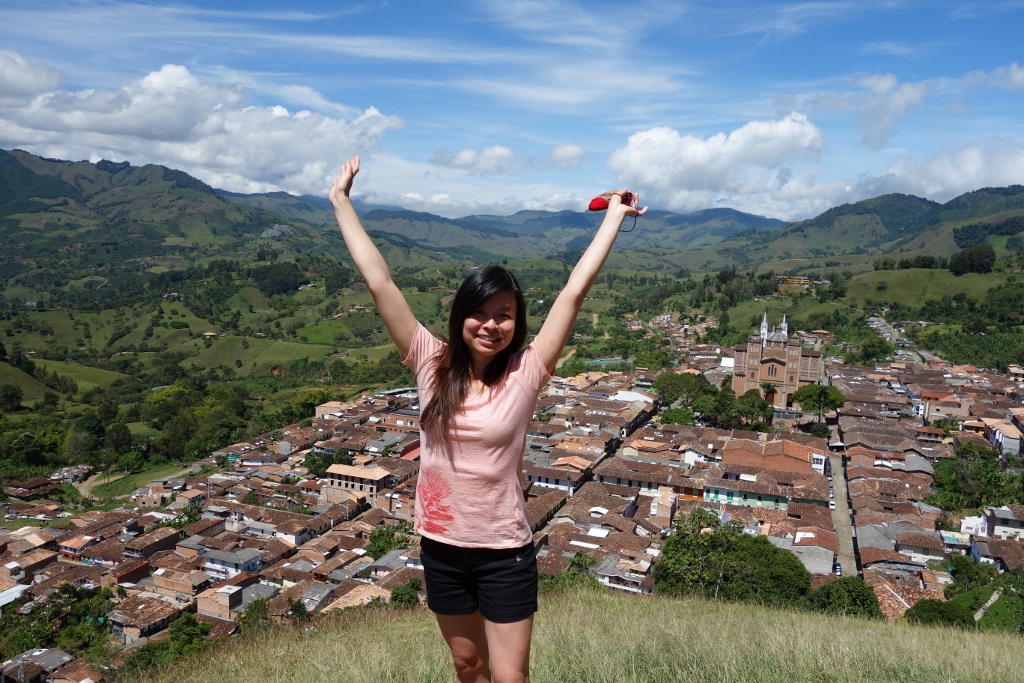
The botanical garden, ‘Los Bolsos’, is located at the base of El Salvador.  The pathways will eventually lead up top the top of El Salvador, where stands Jericó’s own statue of Christ.  From here, you can take in breathtaking, panoramic views of the village and surrounding mountain vistas.

Panorama from the top of El Salvador (Jerico, Colombia)

Panorama from the top of El Salvador

We met a friendly local up at the top who tried to teach us about the village’s history. Too bad his lecture was entirely in Spanish 😛  He offered to take some pictures of us though.

Christ statue at the top of El Salvador (Jerico, Colombia)

Christ statue at the top of El Salvador

We stayed up at the top enjoying the breeze and the views for awhile.

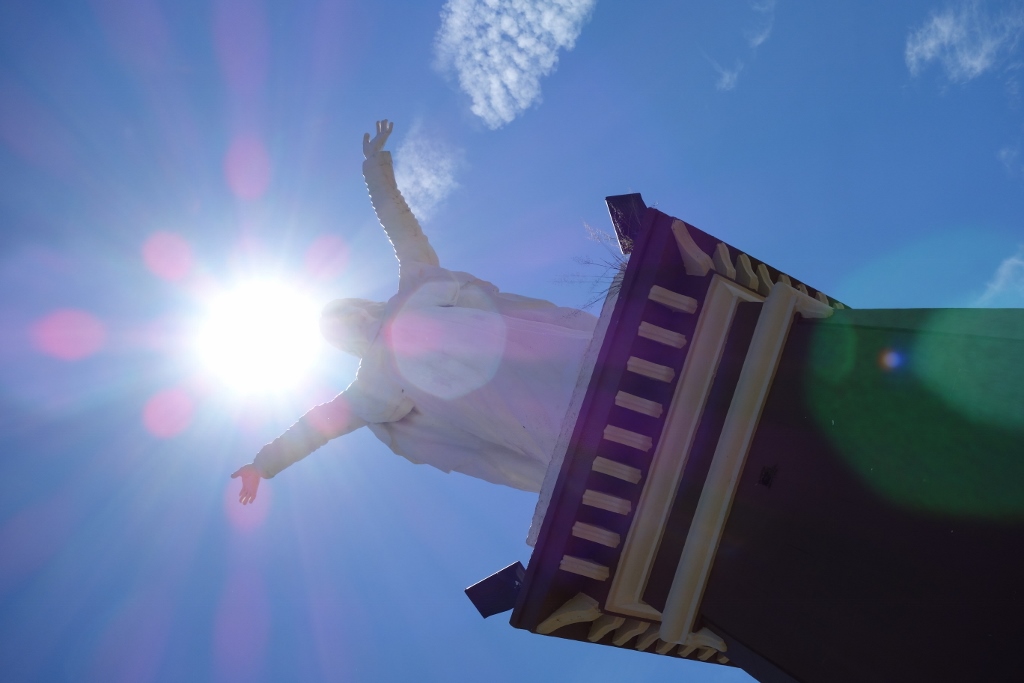
Christ statue at the top of El Salvador (Jerico, Colombia)

Jerico’s own statue of Christ, at the top of “El Salvador”

Top  of El Salvador (Jerico, Colombia)

This is me imitating the statue. No, just joking..I’m not sure why I’m posing like that.

Asian tourist (Jerico, Colombia)

This little girl cozied up to Jason and wanted her picture taken with the rarely-seen Asian tourist.

Top  of El Salvador (Jerico, Colombia)

Jason pondering life’s mysteries….or what to have for lunch.

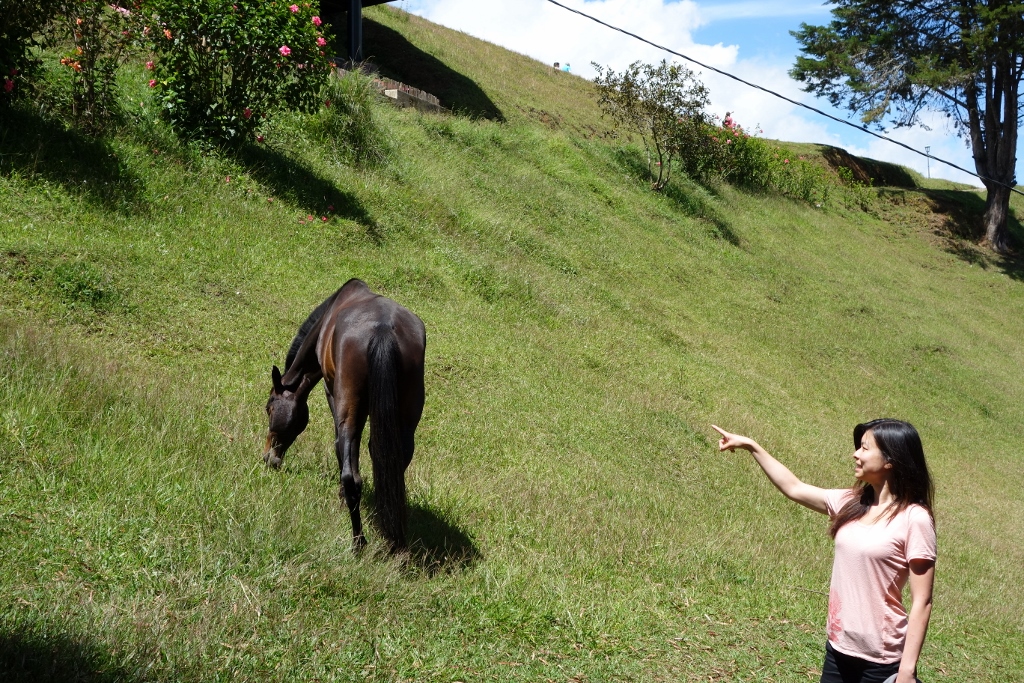
On our way down we saw this beautiful wild horse just horsing around (haha). He was a little scary since he was humongous! He almost charged me at one point and I freaked out!  It took a lot of coaxing from Jason to get me into the same photo frame with him after that incident.

Scared of the wild horse (Jerico, Colombia)

Scared of the wild horse

We were wandering the small streets, when we were stopped by an older gentleman. He guessed we were from Canada (We must’ve been in the middle of asking a question, eh?) and told us that he lived in Toronto for years! Say wha?!? What are the chances of bumping into a local who used to live in Toronto but now lives in this tiny little village??

Decio the Canadian/Jerico local (Jerico, Colombia)

Jason, Decio and Decio’s friend Jaime.

Jenn & Decio (Jerico, Colombia)

Jenn & Decio

His name is Decio and he was born in Italy, lived in Toronto for years, but has now located to Jericó where his wife was born. It was great to be able to converse with a local in English so we spent the afternoon with him, enjoying coffee in the central plaza and walking around the beautiful streets.
Weekend market (Jerico, Colombia)

Vendors set up on the weekend in the central plaza, Parque Reyes

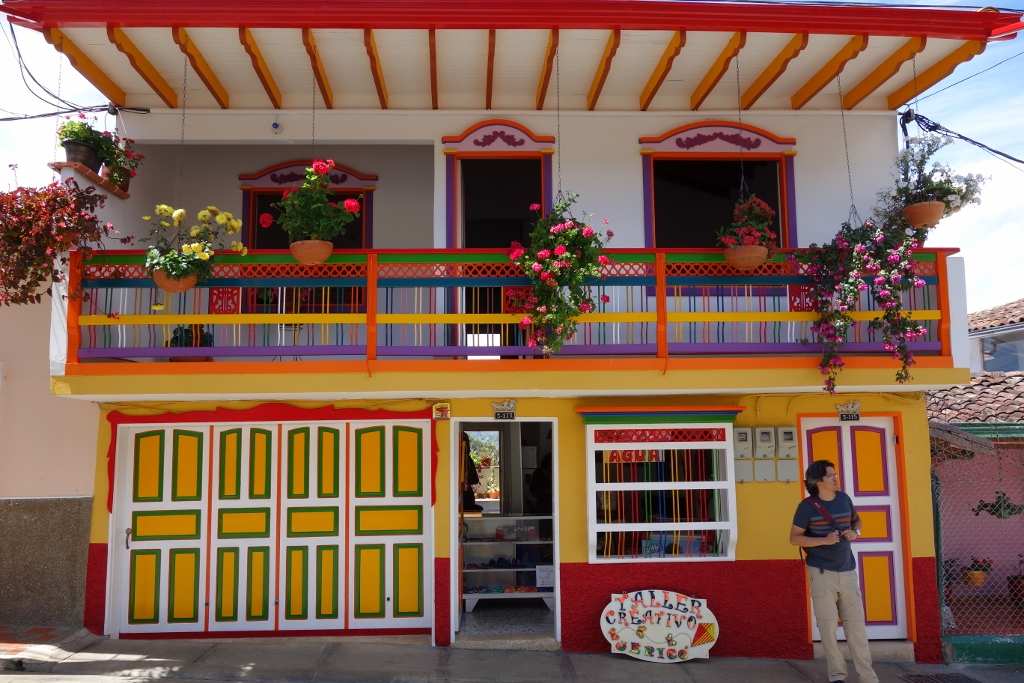
Typical Antioquian architecture (Jerico, Colombia)

Typical Antioquian architecture: colourfully-painted doors, window frames and balconies.

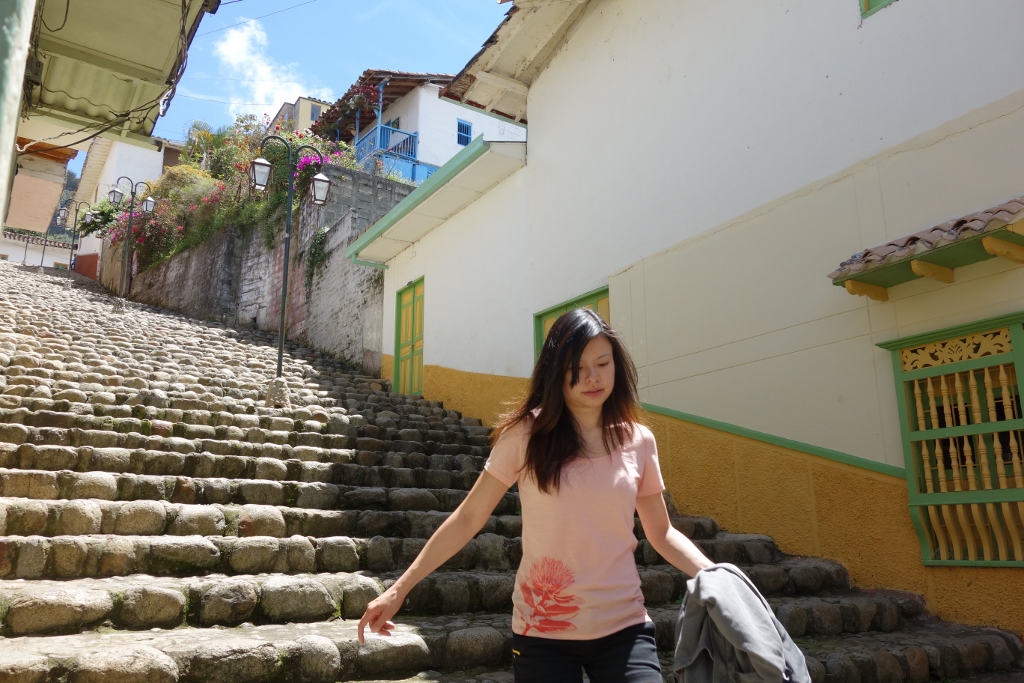
Cobblestone staircases (Jerico, Colombia)

Flower-lined streets, cobble-stone staircases, more colourful houses

Decio invited us into his home to show us the view of the mountains and his cattle farm from his rooftop terrace.

Panorama from Decio's balcony (Jerico, Colombia)

Panorama from Decio’s balcony

Pretty cool to see what a local’s home looks like. All in all, Jericó is a must see. Go before its overrun by tourists 🙂

Misconceptions of Medellin

Two posts in two days! I’m on a roll! Medellin, Colombia

Medellin is a city of misconceptions.  A lot of Colombia’s bad rap comes from Medellin.  In the 80s and 90s, drug gang turf wars were rampant and that bloody era earned Medellin the world’s highest murder rate.  Pablo Escobar, Colombia’s cocaine druglord, ran the show back then, but when he was killed in 1993, Medellin began to turn itself around.

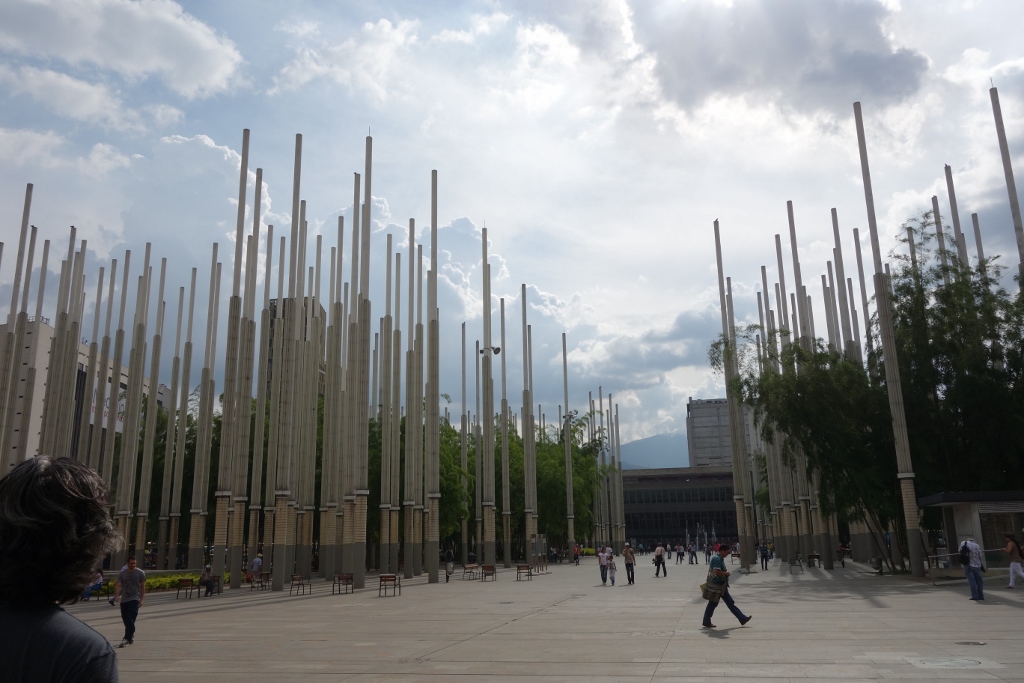
Modern art sculptures (Medellin, Colombia)

Modern public art sculptures

When people travel to Colombia, they might expect to see a still-developing country.  However, Medellin is a modern city that rivals big cities in North America.  Modern freeways, a fast and efficient public transportation system, and bustling commercial centres have allowed this city to grow and prosper.

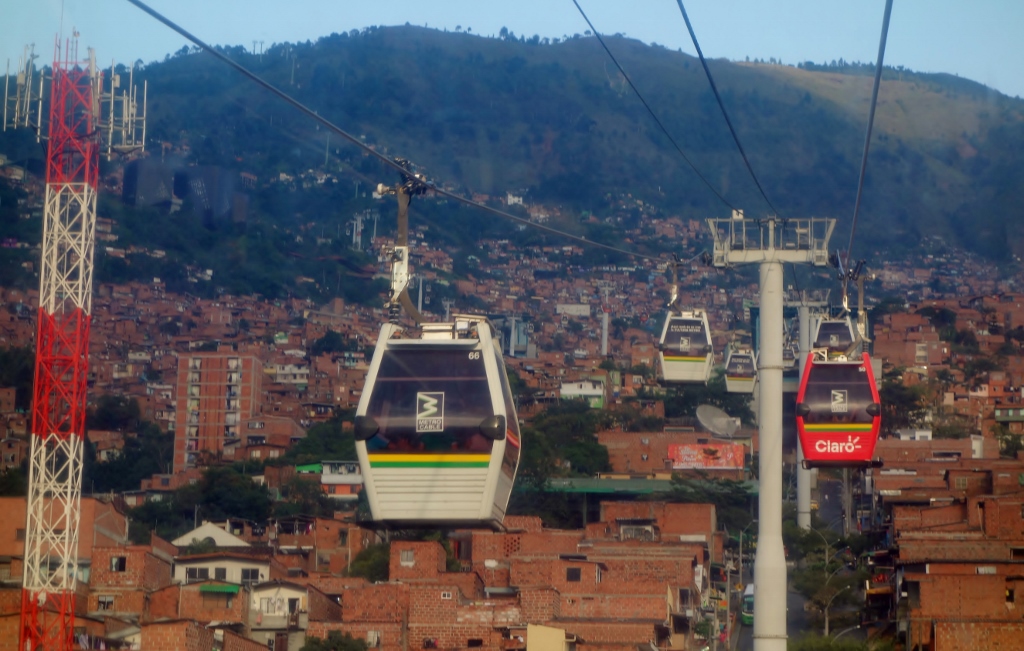
Medellin metro system

The metro was a great way for us to get around the city. It also connects to the cable cars – so once you pay for the metro, you can take a free ride up to the top of Santo Domingo for spectacular views of the city

It’s still important to note that there are neighbourhoods (i.e. some areas in the downtown core) that should be avoided.  Jason (of course) was curious so we wandered into one of the sketchier areas (during the day..don’t worry, dad!) but hightailed it out of there after we got some weird stares from the locals huddled around a crack pipe.

Cablecar to top of Santo Domingo (Medellin, Colombia)

On our way up to the top of Santo Domingo

Travellers who come here today will find a (relatively) safe and modern city.  No wonder so many travellers decide to stay put and actually live here.  It has a pleasant climate (year-round temperatures of mid-20s°C), inviting green spaces, excellent restaurants, and an interesting arts and culture scene.

DSC00289 (683x1024)DSC00301 (683x1024)

We spent the day wandering around the Museo de Antioquia, walking down the lively, pedestrian-only Avenida Carabobo (Carrera 52), and then took the cable car up for views of the city from Santo Domingo.

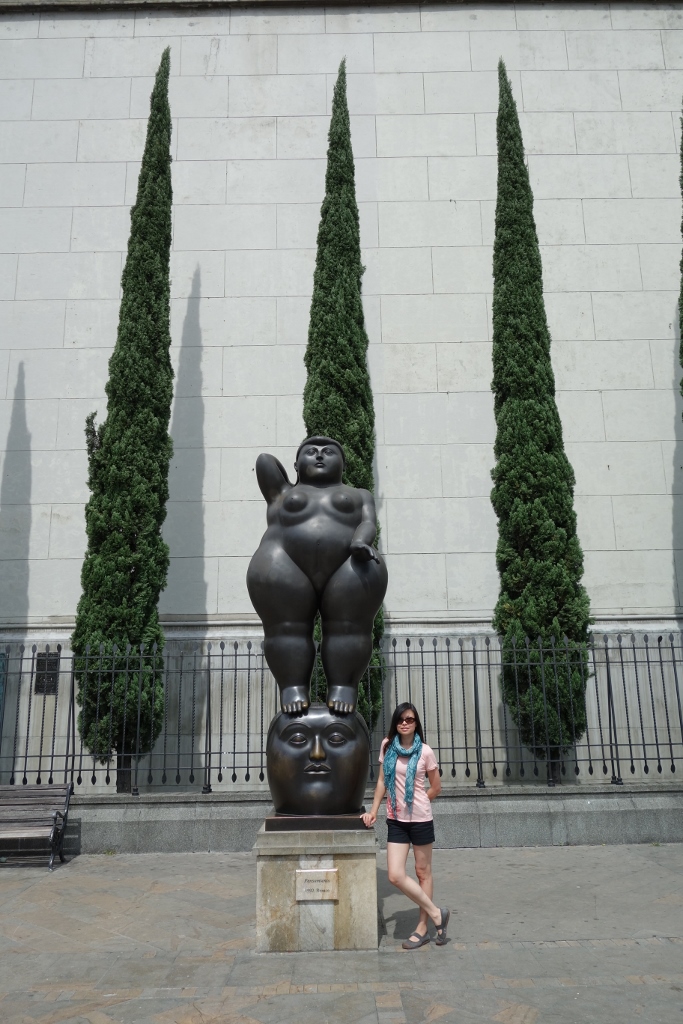
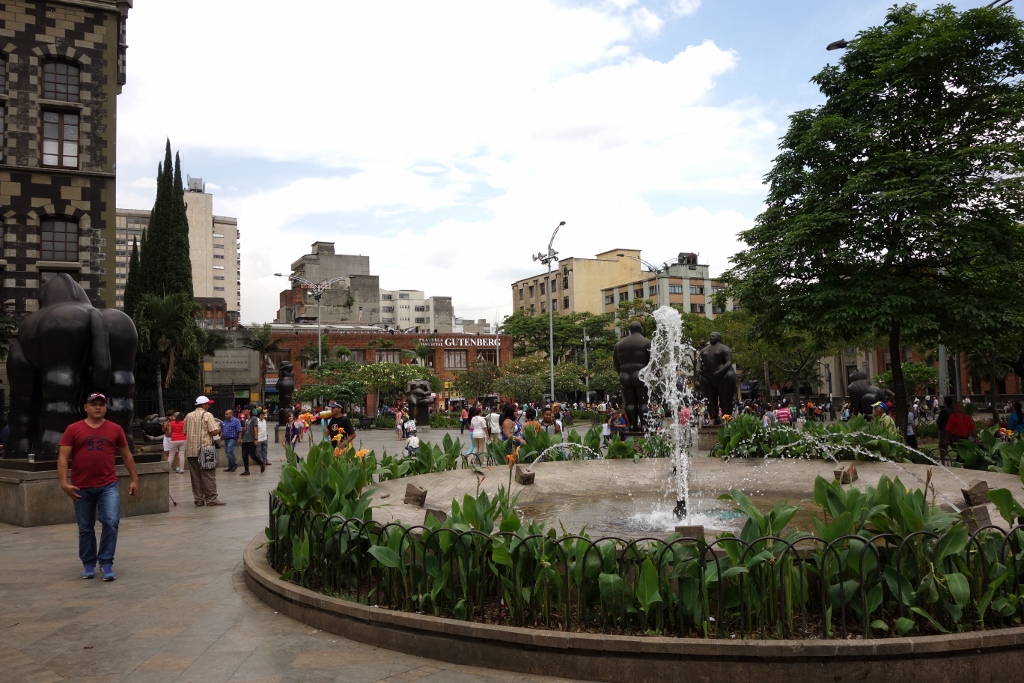
Plaza Botero (Medellin, Colombia)

Medellin is the birthplace of the artist, Fernando Botero. Plaza Botero has about 20 of his sculptures on display (free of charge), right next to the Museo di Antioquia

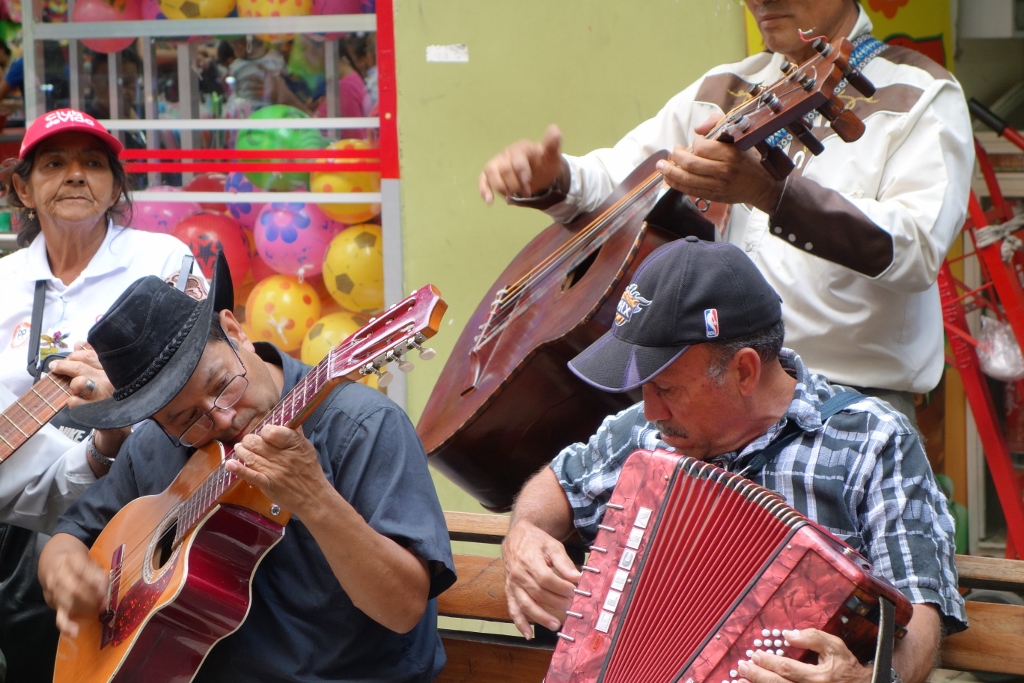
Street musicians (Medellin, Colombia)

Musicians on Avenida Carabobo (Carrera 52)

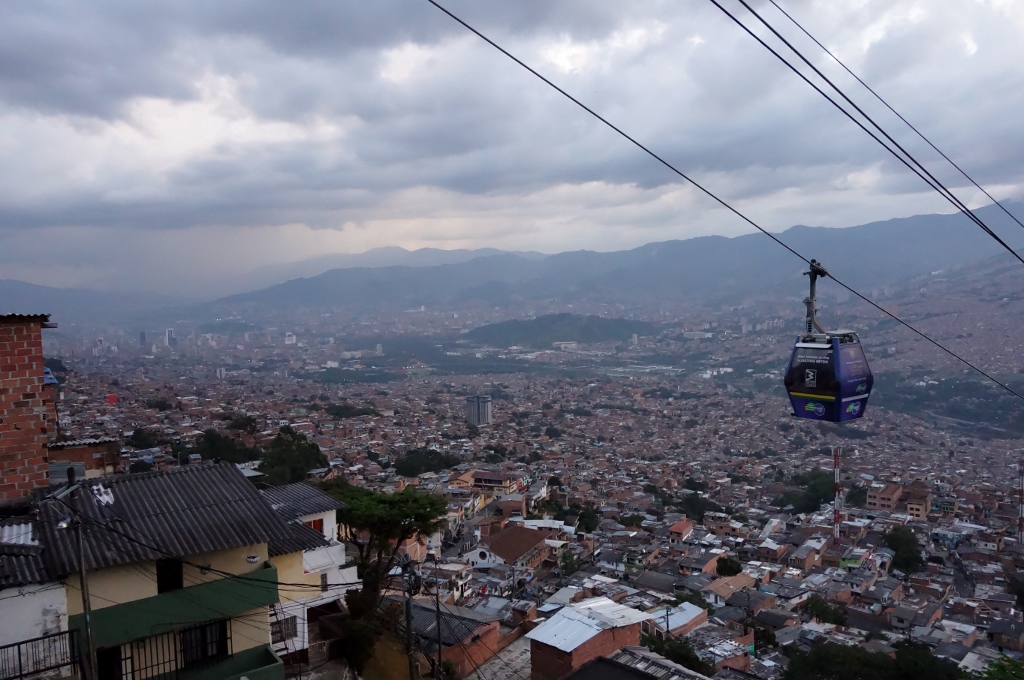
Cablecar to top of Santo Domingo (Medellin, Colombia)

View of the city from the cable car

Cablecar to top of Santo Domingo (Medellin, Colombia)

On the cable car up to the top of Santo Domingo

If we were to move to Colombia, we would likely choose Medellin as well.  It’s a definitely a city to live in, as opposed to a city to just visit.

Sardines in a Can Van

Interior of the Chiva bus

The more eclectic the decor on the bus, the faster and crazier the driving.

Whenever possible, Jason and I try to avoid intercity or inter-country bus travel.  But in South America, there isn’t really any sort of useful passenger rail system – leaving us with either expensive flights or the dreaded ‘superlong, head-tossing, stomach-churning, hairpin-turning, traffic-weaving, over-air conditioned’ bus rides.  So we have accepted the fact that ‘superlong, head-tossing, stomach-churning, hairpin-turning, traffic-weaving, over-air conditioned’ bus rides will be part of our South American adventure – or the actual adventure itself.  Let me tell you about our epic bus adventure from Cartagena to Medellin- a whopping 16-hour, multi-part saga.

Exterior of the Chiva bus

The bus ride from Jerico to Andes was one of the most interesting bus rides we’ve taken so far. Unfortunately, the one from Cartagena to Medellin was the exact opposite

Part 1: The Negotiation

Getting to the main bus terminal in Cartagena took a 40 min cab ride (which surprisingly only cost CDN $11). Once we arrived, we found out the next available bus would require us to wait another 3 hours in the sweltering bus terminal. We couldn’t afford to leave Cartagena that late since the estimated 13 hour bus ride would mean we would arrive in Medellin somewhere around 3am. We had read warnings to only arrive in Medellin during the day.  Note: Although this warning was directed specifically to people flying into Medellin (i.e. to avoid the stretch of highway between the airport and the city at night), we decided that it might be wise to apply this to our bus travels as well.

After a game of Colombian Charades (i.e. Charades with Colombian locals) with a few random men hanging around a couple of passenger vans, we were able to negotiate a ride to Medellin that would leave immediately.

Part II: Sardines in a can van

12 people crammed into a van that is supposed to seat 8. This part lasted 6 hours.

sardines in a van

Squished into the 2 front seats were 3 people. Squished behind me in the 3 back seats were 5 people.

sardines in a van

Jason and I were lucky enough to get our own seats!

Part III: Language barrier

Our bus driver stopped at a bus station in some unknown town. Everyone got off the van and got into another van.  A Colombian fellow took our bags and loaded them into the van too. Just before we took off, Jason asked “á Medellin?” The driver looked at us as if we had both grown an extra head.  Then a stream of Spanish words came out of his mouth, of which none were ‘Medellin‘.  He waved us off the van, while a Colombian boy unloaded our backpacks.  He then put them both on (one on his back, the other on his front) and walked off around a corner.  We scurried after him and when we caught up to him, he was loading our backpacks onto an entirely different bus.  “Medellin?“, we asked one of the random men standing around the bus. “Si.”, one them replied.  So we hopped onto the slightly bigger, more run-down, dark and dank bus and hoped the guy outside knew what he was talking about.

Part IV: Musical Chairs Buses

Another 5 hours later, we arrived at a bus station in another unknown town.  We got off the dark, dank bus because everyone else did.  This time, our bags got moved into one of those fancy coach buses.  The conductor started drawing up new tickets for us, and I thought we’d have to pay again for the next leg of the epic saga titled “The never-ending bus ride”.  Luckily, there was an English-speaking Colombian man in the mix.  We’ve discovered on this trip that finding someone who speaks English in Colombia is like receiving good customer service from Rogers Cable…a rare and pleasant surprise!  He told us that this was the last bus transfer and that we should be arriving in Medellin around midnight.

Dirt road from Cartagena to Medellin

On this bus ride, we spent 3 hours travelling on a dirt road. We probably could’ve walked it faster 🙂

The Epilogue: 

I can’t really title this part, “Part V”, since we were still on the same bus.  But around 11pm, we came to a sudden stop on a winding mountain road.  At first I thought we were having engine trouble or maybe a flat tire.  The bus driver adjusted the bus a bit and then turned the engine off.  We were plunged into darkness and silence.  No one was panicking so I didn’t think we were in trouble.  Everyone else on the bus just sat back and went back to sleep.

After sitting in the dark for 15 minutes, I asked Jason to find out what was going on.  The English-speaking Colombian was not with us, so we tried to patch together whatever Spanish we understood and figured out that we were going to sit here until the road construction up ahead was finished(?!!)  We were flabbergasted!  We had to wait here for at least another hour until the construction crew finished building, apparently, the only road between here and Medellin.

So we sat.

And sat.

And sat some more.

When we finally got started again, and drove over the newly-formed “road”, we gaped at the line-up of cars, trucks, and buses on the oncoming side of traffic.  Colombian efficiency at its best, I tell ya.   Who schedules construction on the only road in the area when there’s obviously still plenty of traffic?  We finally rolled into Medellin at 2 in the morning.

Ten minutes later, the bus that left Cartagena 3 hours after we left also rolled in.

Hot & Steamy Cartagena

Have you ever seen the movie “Mr. & Mrs. Smith”? The scene, where the characters portrayed by Angelina Jolie and Brad Pitt first meet, is supposed to be set in the capital city of Colombia: Bogota.

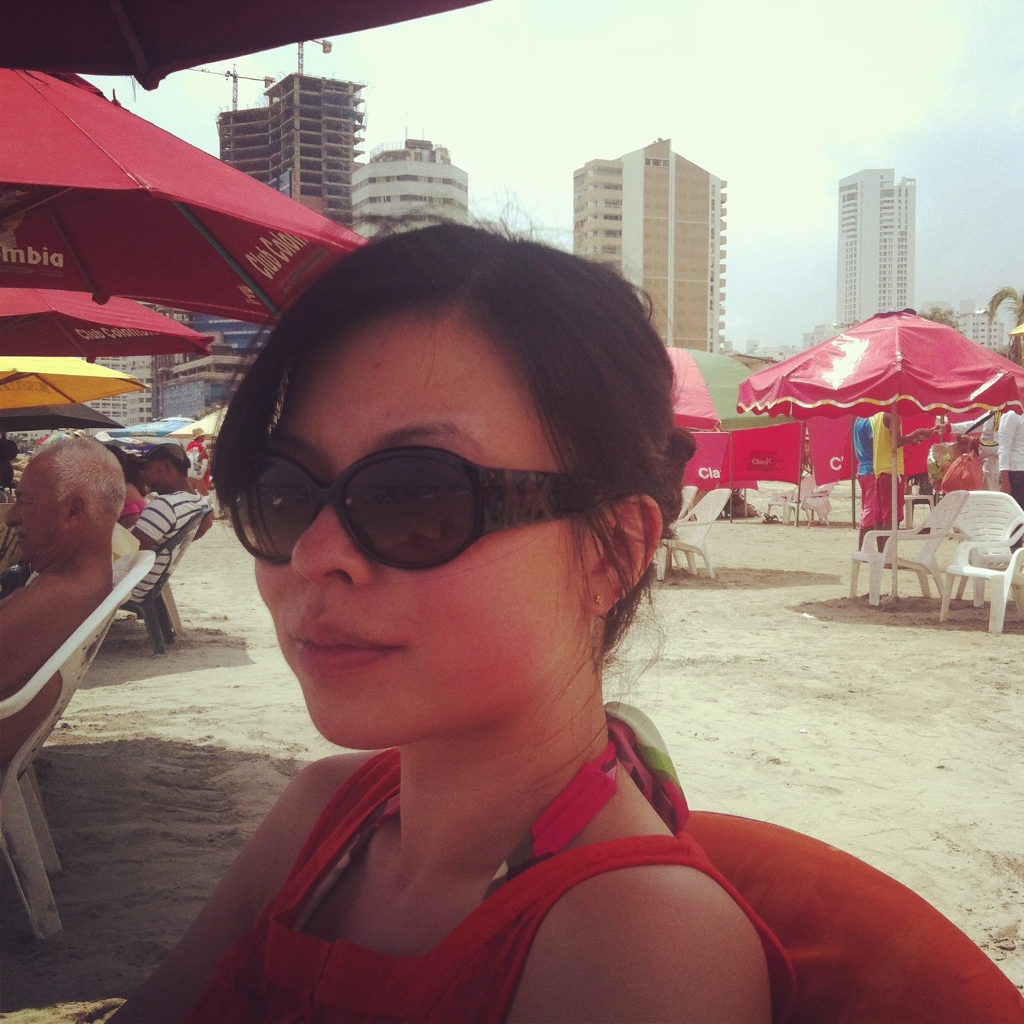
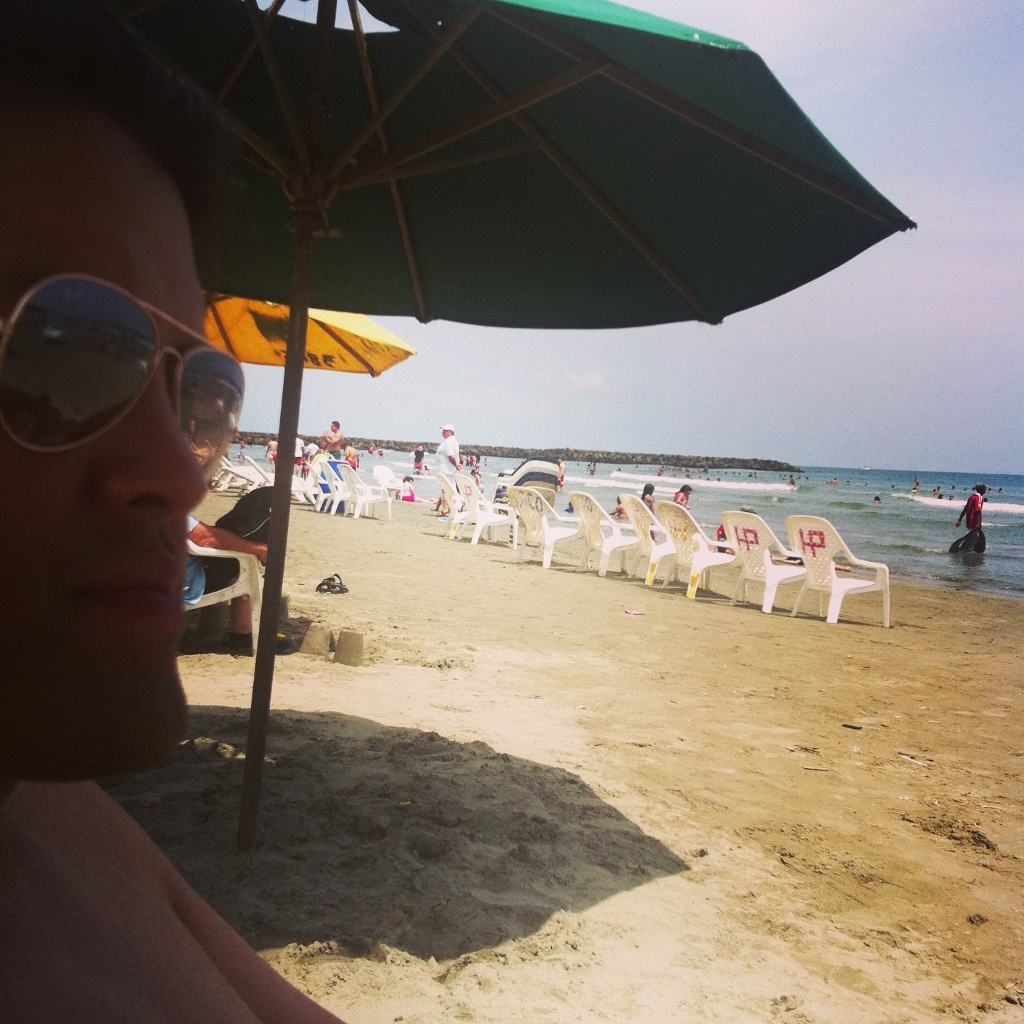
They’d portrayed Bogota as this hot, steamy city. Let me tell you: Hollywood got it all wrong. Bogota is cold! (i.e. an average temperature of about 19°C year-round) They must’ve mixed up their Colombian cities. Perhaps they meant to use Cartagena instead? Because this place is definitely hot and steamy! This is us simmering in the Caribbean heat.

photo f (1024x1024)photo d2 (1024x1024)

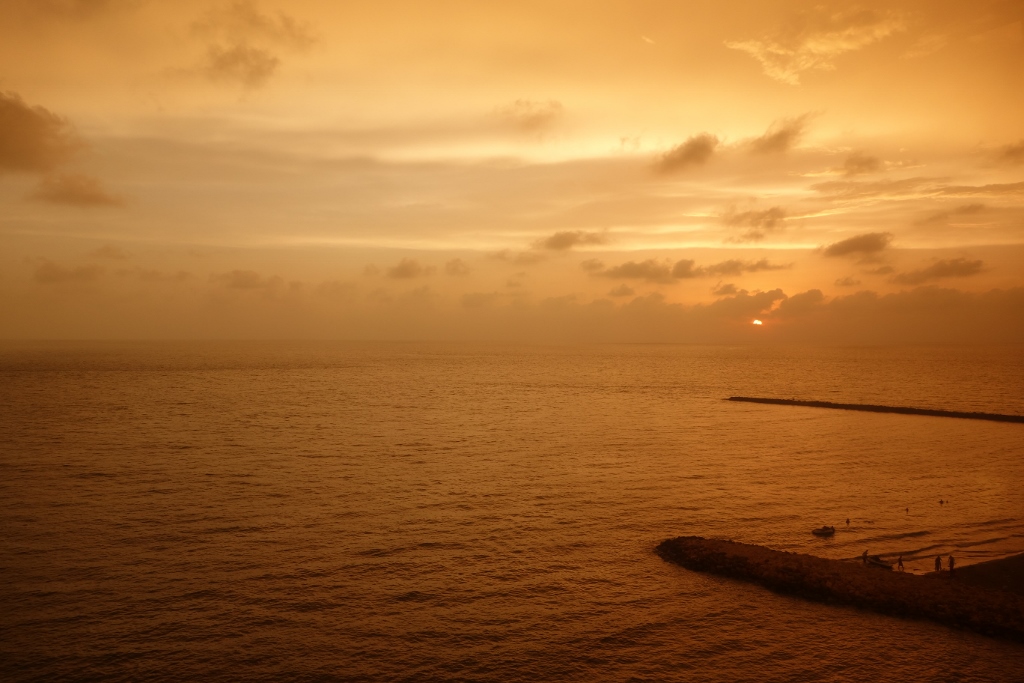
Jason and I are on the northern Caribbean coast of Colombia, in the city of Cartagena. I’ve read mixed reviews about this place, but I personally loved it (once I was able to stop scratching long enough to enjoy the Caribbean heat). The palm trees were beautiful, the beaches were plenty, and we had a front row view of the ocean.

View from our apartment (Cartagena, Colombia)

Beautiful ocean view from our Bocagrande apartment

Before we moved closer to the ocean, we stayed for a few days in the old walled city.

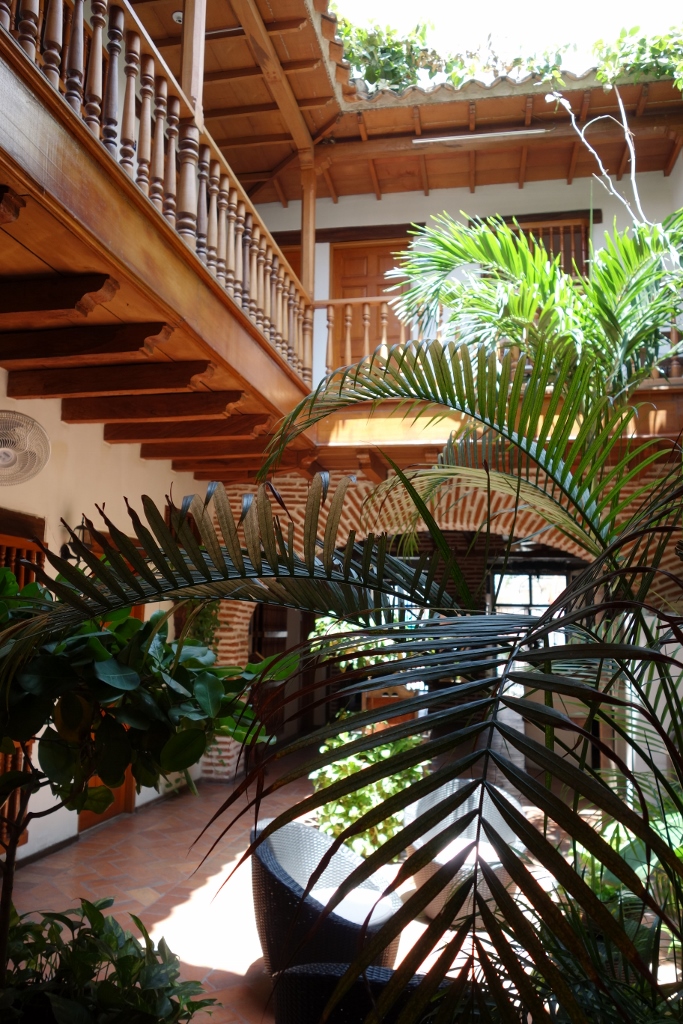
Casa Villa Colonial (Cartagena, Colombia)

Our hostel in Getsemani: Casa Villa Colonial. Beautiful, airy, and bright. I would definitely recommend this place to any traveller staying in Cartagena

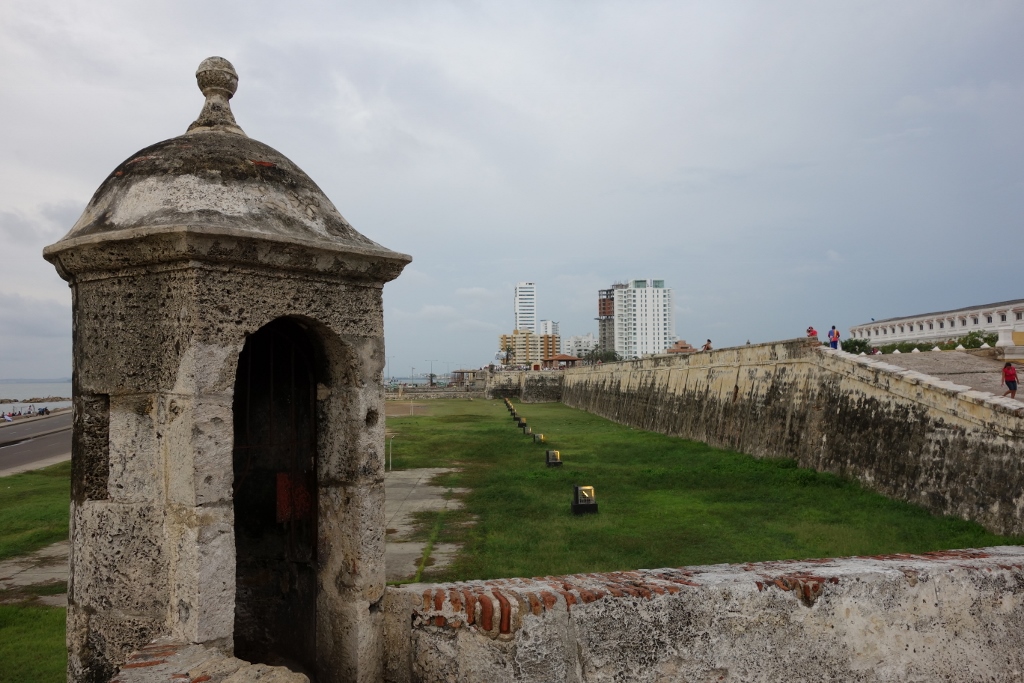
There are three areas within the walled cIty: the beautiful original part of the walled city called Old City, the newer part called San Diego, and the grittier, sketchier area of Getsmani, where the majority of the hostels were.

Old City (Cartagena, Colombia)

The ramparts that surround the Old City in Cartagena.

We stayed in Getsemani and fell in love with how it best represented local life in Cartagena. The food was authentic and cheap, music was always blaring at night, and old men sat around watching the pedestrian traffic pass by.

Getsemani (Cartagena, Colombia)

Grittier (but no less beautiful) Getsemani.

When we decided to stay in Cartagena for a little longer, we rented an apartment nearby in Bocagrande, a modern area dotted with high-rise hotels and accommodations for Colombian vacationers.

Bocagrande (Cartagena, Colombia)

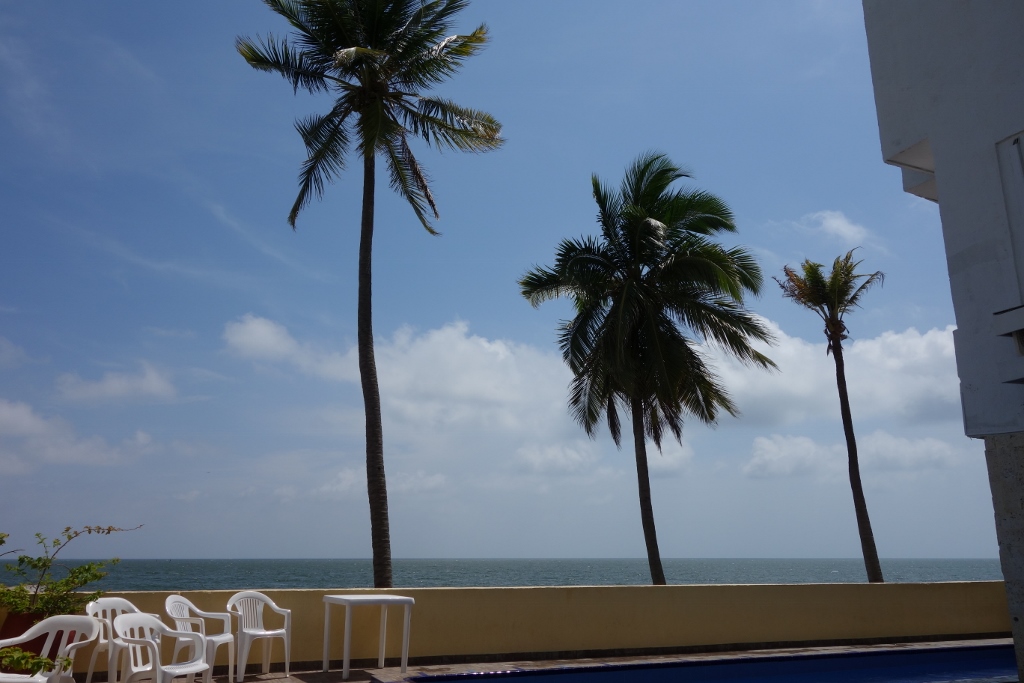
The pool terrace at the apartment we stayed at in Bocagrande

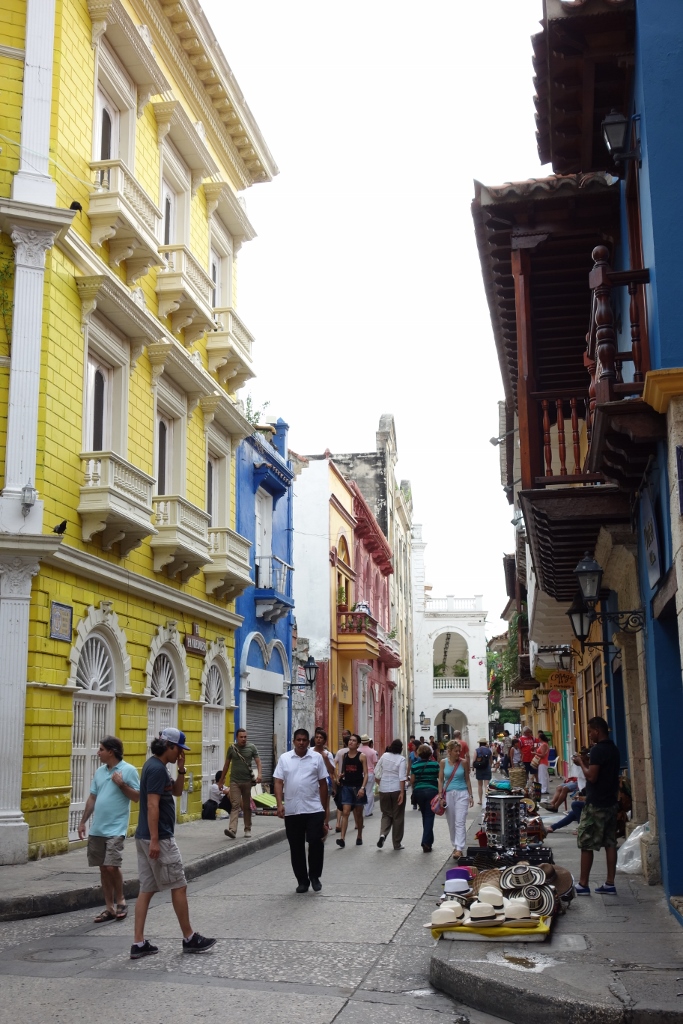
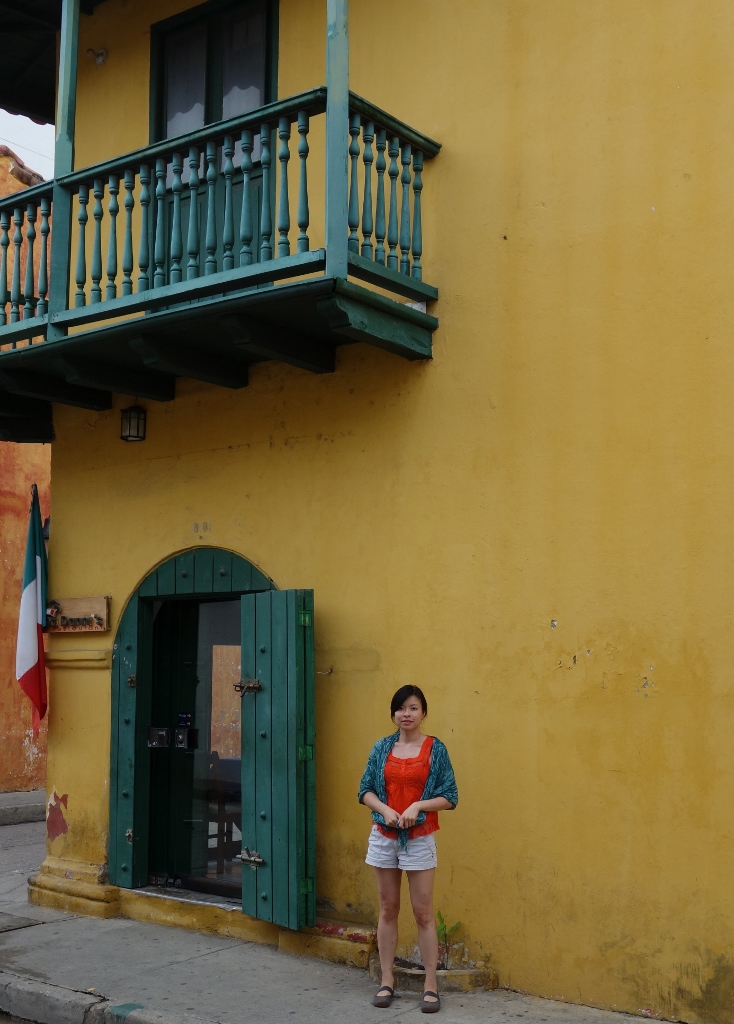
I loved the attractiveness of Cartagena: the colourful Spanish-colonial architecture; the narrow winding stone-paved streets, and the surprise of turning a corner and happening upon yet another one of the city’s many plazas.

DSC00235 (683x1024)DSC00213 (734x1024)

Speaking of surprises and plazas, check out this strange spectacle in Plaza Fernandez de Madrid:

Street performers (Cartagena, Colombia)

Eye-popping tricks by street performers

We were pretty captivated with him until we figured out how was he doing it. Can you figure it out?

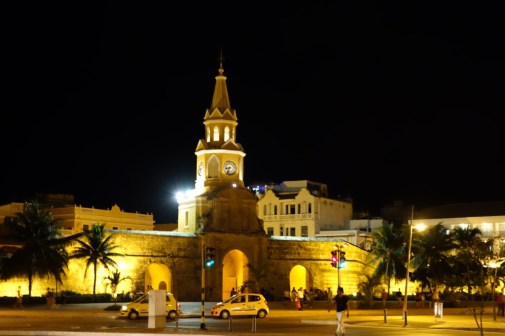
And then after dark, the Old City got even more enchanting. Seriously, this city is like the girls you see roaming the club district in Toronto – gets more beautiful after dark.

Old City (Cartagena, Colombia)

Jason watching people-watching people in the open air cafe

Old City (Cartagena, Colombia)

Old City Cartagena all lit up at night

See? I wasn’t kidding you. She’s pretty gorgeous. Feel free to ask her for her phone number.

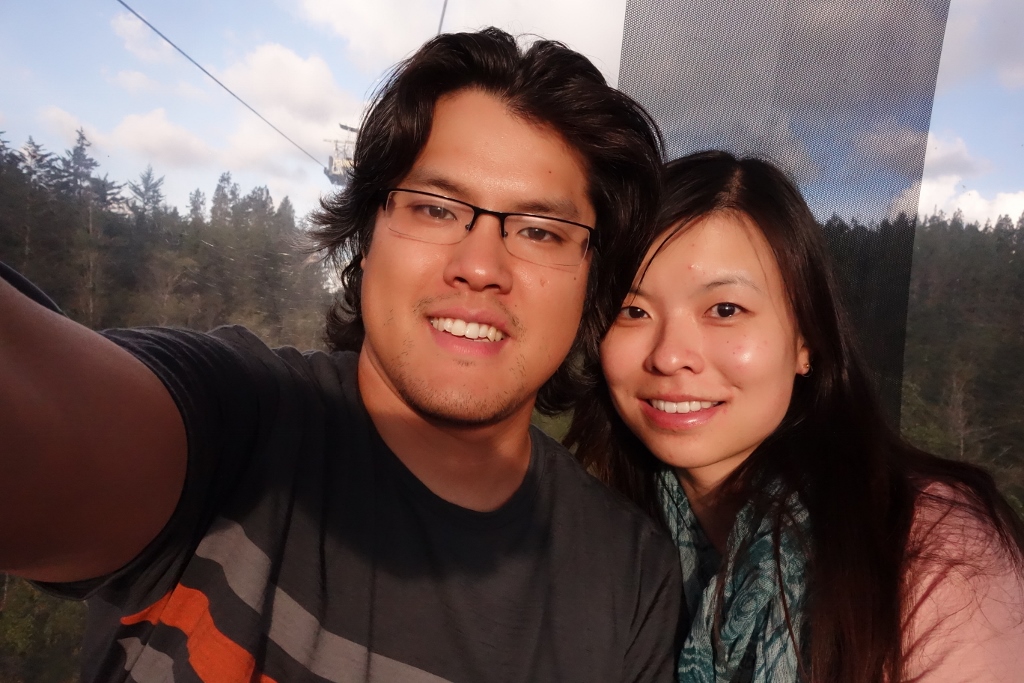
We’re here!

I have to admit, I wasn’t looking forward to our trip. Oh no, I’m not talking about the 6-month adventure we were about to embark on. I’m talking about the 20-hour trip to Bogota. The one where we had to :

  • catch a bus from Toronto to Buffalo at midnight (after cleaning, packing, moving for 16 hours)
  • sleep over at the Buffalo airport (which Jason and I have now pretty much perfected to a T, especially after we slept outside the airport in Saigon, Vietnam on the first night of our honeymoon…but that’s another story..or blog post)
  • catch a flight from Buffalo to Orlando
  • catch a flight from Orlando to Bogota

So you can imagine my relief when I saw this on my airplane seat monitor: We’re finally here!

Bogota, Colombia

We’ve arrived!

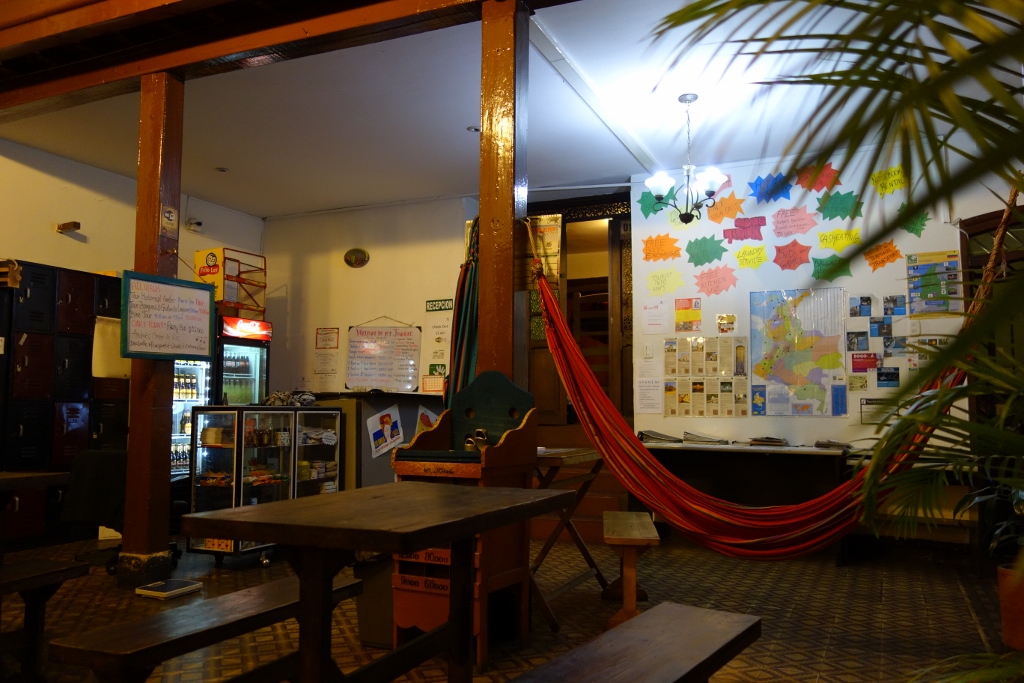
We arrived at our hostel to find a charming little courtyard, replete with colourful hammocks, palm trees, and a fridge stocked full of cold beer.

Our colourful hostel (Bogota, Colombia)

Our colourful hostel in Bogota

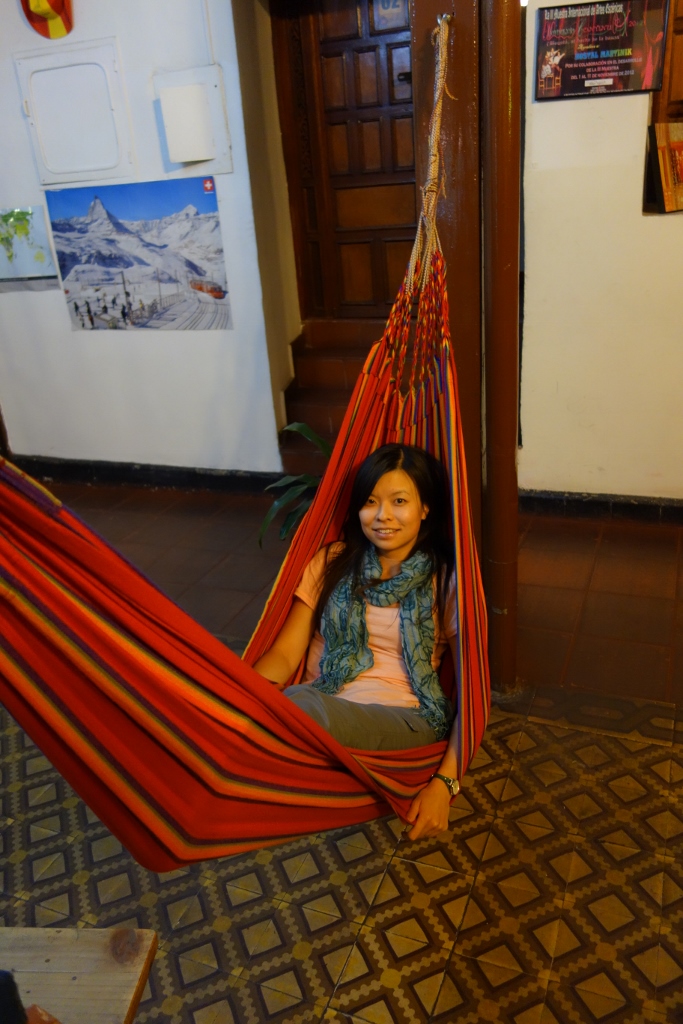
Unfortunately, our actual room was rather bleak and depressing-looking, so I tried my hand at making myself comfortable in the hammock. Hammocks – I have never been able to figure them out. People always look so comfortable lounging in hammocks. So anytime there’s a hammock, I climb in and try to find a comfortable spot. I’ve never been successful in my attempts to comfortably lounge in a hammock…this time was no different (as you can tell from my awkward pose..and awkward smile).

Jenn vs Hammock

Jenn vs. hammock

After our brief, little struggle, the hammock and I called a truce and I trudged back up to our bleak little room. Oh hammock, we will meet again another day.