Eating: Nazca Street Food

I would never have guessed that Nazca would be such a good street food destination. Jason and I were reminiscing about our honeymoon in Vietnam and how the street food there was so delicious.  We missed being able to walk down a street, stop at a stall to gawk at what the locals were eating, and then order whatever they were having. Colombia and northern Peru didn’t have much of a street food scene – which happens to be our favourite way to sample local food.

However, when the sun dipped below the horizon in Nazca, street food vendors started coming out of nowhere and setting up shop along the main streets (much to our surprise and delight!).

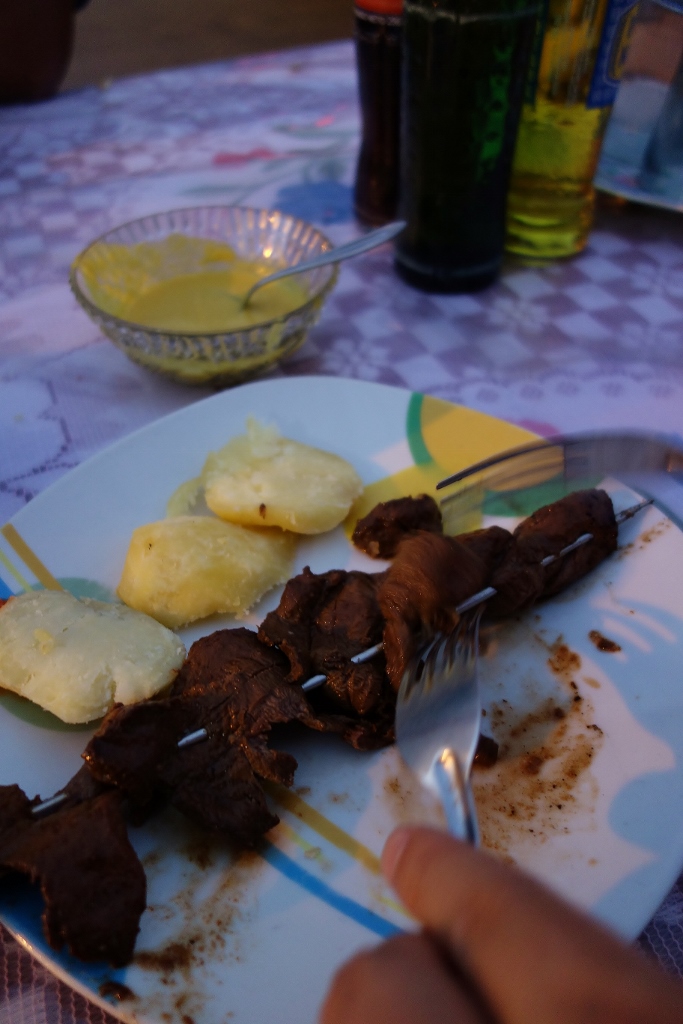
The first vendor we saw setting up at twilight was a woman who was grilling mystery meat.  We ordered a skewer and was surprised by how delicious it was.  Super tender and tasty! Yum!

Nazca Street Food

Grilled mystery meat in Nazca

We followed our noses down the street (FYI, all the street vendors were within a 2-block radius of each other), and discovered a guy grilling more mystery meat.  This time, the street vendor was serving miscellaneous grilled chicken parts (i.e. liver, feet, hearts, etc).  It was really tasty, but Jason wasn’t too fond of the crunchiness of the cartilage. I thought it was delicious though.

Grilled chicken everything (Nazca, Peru)

Grilled chicken everything (feet, cartilege, heart, kidneys)

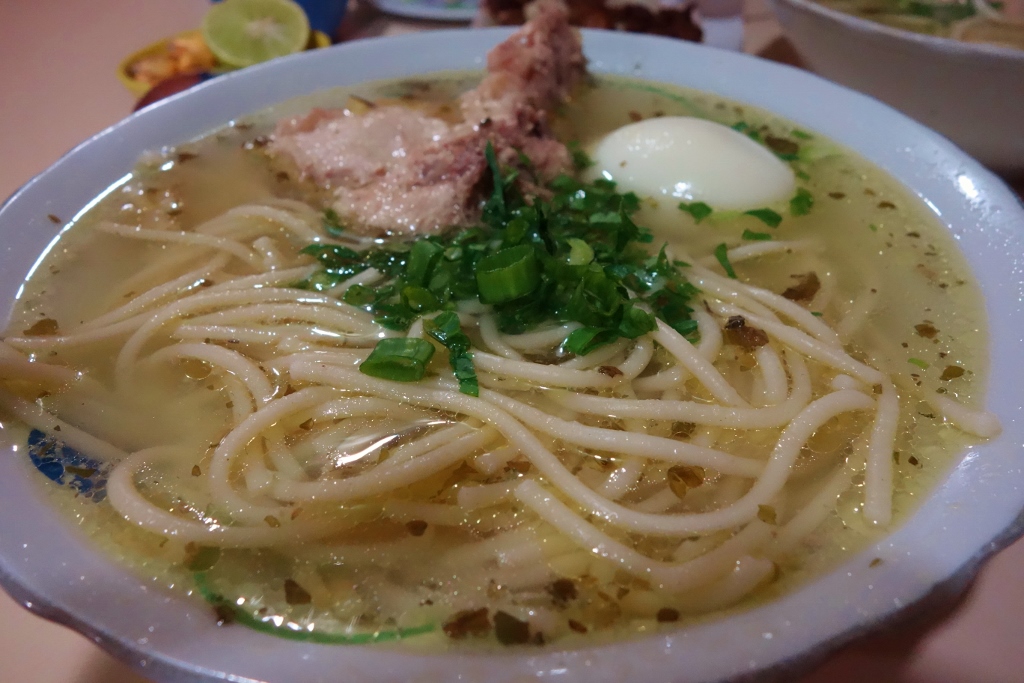
My favourite street food find was a Chicken Noodle Soup (Caldo de Gallina).  Her stall was packed with people. so we knew that was a good sign.  She served the huge bowls of noodle, chicken, and hard-boiled egg in a delicious herbed broth, along with a bowl of maize kernels, and homemade hot sauce.  At this point in our travels, I was really craving noodle soup like crazy (noodle soup being one of my favourite meals).  And this really hit the spot.  Really reminded me of Vietnamese street food actually.  Steamy, delicious goodness.

Caldo de Gallina - Nazca, Peru

Caldo de Gallina – Chicken noodle soup

Our last street food stop was a woman who had set up a deep-fryer on the street.  She was deep-frying rings of dough into the lightest, fluffy, homemade doughnuts.  She included a packet of honey, which you drizzled over top of the crispy delights.  She was even cool enough to pose for my picture 🙂

Homemade donut (Nazca, Peru)

The woman made the most addictive donuts right on the street. Fluffy, light, and crispy on the outside.


The amazing street food experience in Nazca definitely upped the overall appeal of this sunbaked little town.

Eating (and Experiencing): Lima

We were advised by my friend’s co-worker (who happens to be Peruvian) to not spend any time or money on Lima, the capital of Peru.

Peruvian Andes

Our first glimpse of Peru, flying over the dry Andean mountain ranges

In the winter months, Lima is a pretty depressing city to be in. It’s a city of grey – crumbling concrete buildings in the poorer areas, a sky that is terminally grey and overcast, even the ocean looks grey. It’s damp and cold from May until the end of November. SAD (Seasonal Affective Disorder) is a big problem here during the constant cloud and fog of winter.

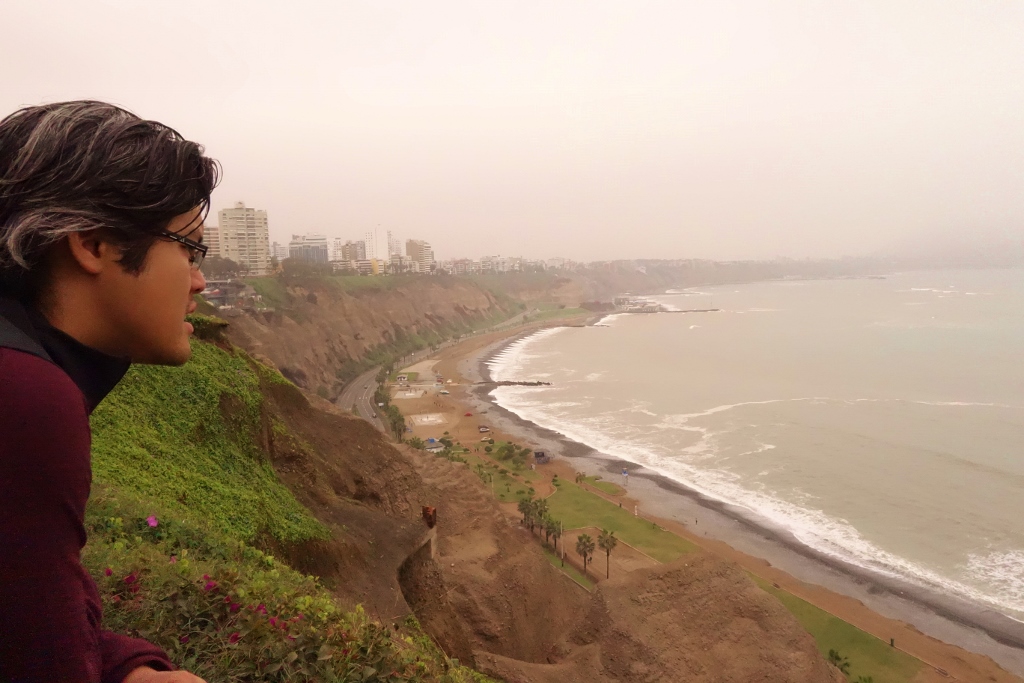
We were also warned that Lima can be dangerous – with pockets of poverty so extreme that those areas have been designated as no-go zones for tourists and travellers. But after looking over our shoulders and mentally preparing for armed muggings for almost a month in Colombia, we felt like Lima was a breath of fresh air. We spent a lot more time out and about after dark, which we wouldn’t really dare to do in the bigger cities of Colombia. It helped that we stayed in the more modern and cleaner neighbourhood of Miraflores, which is known for its great restaurants and beautiful seaside bluffs.
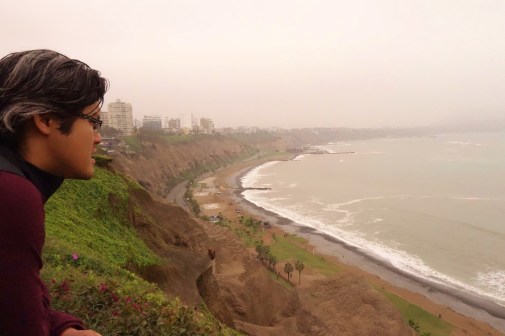
The bluffs at Miraflores

The impressive bluffs in Miraflores

Winding paths and beautiful parks along the bluffs in Miraflores

Winding paths and beautiful parks lined the bluffs in Miraflores. The government is investing a lot into beautifying this part of the city.

One of the biggest reasons for spending a few days in Lima is the food. We’ve read the Peruvian cuisine is amazingly diverse, using its indigenous cooking as a base and drawing from Spanish, Chinese, Italian, African, and Japanese influences. On top of that, Lima is said to have world-class food. So after the disappointment of Colombian food, we were ready for what we hoped would be an ecstatic food experience.

And we were not disappointed. Food in Lima was everything we had hoped for.

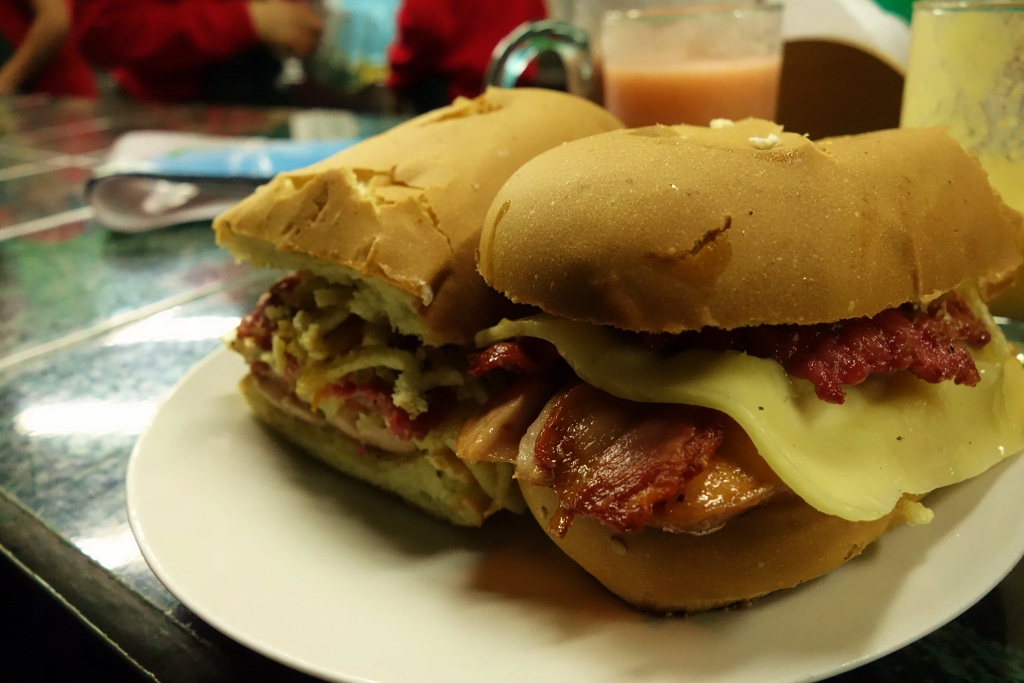
Our first stop was ‘El Enano’, a very poplar, open-air sandwich restaurant that served delicious, greasy sandwiches. They also had a huge selection of fresh fruit juice concoctions served in huge glass pitchers to wash down the greasy sandwiches. We both ordered the “El Enano” sandwich – a meatlover’s delight. Ham, bacon, pork sausage, and melted cheese sandwiched between toasted hotdog buns.
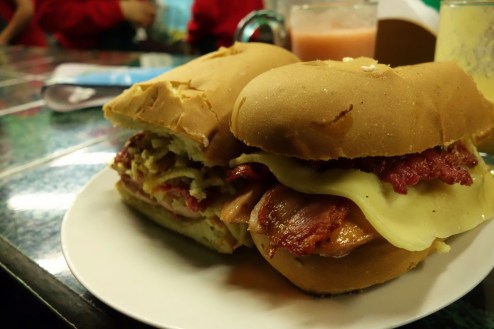
The "El Enano" sandwich

Heart attack on a bun

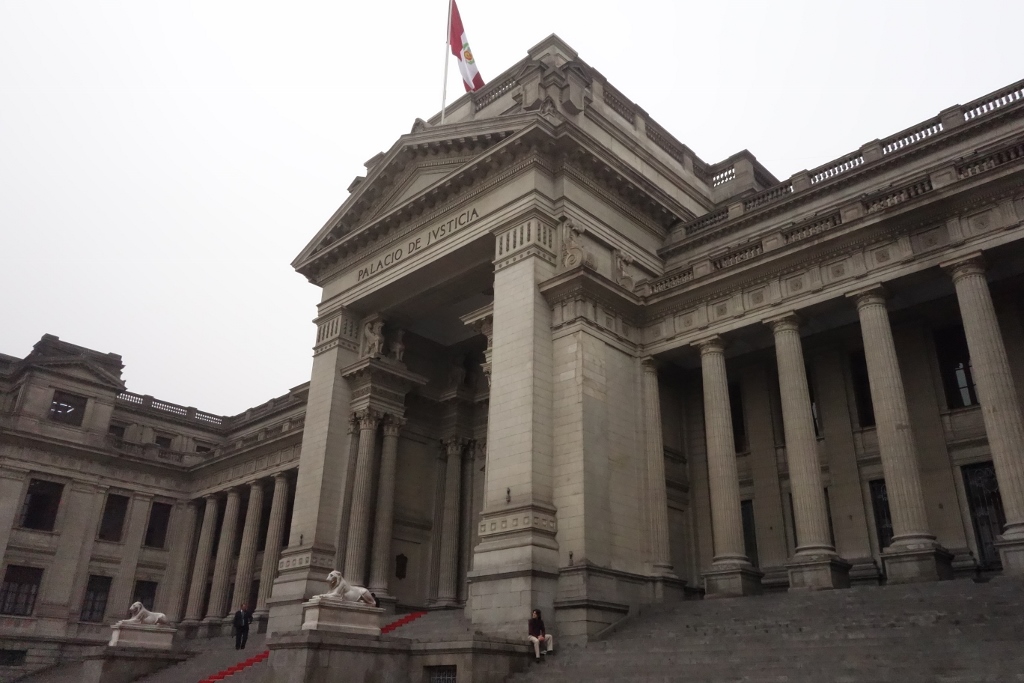
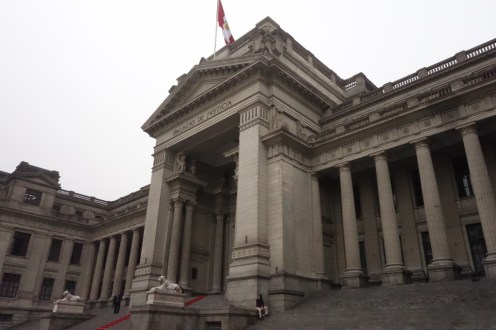
The next day, we took the modern Metropolitano bus service (a quick, easy, and safer way to get around Lima) up to the sketchier area of Central Lima.
DSC00829 (1024x683)

Most buildings in Central Lima were grey – to match the whole grey vibe of Lima in the winter.

There’s a huge complex of individual clothing and shoe stalls called Polvos Azules (just southeast of Estacion Central). You can find cheap, branded clothing here but the area is full of pickpocketers so it’s best to go there earlier in the morning with only the money you plan to spend.

We bumped into an American i-banker, straight out of business school, who was here in Peru for work for a month. He told us about the phenomenon of chifas (Chinese restaurants) that served huge inexpensive portions of Chinese dishes that were similar to those that you’d find in food courts back at home (i.e. Manchu Wok). He joked about how Peruvians rave about chifas and insisted that he had to go and try the food there – but since he’s from San Franciso, he can have Americanized Chinese food at almost every street corner back at home.

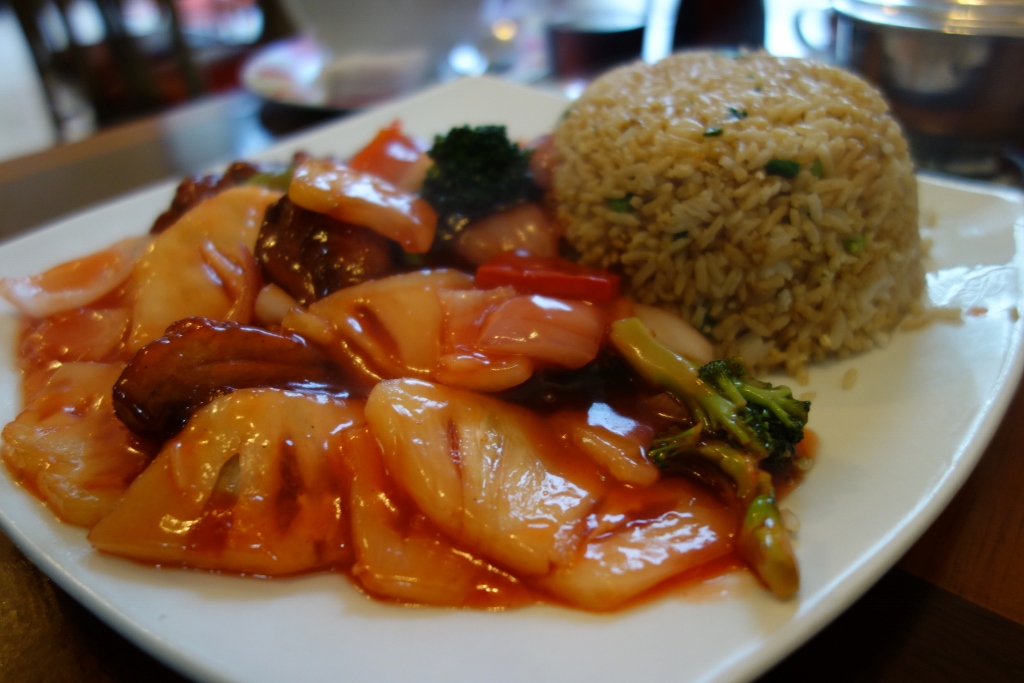
I was craving some familiar flavours, so we decided to try out a chifa. I have to admit, it was pretty good, but it’s hard to go wrong with tamarindo (Peruvian version of sweet-and-sour) pork and chicken fried rice 🙂
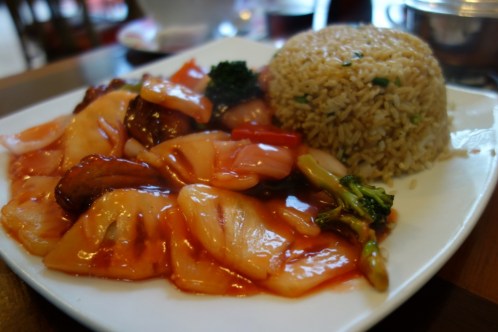
Chifa (Lima, Peru)

Chifa (or Peruvian version of Chinese food) in Lima. Sweet & sour pork and fried rice.

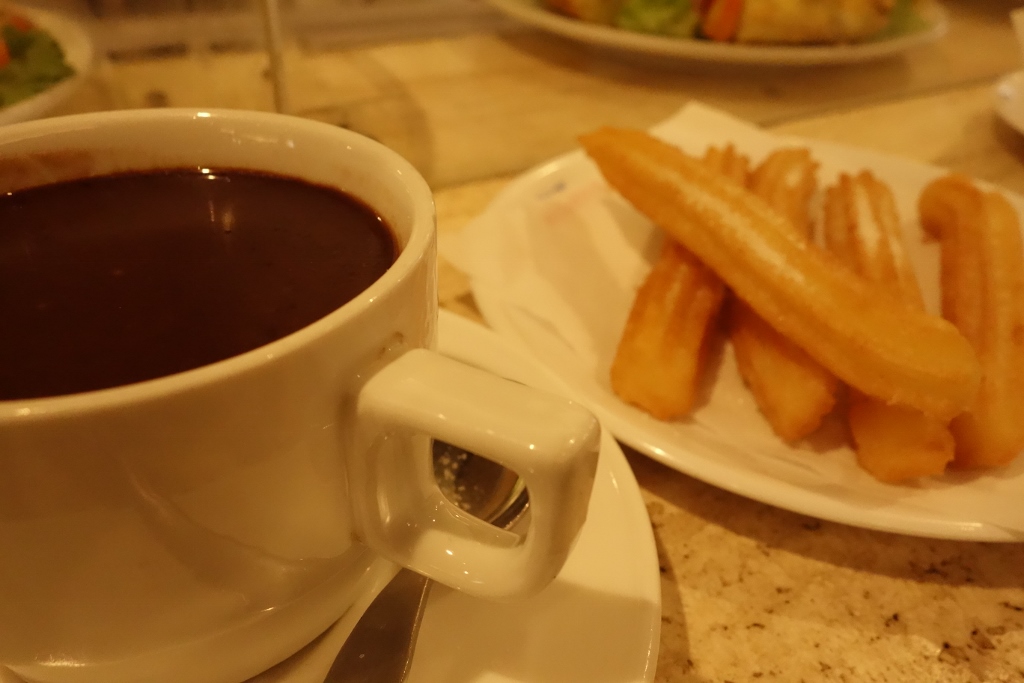
The next day, we decided to make our way over to Barranco, an artsy and Bohemian neighbourhood in Lima. It took us awhile to get there because we kept stopping at cafes along the way. We tried some delicious churros with a side of hot chocolate for dipping.
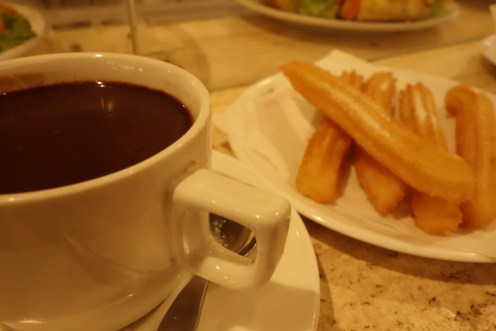
DSC00818 (1024x683)

Crispy churros and hot chocolate. Delicious, crispy, and sweet bites of heaven.

One of our favourite meals so far in Peru has been in a small open-aired ceviche stall, hidden near the back of a little market on Union street in Barranco. This mom and pop eatery was a hidden gem – very well hidden actually.
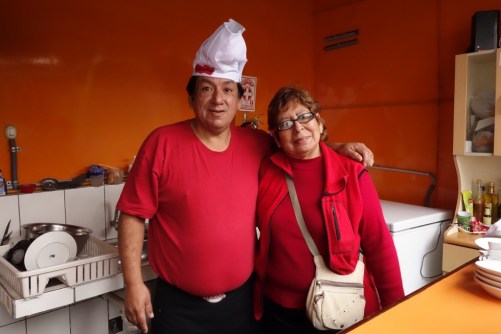
Husband & wife ceviche chef team (Lima, Peru)

The wonderful husband & wife chef team that made the best ceviche meal I had in Peru

The friendly owners greeted us warmly and right away offered us pisco sours (Peru is very proud of their national beverage, pisco – a potent grape brandy)

DSC00832 (1024x683)

Pisco Sour – made with pisco, lime juice, egg whites, ice, and sugar. Very delicious and surprisingly strong cocktail.

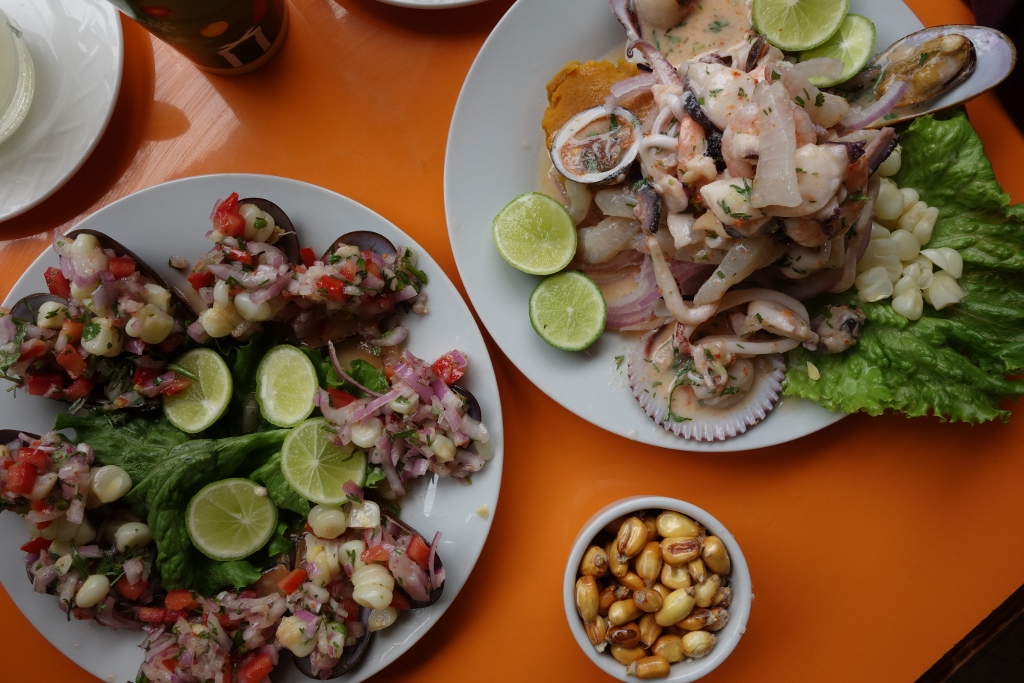
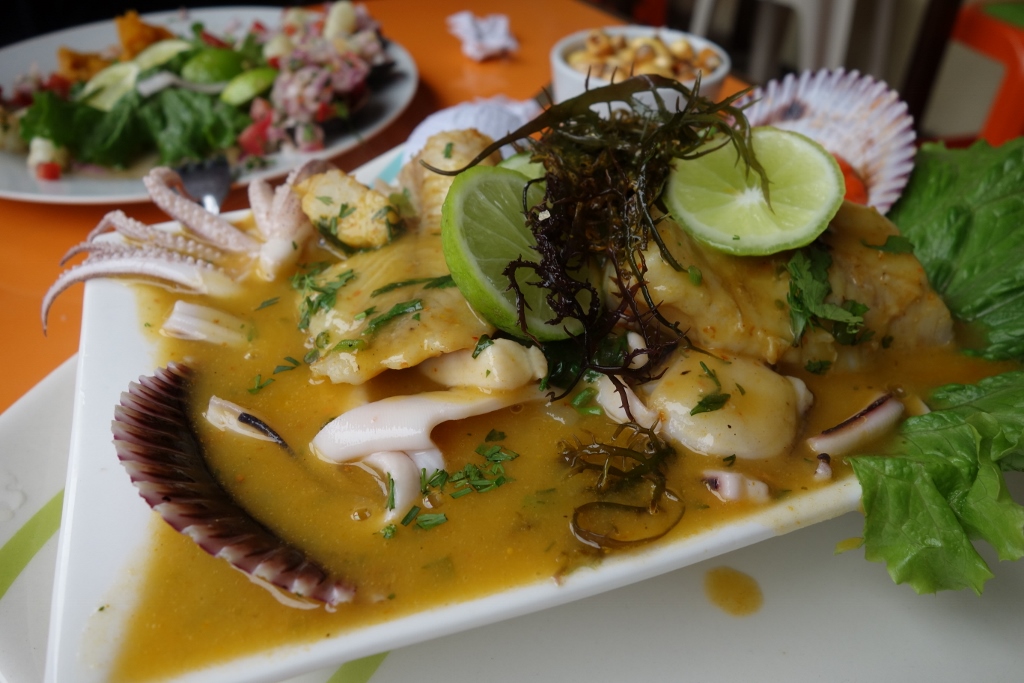
Lima, being right on the edge of the Pacific, is a great place for fresh ceviche. And unlike La Cevecheria in Cartagena, Colombia, this place definitely did not disappoint. It was probably the best ceviche I’ve ever had in my life. It was so fresh and tasty, with just enough tartness from the lime juice, and heat from the chilies.
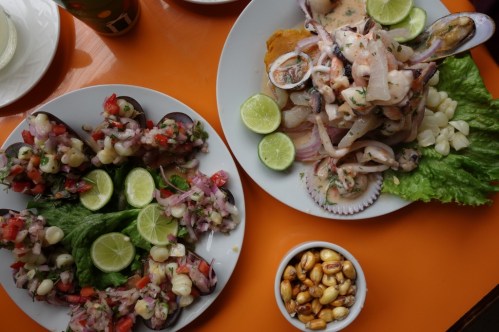
Ceviche stall food (Lima, Peru)

The best ceviche I had in Peru. The flavours were sooo intense!

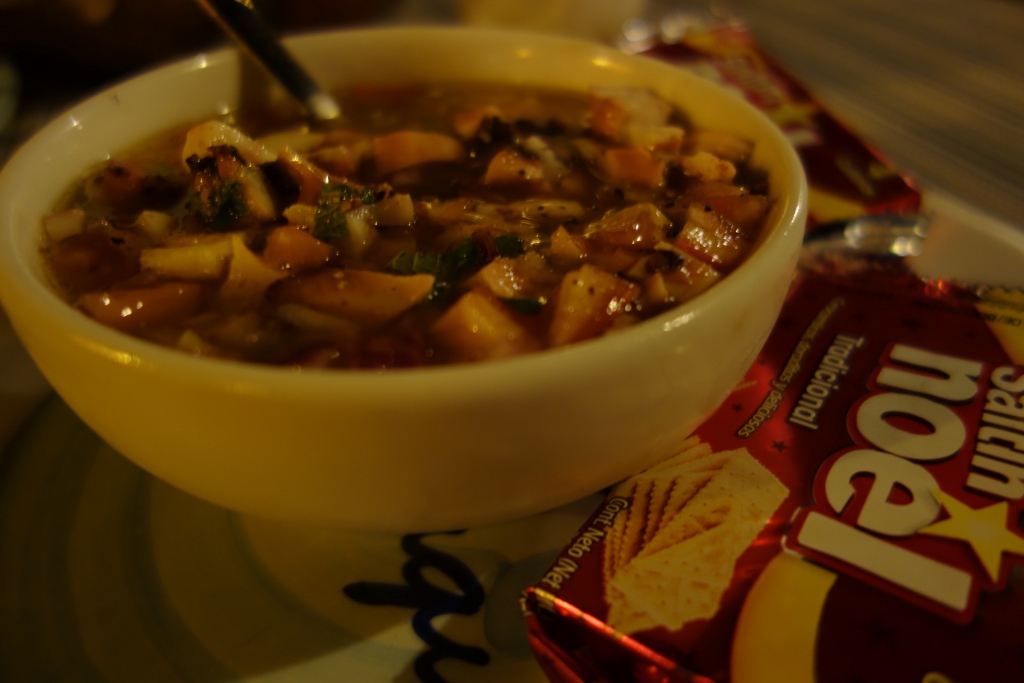
We also ordered the mixed seafood soup. Wow, flavour explosion!
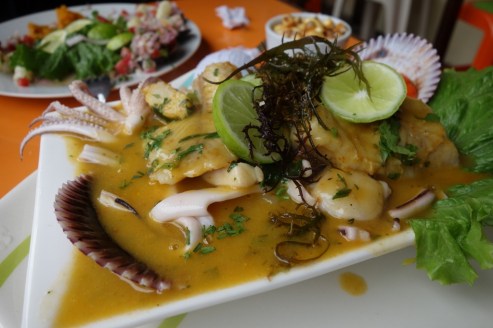
Seafood stew (Lima, Peru)

Savoury and tasty seafood stew. SO good.

If our first stop in Peru has been this delicious, I am anxiously awaiting the gastronomical delights the rest of the country has to offer. Stay tuned!
Eating: Colombia

Introducing the ‘Eating’ series! All ‘Eating’ posts will be wholly devoted to foods and drinks from our travels. Yum!

Jason and I love trying out local dishes and eating new foods when we travel (one of the reasons our travel blog is named Travels of Yum), but Colombian food isn’t really anything to write home about. (Which is a little ironic since, technically, I am kind of writing home about it in this blog post)

Colombian food is very meat and starch-heavy. Jason LOVES meat but I prefer lighter fare. Also Colombians love to fry everything, which is delicious occasionally but when you have your fifth deep-fried ‘some sort of meat encased in a ball of corn flour’, you start craving a stalk of celery.

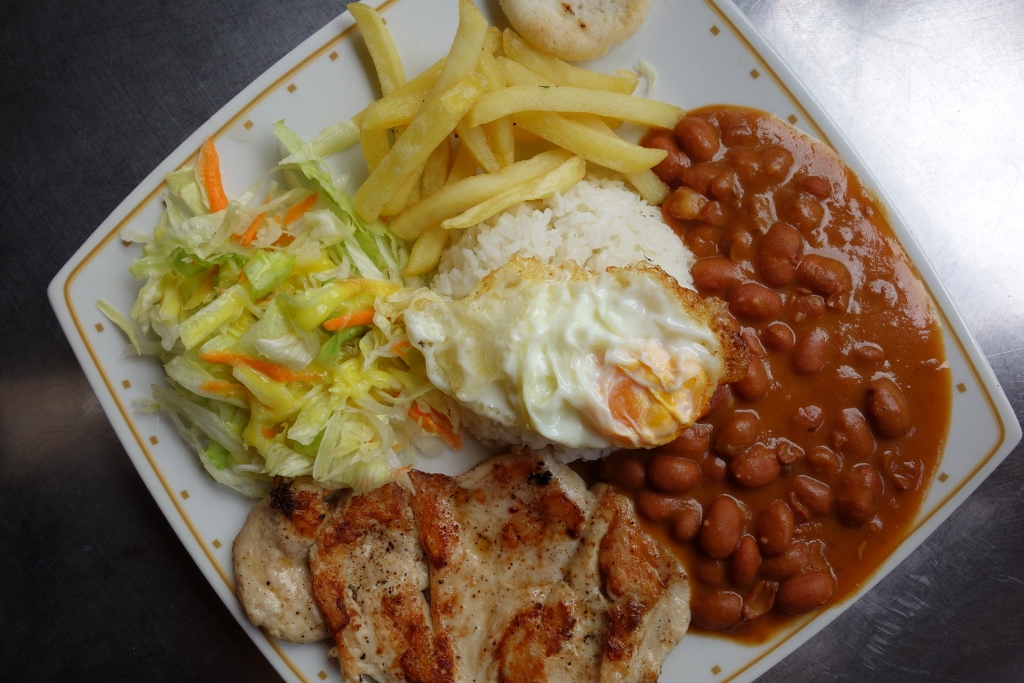
Typical Colombian dish

Typical Colombian dish: a platter consisting of rice, slaw, fried plantain, beans, and then either chicken, pork chop, or grilled steak. It was tasty but lacked a little variety. (Taken in Cartagena)

Typical Colombian dish

Same traditional Colombian dish – different meat. (Taken in Medellin)

Something we both agreed on is the flavour of Colombian food – or maybe lack thereof. We’re used to the flavour explosion of Korean kalbi, or the subtle hints of fresh herbs in Vietnamese pho, or oregano-infused aroma of fresh Italian tomato sauce. In comparison, Colombian food is a little one-dimensional. Locals are always sprinkling salt, shaking pepper, squeezing lime or squirting hot sauce on everything to give it some sort of kick.

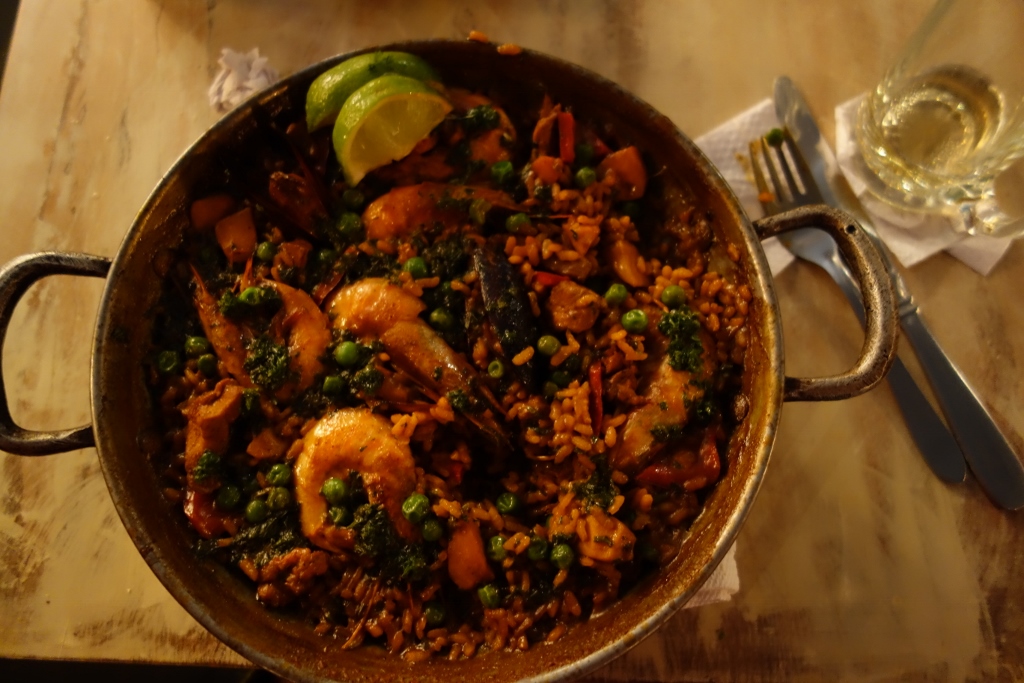
After two weeks in Colombia and in search of something different, I tried a seafood paella in Cartagena. Cartagena is on the coast and I thought the Spanish seafood dish would be a good choice. Unfortunately, it wasn’t prepared very well (rice was overcooked and it was too salty.

Seafood paella (Cartagena, Colombia)

Looked good…but was a little salty and overcooked.

While on the coast in Cartagena, we also tried ceviche (fresh raw seafood marinated or cured in lime juice and seasoned with chili peppers). We visited a place called La Cevicheria.

La Cevicheria in Cartagena, Colombia

A bowl of octupus ceviche in Cartagena

Apparently Anthony Bourdain had visited this place on his show No Reservations. I’m not sure why, as we found the ceviche very sub par – it was overpoweringly tart and overpriced. I had the octopus ceviche and Jason had the mixed seafood ceviche. Jason’s was mildly better because of the variety in texture.

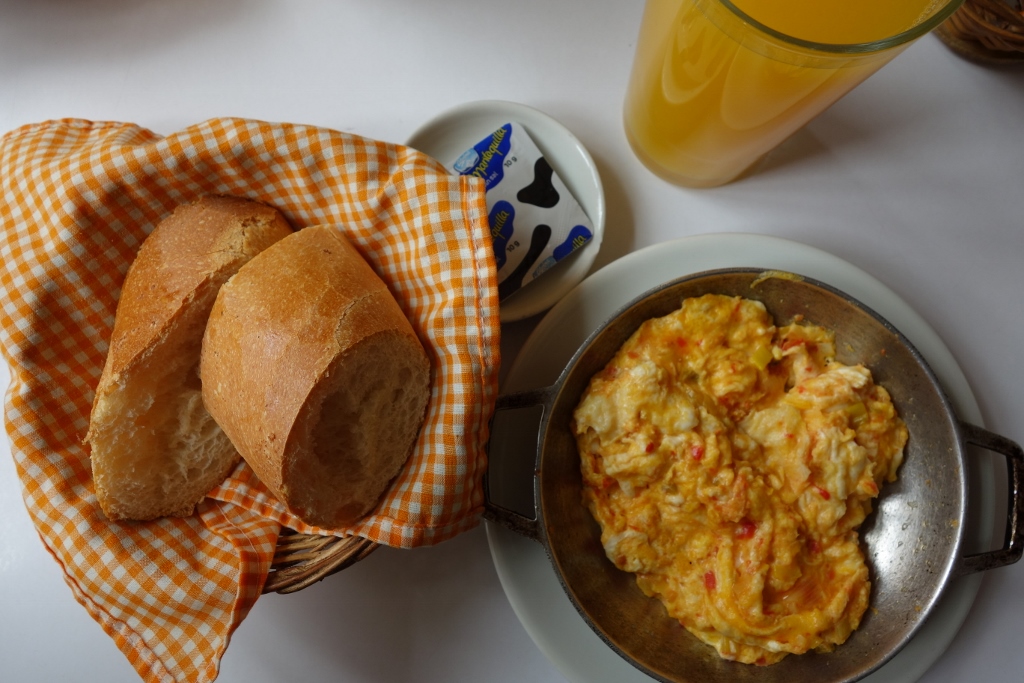
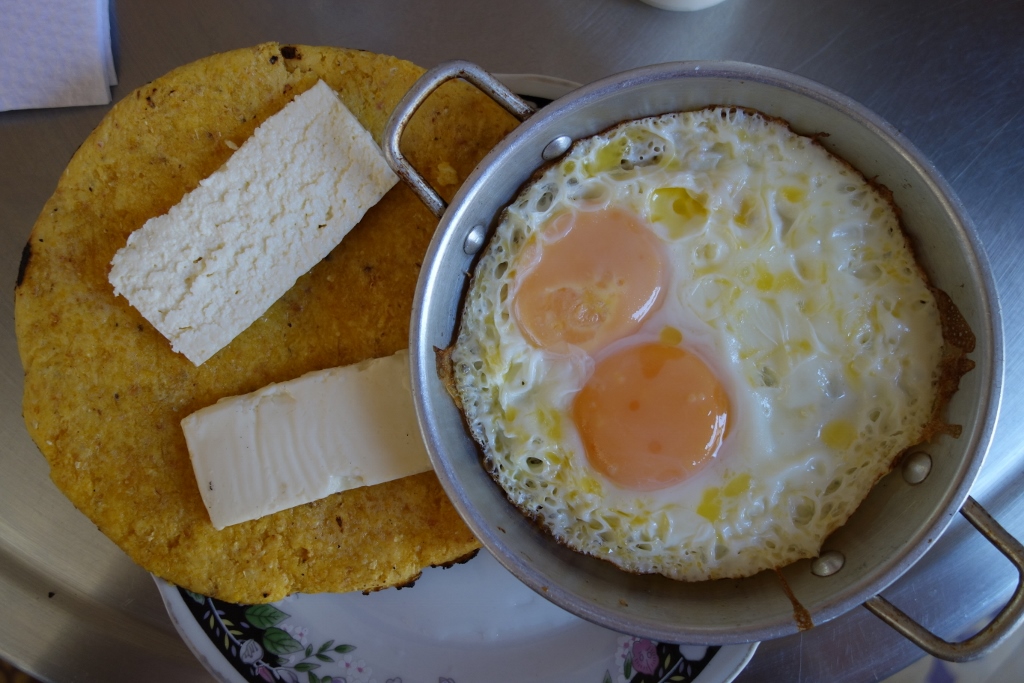
Luckily, breakfasts were pretty consistently delicious. Fresh baguette served with huevos pericos (scrambled eggs with onion and tomatoes) or arepa (fried maize pancake) served with fried eggs, drizzled with butter and sometime served with a local cheese that’s really similar to feta.

Huevos pericos (Bogota, Colombia)

Huevos pericos and fresh baguette

Delicious breakfast (Jerico, Colombia)

Arepa with cheese and fried eggs (one of my favourite breakfast dishes!)

One thing Colombia does really well is their soups and stews. I’ve posted this photo before but I’ll post it again since it was so good. Their fish soups, pureed vegetable soups, chicken soups are so good! Add a splash of lime and it’s perfect.

Authentic fish stew (Medellin, Colombia)

Don’t miss the soups and stews in Colombia!

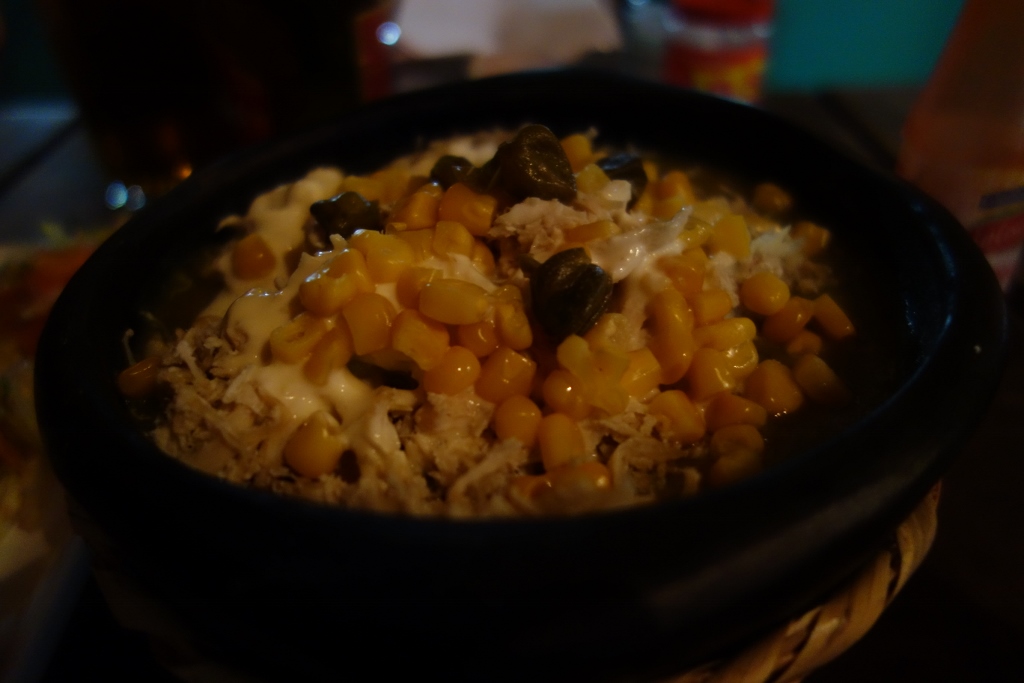
Supposedly, one of Colombia’s tastiest dishes is the ajiaco – a very thick chicken stew that’s chock full of vegetables, maize, potatoes, cream, and capers. I only say ‘supposedly’ because I don’t think the version we tried was that great. It was a little too thick in consistency, almost like I was eating a bowl of really thick chicken-flavoured mashed potatoes. We would’ve given it another chance but we ran out of time in Colombia.

Ajiaco (Jardin, Colombia)

Ajiaco – A popular Columbian stew

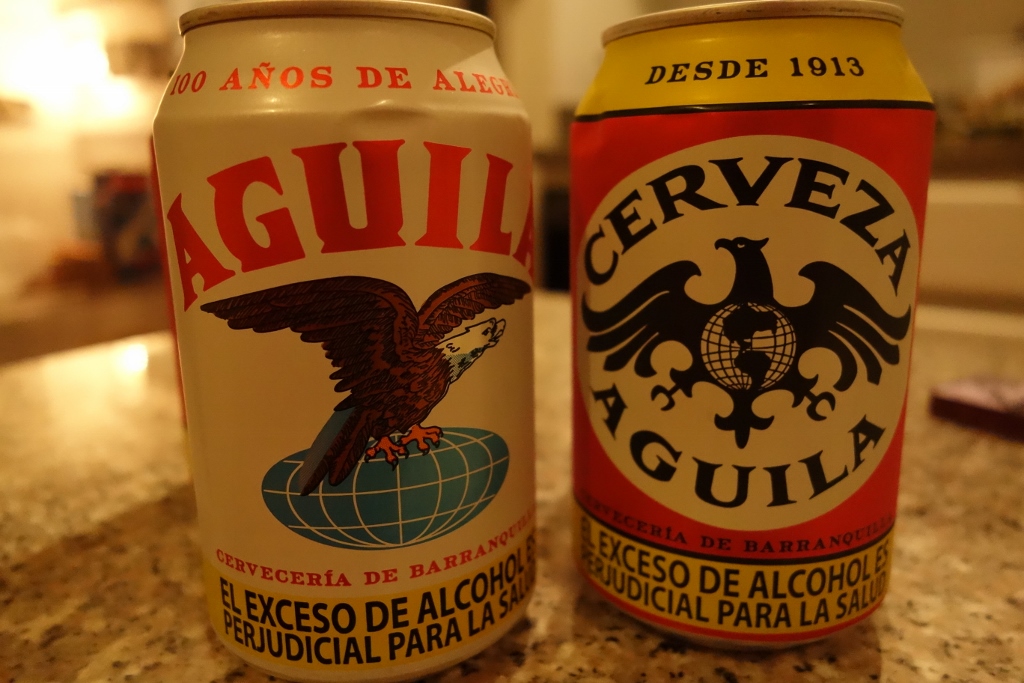
Colombia also has some amazing exotic fruits (guanabana, mora, etc), so they have delicious fresh jugos (or juices) everywhere. Definitely not something to miss! No pictures to post though, since I always forgot to snap a picture before gulping down the deliciousness. Here’s a picture of Colombian beer though (which was also pretty good) 🙂

Colombian beers

Cool graphic beer logos.

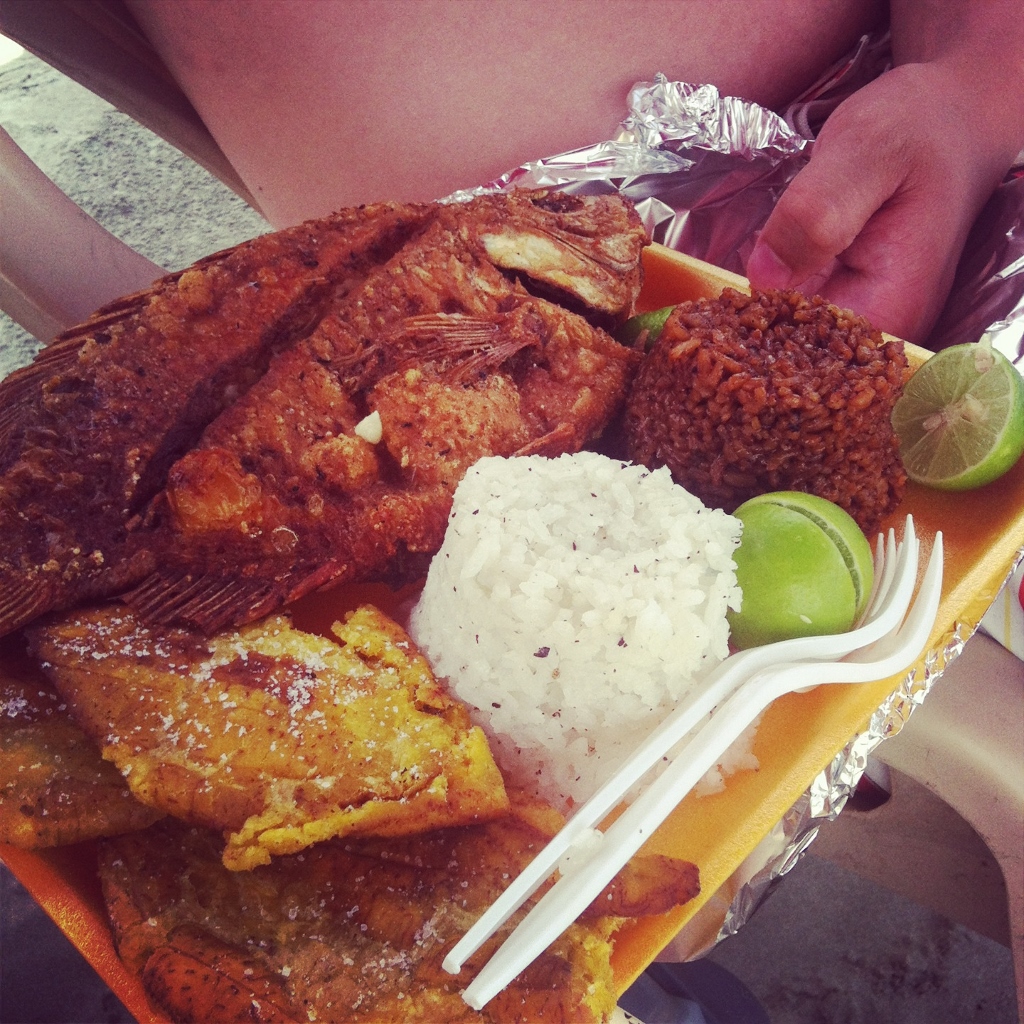
The highlight of the food we had in Colombia was definitely the fish in Cartagena. They brought fresh fish to us while we lounged on the beach, so that we can select one we liked (we chose the Red Snapper) and they fried it up for us and served it with coconut rice. Absolutely amazing.

Deep fried red snapper (Cartagena, Colombia)

Fresh, deep-fried red snapper served right on the beach

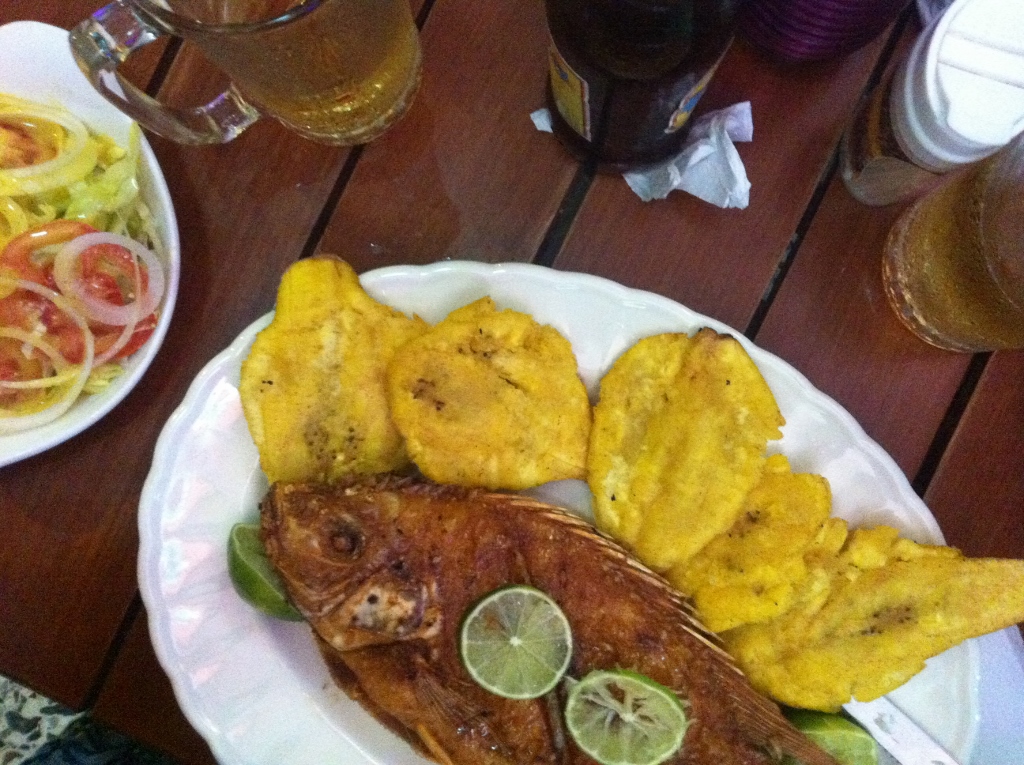
I couldn’t get enough of it. I ordered it again for dinner (where I tried the Mojarra). And again for lunch the next day.

Deep-fried Mojarra (Cartagena, Colombia)

Deep-fried Mojarra in Cartagena

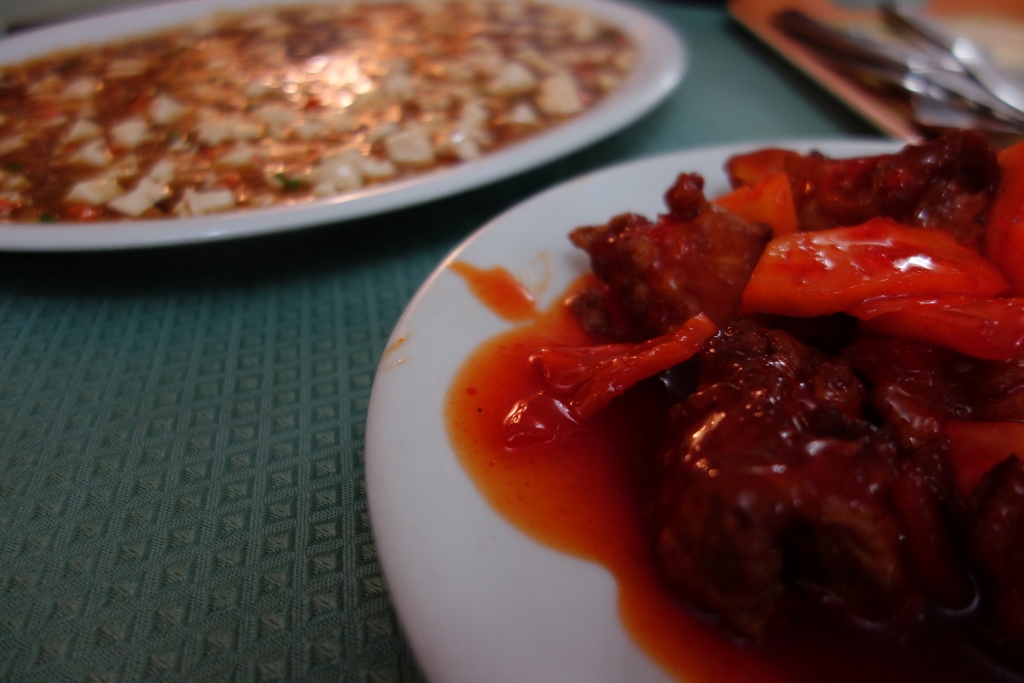
Closing in on 3 weeks in Colombia, we decided to get a taste of something familiar – Chinese food. We found one of the few Chinese restaurant in Medellin. Thanks to my dad insistence that I learn the language of my ancestors (i.e. 3 hours of Chinese school every Saturday all through my grade school years), I was able to converse well enough with the owner of the restaurant to order off the menu. That meant we were able to order some authentic Chinese food, as opposed to the Americanized (Colombianized?) Chinese food that she normally serves.

Chinese food (Medellin, Colombia)

Pretty authentic Chinese food (Ma-Po Tofu and Sweet & Sour Pork)

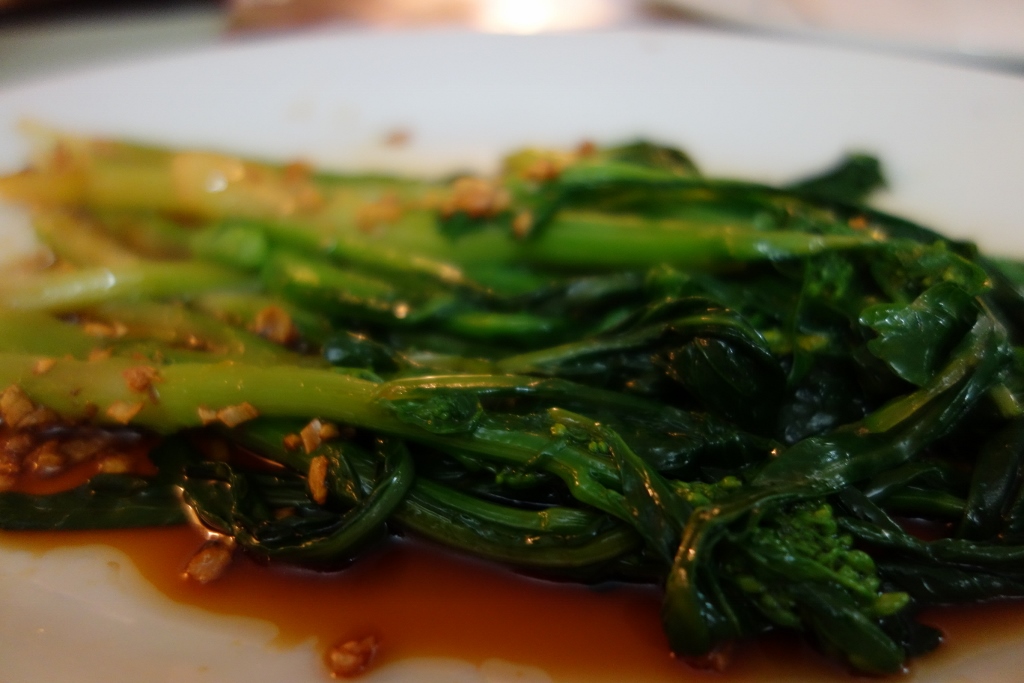
Chinese veggies in soy sauce and garlic (Medellin, Colombia)

After weeks of eating meat and starches, it was nice to have some leafy greens. The owner has to special order in ‘Guy Lian‘. What a treat!

Adios Colombia! The country was beautiful, the people were really friendly, but the food could be better.

El Corral (Worm)Burgers

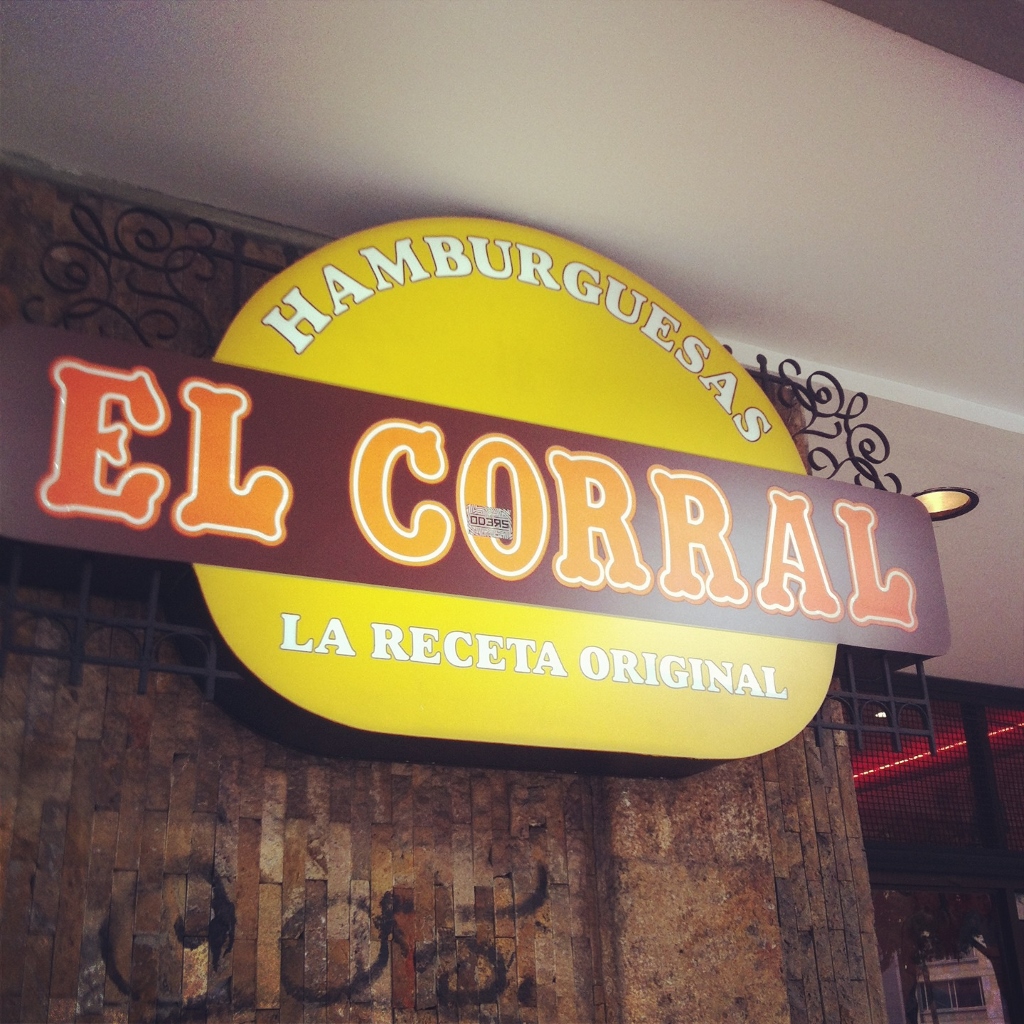
El Corral (Bogota, Colombia)

Mission accepted!

We were instructed to check out El Corral and to report back findings while in Colombia.  El Corral is a restaurant chain in Colombia that’s known for its burgers…..more specifically, its worm burgers!

Rumour has it that its burger patties contain ground up worms. Apparently worms are high in protein and are cheap and effective substitutes for meat.

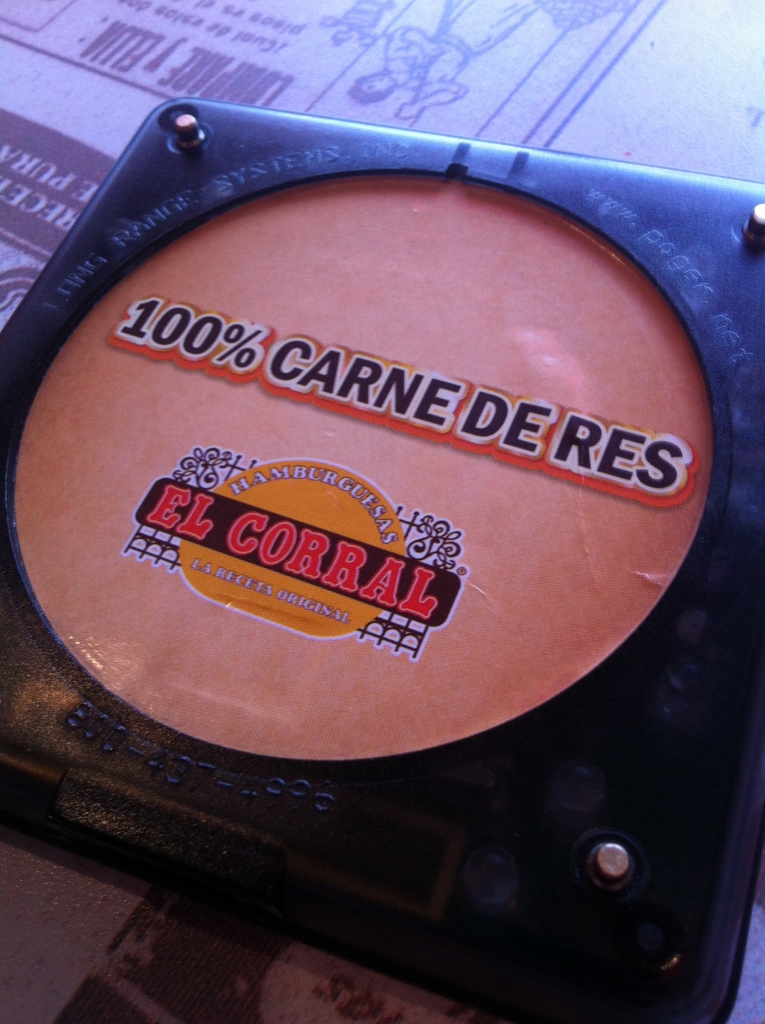
100% beef (Bogota, Colombia)

They DO claim that it’s 100% beef. But then again, so does McDonalds.

Jason and I decided to accept our mission and check out whether the rumour is true.

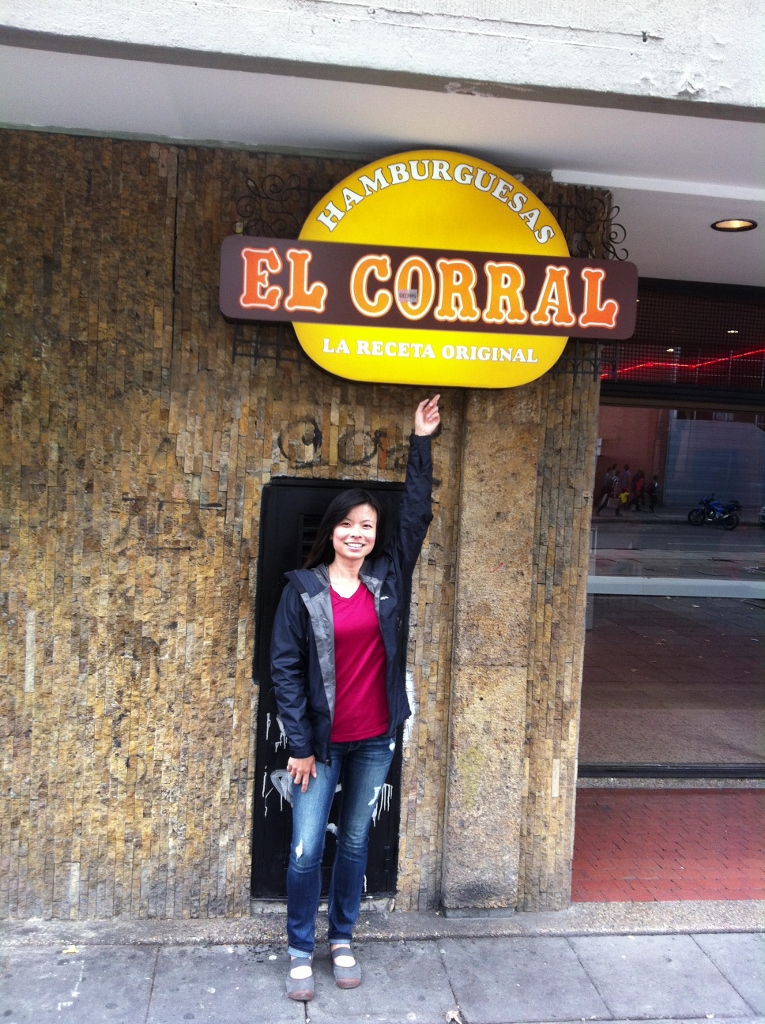
El Corral (Bogota, Colombia)

About to embark on our El Corral mission

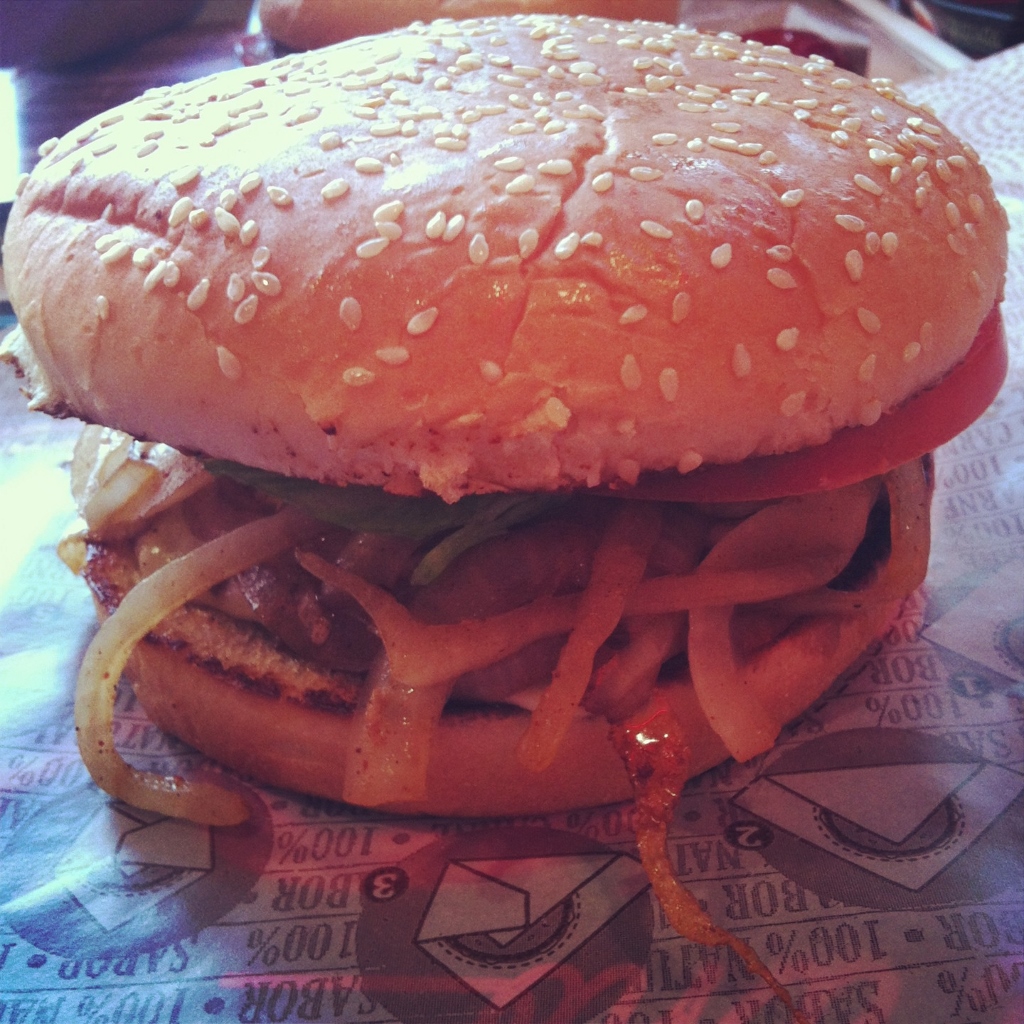
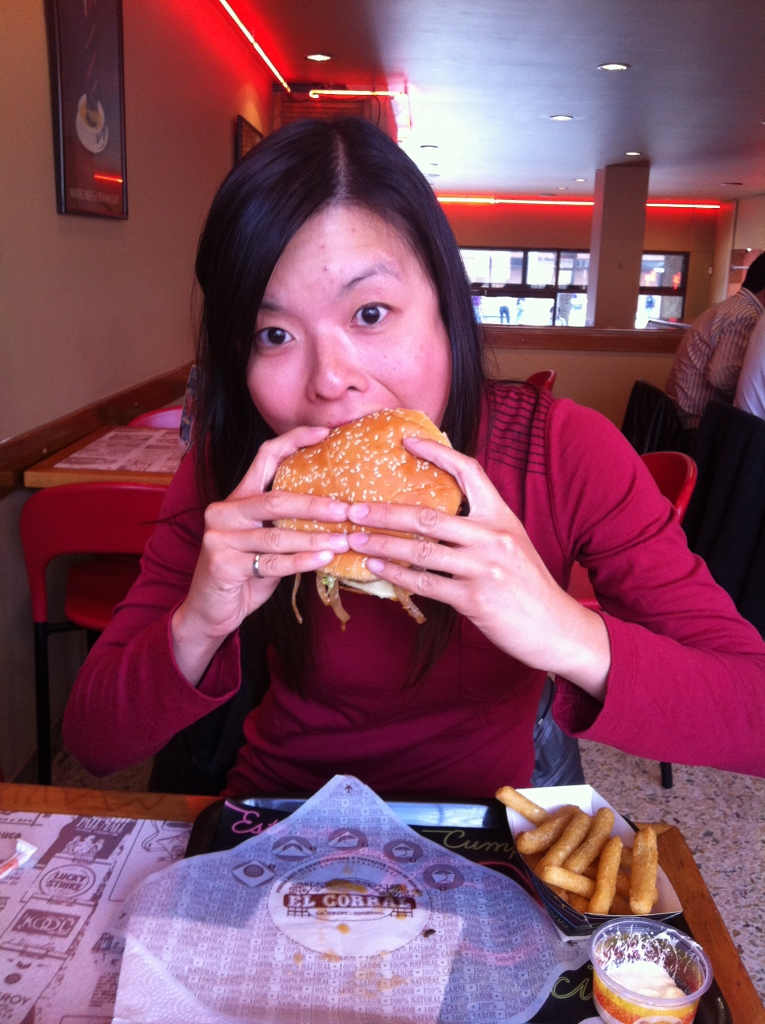
Jason ordered the classic and I ordered the Criolla – which is the classic with sautéed onions, bacon, cheese and a fried egg.

Criolla burger at El Corral

Beef (& worm?) patty, sauteed onions, tomato, bacon, fried egg = perfect burger!

Yummers!!

After Lick’s burgers, this was the most delicious, messiest, artery-hardening burger I’ve ever had!

Criolla burger at El Corral

The view of the Criolla burger from another angle

I scrutinized the patty after I’ve taken a few bites. Little globules of fat?…worms?…I wasn’t sure. So the verdict is…….inconclusive.

I cannot confirm or deny the use of ground up worms in their burgers. I can, however, confirm that they are delicious.

El Corral (Bogota, Colombia)

Stuffing my face Testing for scientific purposes at El Corral

BO-gaw-taw

Colourful (Bogota, Colombia)

Colour & graffiti

I didn’t know that Bogota was pronounced BO-gaw-taw until only 3 months ago.  I pronounced it ba-GO-tah (similar to Pagoda).  Good thing the travel agent corrected us, otherwise we would have travelled through the whole of Colombia mispronouncing their capital city.

We spent a total of 6 days in Bogota, but I have to admit: our first impression was a little mixed.  The beautiful historic area we stayed in, called La Candelaria, was pretty charming.  Beautiful, colourful Colonial-style buildings covered every block and the streets were teeming with people.  Bogota has managed to pull off this cosmopolitan-big-city-meets-old-world-charm kinda vibe.

Plaza de Bolivar (Bogota, Colombia)

Llama rides in the pigeon-filled Plaza de Bolivar

Graffiti in La Cadelaria (Bogota, Colombia)

The pretty kind of graffiti in La Candelaria

On the flipside, Bogota is covered in graffiti and garbage.  Next to many beautiful colonial structures are decrepit, run-down buildings.  Our guidebook also warned us about very dodgy (and even dangerous) areas that we should avoid, which has made us a little nervous of just wandering and discovering the city.  Our hostel had signs posted all over, warning us to keep all credit/debit cards in the hostel and to only bring with us enough money for the time we were out.  But honestly, how much is “enough money”?  What if I’m in a dire emergency and need to purchase a new hat?  OK,all joking aside, we were always a little skittish when walking around at night.

Almost everyone we’ve encountered didn’t speak English, so we’ve resorted to impromptu games of Charades and a lot of hand gestures (aided by a few broken Spanish phrases) with the locals.  So for the majority of the first few days here in Colombia, we had no idea what we were ordering to eat (Good thing we’re both adventurous eaters!)

Authentic chicken stew (Medellin, Colombia)

Fish stew in Medellin

One of our first authentic meals here (in a restaurant that was hidden in an alleyway off the main Avenue Jiminez) had us ordering a platter full of meat, rice and avocado & onion salad.  It was delicious!  We started with a thick stew or soup that had plantains, potatoes, and fish in it.  You add in a splash of lime and enjoyed the hearty soup like a meal.

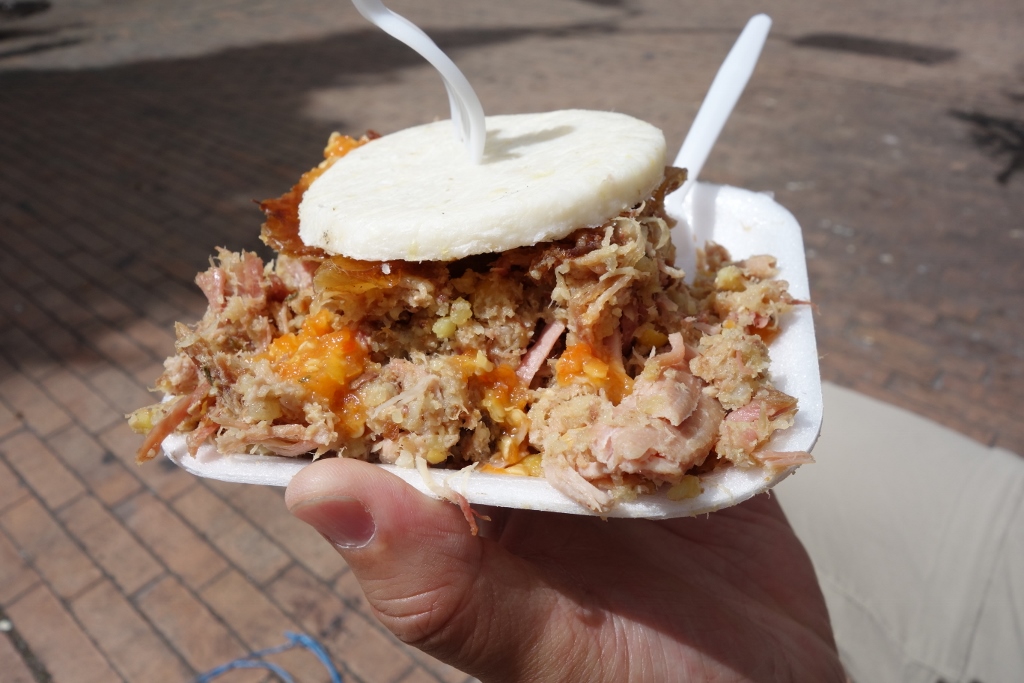
A little while later, we stumbled across a stall that had a whole suckling pig in the window.  They serve it in a mixture of yellow pea puree and corn, with a side of rice arepa (which is a type of bread).  It’s a traditional dish called Lechona and it was delicious!

Lechona (Bogota, Colombia)

Lechona – traditional pork dish in Colombia

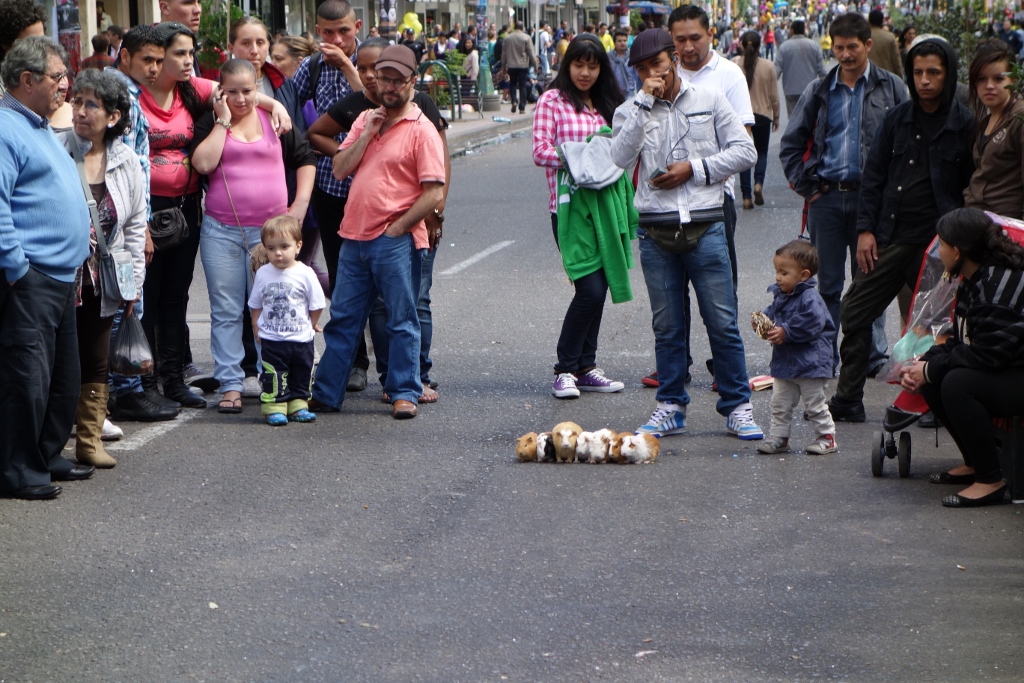
Freshly stuffed with pork, corn, and soup, we wandered outside of the historic area of La Candelaria and saw a crowd of people on one of the main pedestrian streets.  We poked our heads in and saw this highly entertaining sight of a guy racing guinea pigs. Yes, guinea pigs!

Street guinea pig race (Bogota, Colombia)

All the guinea pigs revving their engines at the starting line

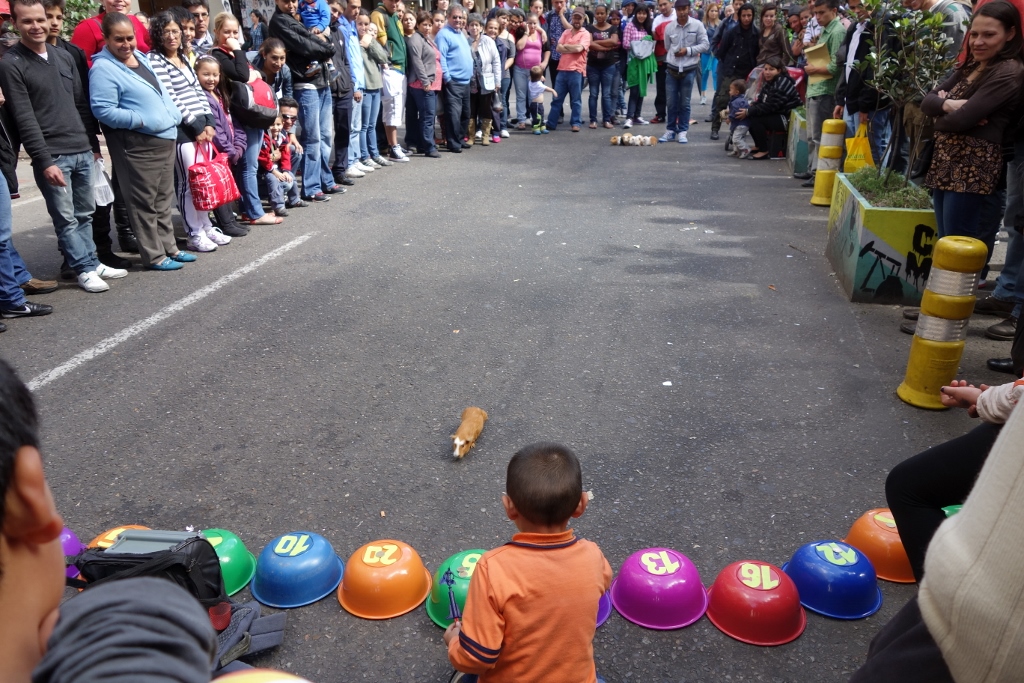
They were so well-trained! That’s coming from someone who used to own a guinea pig – so I know how “untrainable” they are.  They lined up side-by-side, completely still, by the start line. At the finish line were about 20 colourful bowls placed upside down, with little openings cut into each one.  All the bowls are numbered and people place bets by setting down a couple of coins on top of the bowl they think the guinea pig will run into.  Once all bets are taken, the announcer gave one guinea pig a little pat to get him running down the track!  It was really quite amazing…we watched them for a good half hour. We even came close to winning one race, but the little bugger scooted into the next bowl at the last second!
Street guinea pig race (Bogota, Colombia)

Photo finish!

After the exhilarating races, we decided to call it a night.  Our new hostel had a giant medieval kitchen that Jason wanted to use, so we picked up some groceries on the way back for some delicious tomato & sardines pasta. Yum!  Jason can whip up a good meal anywhere!

Homemade dinner (Bogota, Colombia)

Homemade paste for dinner by chef Jason